

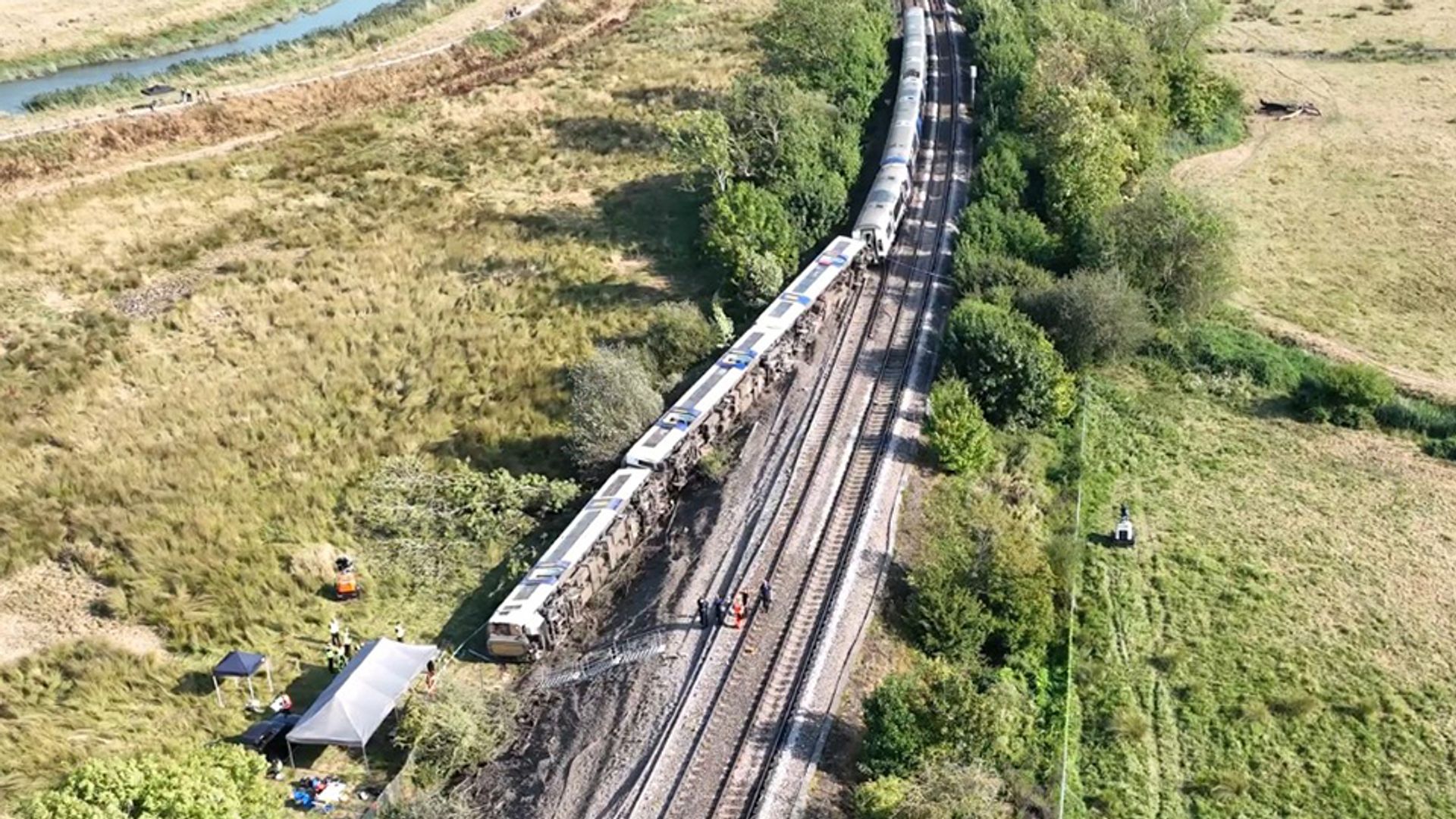
Investigators probing the recent train derailment near Lewes have uncovered a concerning “irregularity” on the railway track leading up to the accident location. This discovery adds a crucial piece to the complex puzzle of what caused the derailment last week, raising important questions about track safety and maintenance protocols in the area.
Uncovering the Track Irregularity
Following the derailment incident, railway safety officials launched a thorough examination of the track infrastructure around the accident site. Their analysis revealed a deviation or defect in the track geometry—referred to in technical terms as an “irregularity”—on the section just before where the train left the rails.
Such irregularities can encompass a range of issues, including uneven rail heights, misaligned tracks, or damaged sleepers, which can significantly impact the stability and smooth operation of trains. Although investigators have not yet specified the exact nature or severity of this irregularity, its presence is a vital lead in determining the derailment’s root causes.
Why Track Conditions Matter in Train Safety
Rail tracks must adhere to stringent engineering standards to ensure the safety of passengers and freight. Even minor defects can cause a train to derail, especially at higher speeds or under heavy loads. Regular inspections and maintenance routines aim to detect and rectify any irregularities before they pose risks.
The Lewes derailment underscores the critical importance of these protocols. While trains are equipped with advanced safety systems, the physical condition of the track remains a fundamental factor in preventing accidents. Detecting irregularities promptly allows rail operators to schedule repairs or replacements, mitigating potential hazards.
Industry experts highlight that irregularities can develop over time due to environmental factors such as soil subsidence, weather conditions, or wear and tear from frequent train passages. This incident will likely prompt a closer review of maintenance schedules and inspection technologies used in the region.
What This Means for the Investigation and Future Rail Safety
Identifying a track irregularity near the derailment site provides investigators with a tangible focus for their ongoing inquiry. It suggests that infrastructure issues could have contributed to the accident, either independently or in conjunction with other factors like train speed, mechanical failures, or human error.
The investigation team will now aim to establish whether this irregularity directly caused the train to derail or if it was one of several compounding elements. This process involves detailed forensic analysis, including track measurements, material testing, and reviewing maintenance records.
For the wider rail network, the incident serves as a stark reminder of the necessity for rigorous monitoring and timely maintenance of tracks. It may accelerate efforts to implement cutting-edge technologies such as track geometry measurement systems and automated defect detection, enhancing early warning capabilities.
Passengers, local communities, and rail operators all have a vested interest in the outcome of this investigation. Ensuring that lessons are learned and applied could prevent similar accidents in the future, safeguarding lives and minimizing disruptions.
Looking Ahead
The discovery of a track irregularity at the Lewes derailment site marks a significant step toward understanding the cause of last week’s accident. As investigators continue their work, the findings will inform safety improvements not only in this locality but potentially across the national rail network.
Rail infrastructure integrity remains a cornerstone of operational safety. This incident highlights the ongoing challenge of maintaining aging tracks under increasing demands and environmental pressures. The commitment to addressing such irregularities promptly will be essential to uphold public confidence and protect rail passengers moving forward.