

The UK government’s ban on the activist group Palestine Action has been declared lawful, but the fight is far from over. The group’s co-founder has secured permission to escalate the case to the Supreme Court, signaling a prolonged legal battle over the controversial proscription. Meanwhile, police arrested 117 demonstrators during a recent protest linked to the group, highlighting the ongoing tensions surrounding their activism.
What Happened: Ban Upheld, Massive Arrests at Protests
Palestine Action, known for its direct action campaigns targeting companies involved in the Israeli-Palestinian conflict, faced a government-imposed ban labeling it a terrorist organization. The Home Office justified the ban by citing concerns over the group’s tactics and alleged links to unlawful activities. The decision sparked widespread debate about the balance between national security and freedom of protest.
Following the ban, law enforcement agencies cracked down on Palestine Action’s demonstrations. During one large-scale protest, police detained 117 individuals, marking a significant enforcement effort against the group’s supporters. These arrests underscore the authorities’ commitment to curbing what they consider extremist activities, while activists argue the measures suppress legitimate dissent.
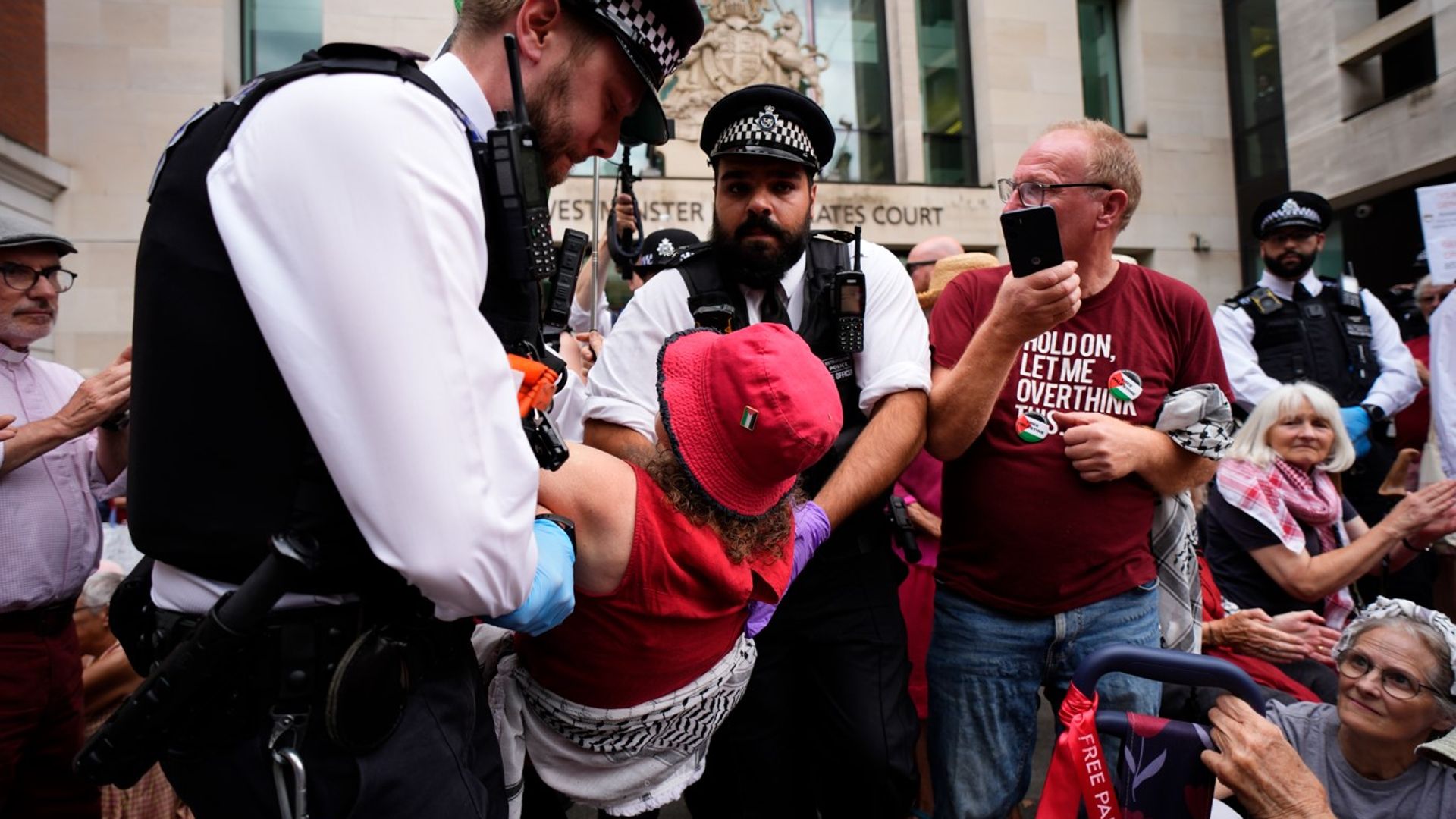
In the legal arena, the group’s co-founder challenged the ban, arguing it infringed on fundamental rights. Although a lower court ruled in favor of the ban, the co-founder has now cleared the hurdle to appeal to the Supreme Court. This progression indicates that the highest judicial authority in the UK will soon weigh in on whether the government’s ban complies with legal standards and human rights protections.
Why This Matters: Freedom of Protest vs. National Security
The Palestine Action case sits at the heart of a broader conflict between ensuring public safety and protecting civil liberties. Governments worldwide grapple with how to address groups that employ disruptive or illegal tactics in pursuit of political goals. The UK’s designation of Palestine Action as a terrorist organization raises critical questions about the criteria for such bans and their implications for democratic rights.
Proponents of the ban emphasize the need to prevent violence, property damage, and intimidation tactics allegedly used by Palestine Action activists. They argue the group’s actions cross a line that justifies legal restriction and police intervention. Conversely, defenders of Palestine Action maintain that their protests are peaceful expressions of solidarity with Palestinians and that the ban suppresses essential political discourse.
The mass arrests at the recent protest further fuel this debate, with critics accusing law enforcement of heavy-handedness and supporters warning of chilling effects on activism. As the case advances to the Supreme Court, it will set a vital precedent regarding how far governments can go in restricting activist groups under terrorism laws.
What Comes Next: Supreme Court’s Role and Broader Implications
The Supreme Court’s decision to hear the appeal means a thorough examination of the legal and constitutional questions involved. The justices will analyze whether the government’s proscription of Palestine Action aligns with principles of justice, proportionality, and freedom of expression guaranteed under UK law and international human rights frameworks.
This ruling could have far-reaching consequences beyond Palestine Action itself. A confirmation of the ban might embolden future proscriptions of activist groups viewed as threats, potentially narrowing the space for protest across the country. On the other hand, overturning the ban could reinforce protections for political activism, even when it involves disruptive tactics.
Meanwhile, the activists and their supporters continue to mobilize, undeterred by legal and police pressure. The 117 arrests demonstrate the scale and intensity of the movement, which remains vocal about Palestinian rights and critical of companies implicated in the conflict. As legal proceedings unfold, public attention will focus sharply on how the UK navigates this complex intersection of security and civil liberties.
Looking Ahead: Balancing Security and Civil Rights
The Palestine Action saga exemplifies the difficult balancing act facing democracies today. Governments must protect citizens from genuine threats while safeguarding the right to protest and political expression. The Supreme Court’s forthcoming judgment will be pivotal in defining that balance in the UK context.
For citizens, activists, and policymakers alike, the case underscores the enduring tensions between state power and grassroots activism. It highlights the importance of clear legal standards and transparent processes when restricting freedoms in the name of security.
As the legal battle continues, the eyes of the nation—and potentially the world—will be on the UK’s highest court to deliver a verdict that shapes the future of protest and dissent for years to come.