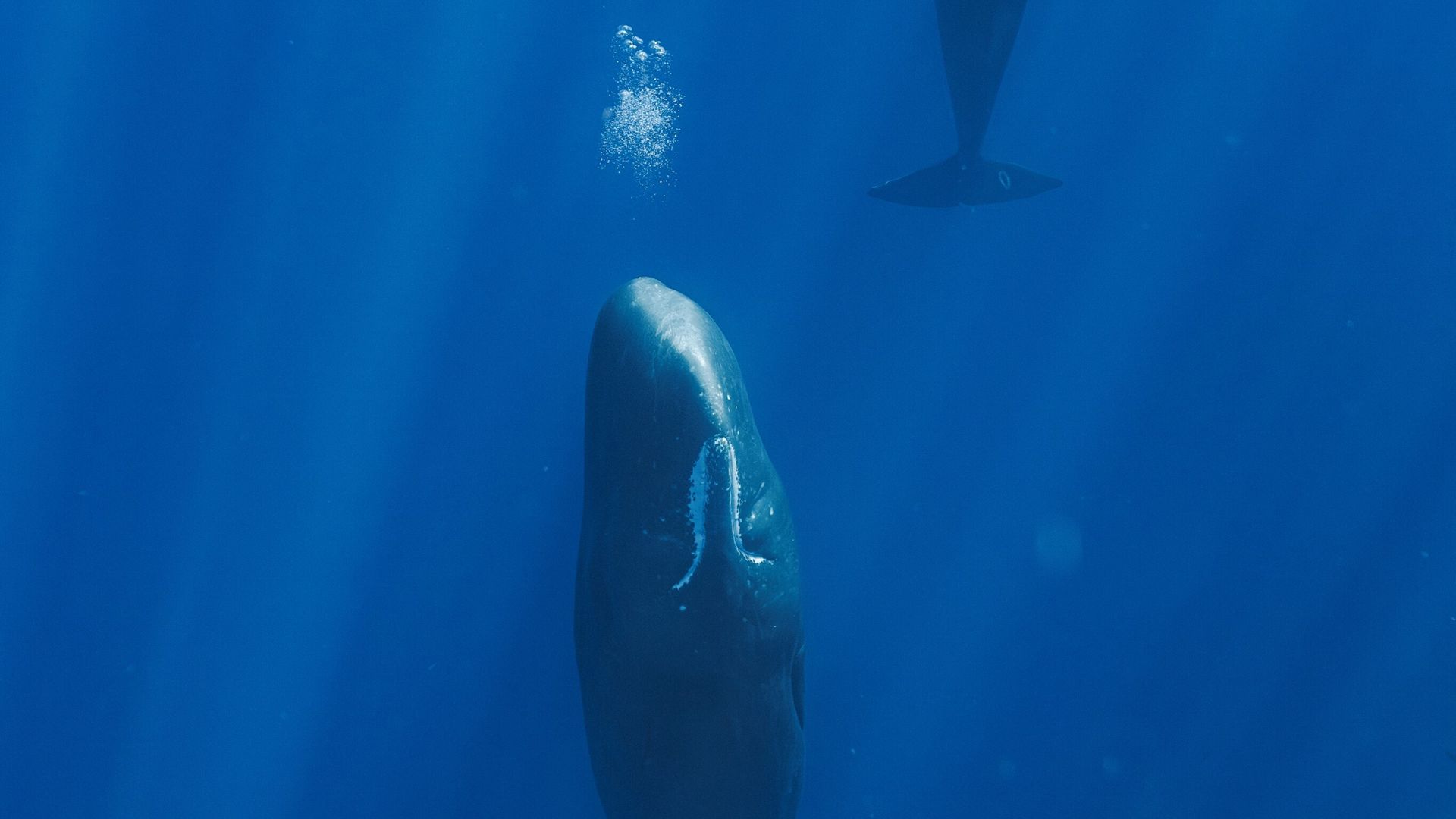
Sperm whales exhibit a remarkable behavior during sleep: they drift vertically in the ocean, seemingly suspended in place. Recent scientific discoveries reveal that these majestic marine mammals achieve this unique resting posture by releasing gas bubbles that finely control their buoyancy, allowing them to float effortlessly while asleep.
How Sperm Whales Use Bubbles to Control Buoyancy
Unlike many animals that rest on land or swim slowly while resting, sperm whales adopt an unusual vertical sleeping position, often described as a “logging” posture due to their resemblance to floating logs. Researchers have long been fascinated by how these large creatures maintain this position without expending energy to stay afloat.
New findings show that sperm whales release gas bubbles from their bodies, which act as natural buoyancy regulators. By adjusting the volume of these bubbles, the whales can fine-tune their density relative to the surrounding seawater. This process enables them to maintain a stable vertical orientation without active swimming or drifting downward.
The bubbles create a subtle, yet crucial cushion of lift, counterbalancing the whale’s weight and allowing it to hang suspended in the water column. This discovery sheds light on the physiological adaptations sperm whales use to rest safely in the open ocean, where surfaces for resting are absent.
Why Vertical Sleeping Matters to Sperm Whales
The vertical sleep posture serves several important functions for sperm whales. First, it likely aids in breathing. Positioned vertically, the whales can easily surface to breathe without expending energy to swim or adjust their posture. This is especially vital during deep dives, after which the whales need to recover and replenish oxygen efficiently.
Second, the vertical floating position may help sperm whales remain alert to potential threats. Suspended in the water column, they can maintain sensory awareness of their surroundings while resting. This ability to rest without losing vigilance is crucial for survival in predator-rich marine environments.
Third, the bubble release technique reflects the whales’ sophisticated control over their physiology. Sperm whales are among the deepest diving mammals, known to reach depths exceeding 2,000 meters. Controlling buoyancy at such depths requires precise mechanisms to conserve energy and manage pressure changes.
What This Discovery Tells Us About Marine Mammal Adaptations
This breakthrough enhances our understanding of marine mammal biology and their evolutionary adaptations to ocean life. The ability to manipulate buoyancy through bubble release highlights the complex interactions between physiology and behavior in large cetaceans.
Moreover, understanding the mechanisms behind sperm whale sleep can inform broader marine conservation efforts. Sleep is essential for cognitive function and overall health, and insights into how these animals rest can help scientists assess the impacts of human activities—such as noise pollution and ship traffic—on their natural behaviors.
Researchers continue to explore the nuances of sperm whale behavior, buoyancy control, and sleep patterns. These studies contribute to a more comprehensive picture of how marine mammals have evolved to thrive in challenging underwater environments.
Looking Ahead: The Importance of Protecting Sperm Whales
The revelation that sperm whales depend on bubble release to rest vertically underscores their vulnerability to disturbances in their habitat. Disruptions that interfere with their ability to regulate buoyancy or rest effectively could have significant consequences for their health and survival.
Protecting their natural environment, minimizing underwater noise pollution, and safeguarding critical habitats are vital steps to ensure sperm whales continue to thrive. As apex predators and key players in marine ecosystems, their well-being reflects the overall health of the ocean.
In sum, this discovery not only uncovers a fascinating aspect of sperm whale biology but also emphasizes the delicate balance these giants maintain to survive. Their use of gas bubbles to sleep vertically is a testament to the intricate adaptations forged by millions of years of evolution beneath the waves.