Britain stands on the brink of a revolutionary shift in military aviation as its next-generation fighter jet might be the final one to carry a human pilot in the cockpit. Air Chief Marshal Sir Harv Smyth, head of the Royal Air Force, has declared that uncrewed drones powered by advanced artificial intelligence (AI) will transform combat aviation as fundamentally as the transition from propeller planes to jets once did.
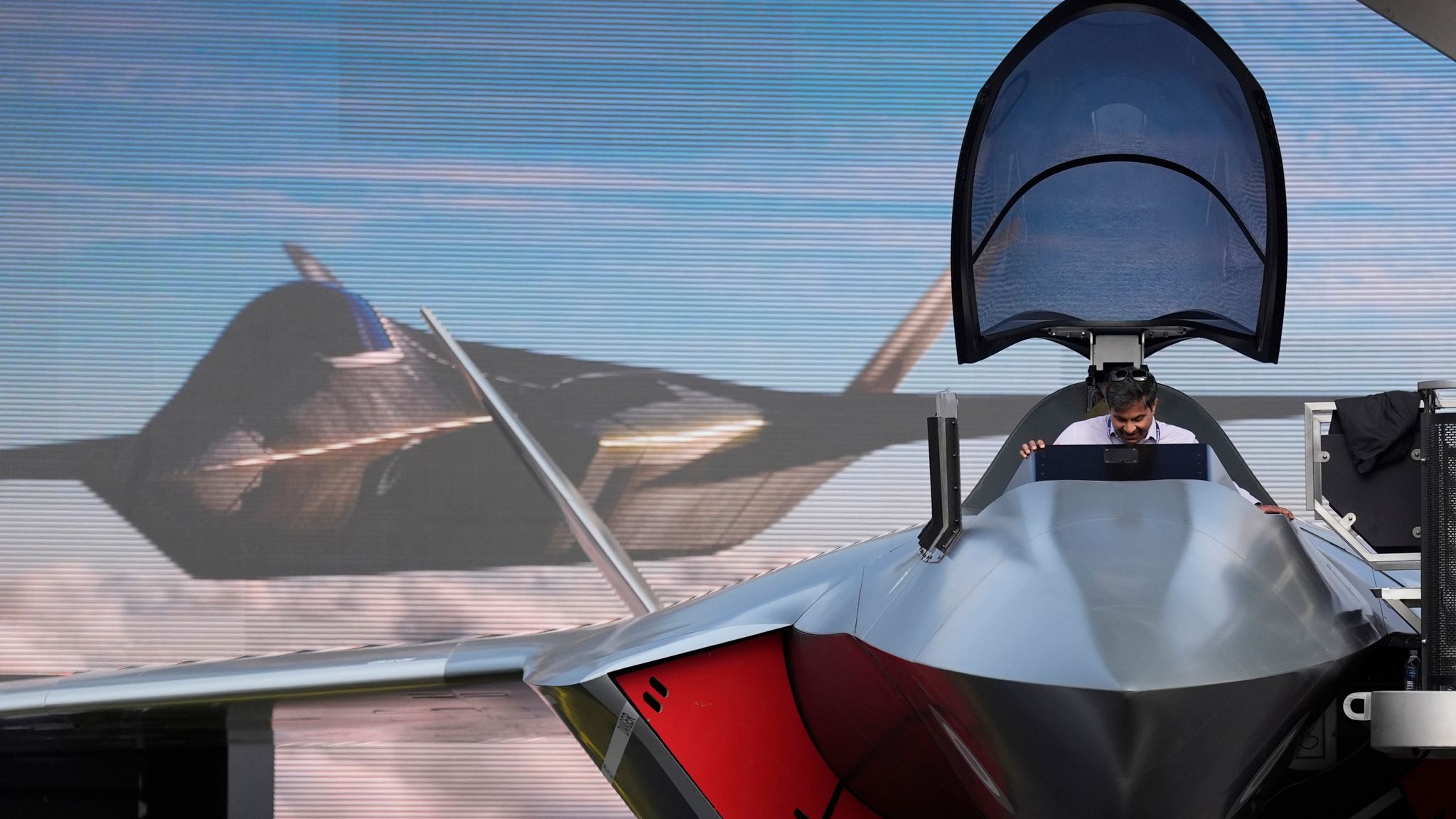
The Future of British Fighter Jets: The Tempest and Beyond
The Royal Air Force’s upcoming fighter, known as the Tempest, is designed to be a sixth-generation stealth aircraft, representing the cutting edge of aerial combat technology. This multi-billion-pound project is being developed under the Global Combat Air Programme (GCAP), a collaborative effort involving the UK’s BAE Systems, Italy’s Leonardo, and Japan’s Aircraft Industrial Enhancement Company.
Scheduled for service by 2035, the Tempest aims to redefine air superiority through a blend of stealth, speed, and advanced autonomous capabilities. Sir Harv Smyth emphasized to The Telegraph that this fighter “is perhaps the last crewed fighter we will ever build,” highlighting a future where the RAF will operate a hybrid fleet combining existing manned jets like the Eurofighter Typhoon FGR4 and F-35 Lightning II with autonomous systems.
The Eurofighter Typhoon currently forms the backbone of the RAF’s combat fleet, while the F-35B Lightning brings stealth and carrier-based versatility, also serving the Royal Navy. However, the trajectory points towards increased reliance on remotely piloted and AI-assisted aircraft.
Integrating AI and Uncrewed Systems: A Paradigm Shift
Britain has already taken significant steps into unmanned aviation. The Protector drone, a remotely piloted 11-metre-long aircraft operated from RAF Waddington in Lincolnshire, performs surveillance and combat operations. It boasts an endurance of approximately 40 hours and carries precision weaponry such as Brimstone missiles and Paveway bombs.
Sir Harv Smyth stressed the importance of using AI as a tool to augment human decision-making rather than replace it. “Used properly, AI and machines will tackle the most dangerous tasks instead of humans, but technology must enhance human judgment, not replace accountability,” he explained.
He further elaborated that the development of uncrewed fighter jets, which will begin flying in UK airspace as early as next year, is both an exciting and necessary evolution in military aviation. This move reflects a strategic shift towards leveraging autonomous systems to reduce risk to human pilots while maintaining operational effectiveness.
Demonstrations of Autonomous Combat Technology
Recent tests by the US Air Force have showcased the future envisioned by the RAF chief. At Edwards Air Force Base in California, a piloted F-22 Raptor acted as an airborne commander, directing a “wingman” drone— the YFQ-44A Fury. This drone, mimicking a traditional fighter jet in appearance, autonomously interpreted the pilot’s tactical instructions, selected maneuvers independently, and executed simulated combat missions without direct human control.
This demonstration underscores how manned and unmanned systems can operate in tandem, with human pilots focusing on strategic decisions while AI-driven drones handle complex, high-risk tasks.
Why This Matters: The Future of Air Combat and National Security
The evolution from piloted to autonomous combat aircraft carries profound implications for military strategy, national defense, and pilot safety. As adversaries develop their own autonomous capabilities, maintaining technological superiority becomes critical.
Moreover, this shift challenges traditional notions of accountability and ethical decision-making in warfare. While AI and autonomous systems can reduce human casualties, they also demand rigorous oversight to ensure responsible use.
For the UK, the Tempest program and its embrace of AI-driven drones represent a decisive step toward securing air dominance in a future where technology and human skill must coexist seamlessly.
Looking Ahead: The RAF’s Path Forward
The RAF’s gradual integration of uncrewed systems alongside proven manned fighters signals an era of hybrid air combat fleets. By 2035, the Tempest and its autonomous counterparts are expected to operate side by side with Typhoons and F-35s, forming a versatile and resilient aerial force.
Sir Harv Smyth’s vision acknowledges that while humans remain at the center of decision-making, the aircraft they pilot may soon be the last to carry them physically into battle. The coming years will be pivotal for how the RAF, and global air forces more broadly, adapt to this technological transformation.
In sum, Britain’s next fighter jet could mark the end of an era and the dawn of a new age of AI-assisted, uncrewed aerial warfare—reshaping the future of military aviation forever.