The UK government’s emergency alert system, designed to warn citizens of immediate life-threatening dangers, has narrowly avoided activation during several critical incidents since its 2023 launch. These “near misses” reveal how close the nation came to receiving urgent mobile alerts amid civil unrest, potential space debris hazards, and a public health scare.
When Emergency Alerts Almost Went Live: The Southport Riots and Beyond
One of the most serious moments prompting consideration of emergency alerts occurred during the Southport riots in the summer of 2024. The unrest ignited after the brutal murder of three young girls at a Taylor Swift-themed dance class in July. Public outrage intensified when online rumours falsely claimed the attacker was a small boat migrant, sparking violent riots across multiple locations.
During the turmoil, mosques, community centres, libraries, and hotels housing asylum seekers became targets of far-right-instigated violence. A subsequent government investigation concluded that far-right groups largely instigated the disturbances. The perpetrator, British-born Axel Rudakubana, later confessed to the murders.
According to documents obtained by the PA news agency via a Freedom of Information request, the Cabinet Office seriously considered deploying the emergency alert system to warn residents in affected areas. However, the decision was ultimately made not to activate the alerts, classifying the episode as a “near miss.”
Other Critical Incidents That Nearly Triggered Alerts
Aside from civil unrest, the government weighed alerting the public to other potentially dangerous events. In early 2026, officials debated sending alerts nationwide about the re-entry of China’s Zhuque-3 space rocket, whose debris was feared to pose a risk to the UK. The rocket’s wreckage was unusually large, raising alarm. Fortunately, the debris landed safely in the ocean more than 1,000 miles south of New Zealand near Antarctica, negating the threat.
Earlier, in May 2024, a public health emergency in Devon brought the emergency alert system back into focus. An outbreak of the parasite cryptosporidium contaminated tens of thousands of residents’ drinking water, causing some to require hospital treatment. Officials considered using alerts to instruct people to boil water before use but ultimately withheld the message.
In September 2025, concerns about potential power shortages in Northern Ireland also put the alert system under review. The Kilroot gas power station was nearing its annual running limit, prompting fears of supply disruption. The Cabinet Office explored using mobile alerts to prepare the public but decided against activation.
Weather-related threats also prompted alert considerations. The government evaluated warnings during Storm Babet in 2025, known for its severe rain and wind, as well as during significant weather events in Scotland and the North East of England in 2023. None of these situations met the high activation threshold required.
Understanding the Emergency Alerts System and Its Purpose
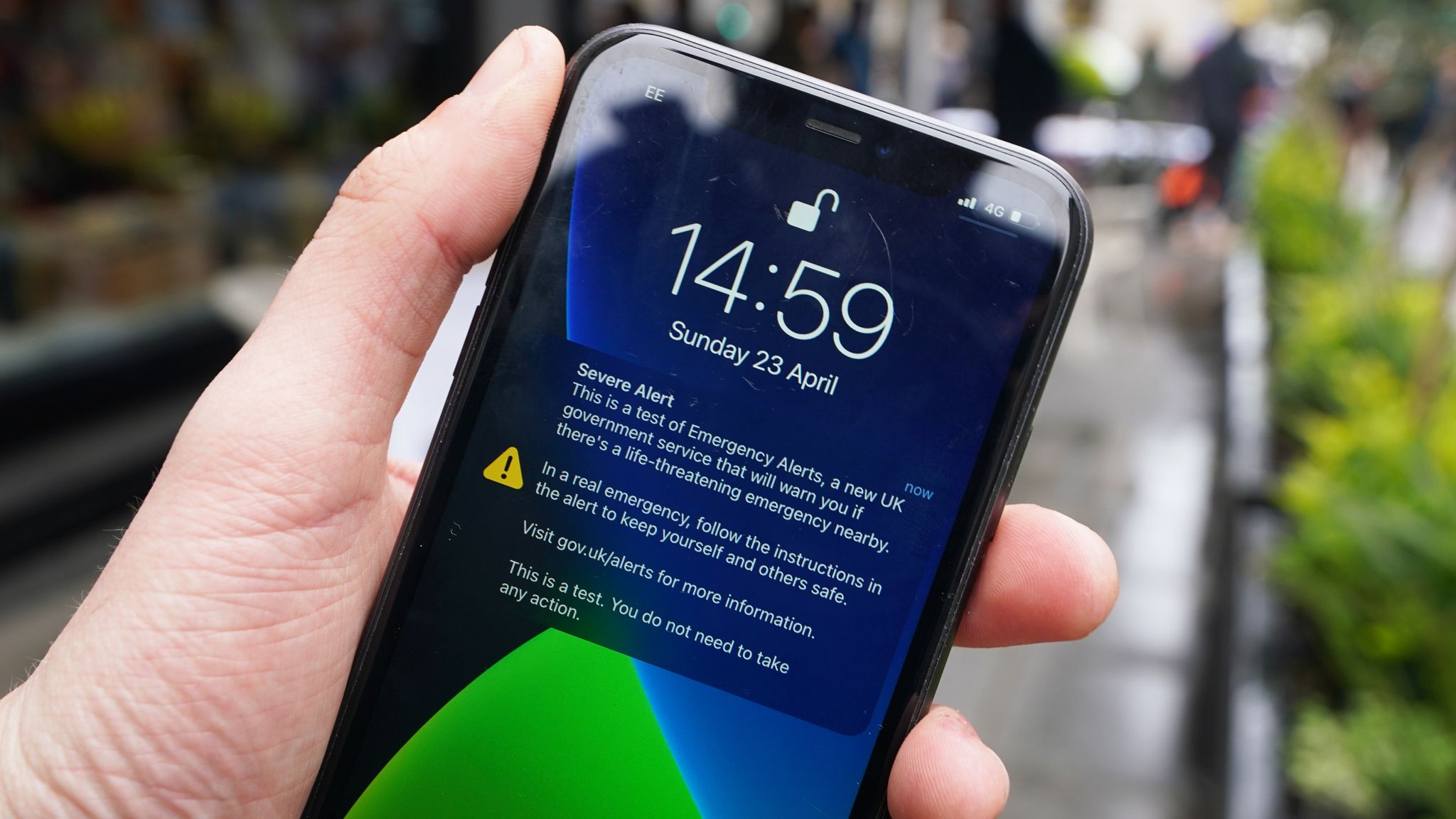
Launched in 2023, the UK’s emergency alert system sends siren-like sounds and urgent messages to mobile phones to warn the public about imminent threats to life. Its use is deliberately rare and carefully regulated to avoid public desensitization or panic.
A government spokesperson emphasized the system’s critical role: “As the public rightly expects, the government actively considers how to respond to a wide range of potential events. The emergency alerts system is a vital public safety tool designed to be used sparingly. Its activation threshold is very high and strictly reserved for threats to life.”
The Cabinet Office’s thorough deliberation before activating alerts underscores a commitment to balancing public safety with clear, credible communication. These “near misses” demonstrate the system’s readiness and the government’s cautious approach to deploying such powerful notifications.
What This Means for Public Safety Moving Forward
The close calls with activating the UK’s emergency alert system reveal both its importance and the complexities involved in emergency communication. As threats evolve—from civil unrest to environmental hazards and public health crises—the system provides a critical lifeline to keep citizens informed and safe.
By maintaining stringent activation criteria, the government preserves the alert system’s effectiveness and public trust. Citizens can be reassured that any future alert will signal a serious and immediate risk warranting urgent attention and action.
These incidents also highlight the importance of monitoring misinformation and social tensions, as seen in the Southport riots, and the need for clear, timely public messaging during emergencies.
While these events did not ultimately trigger emergency alerts, they serve as vital case studies in emergency preparedness and response strategy for the UK.