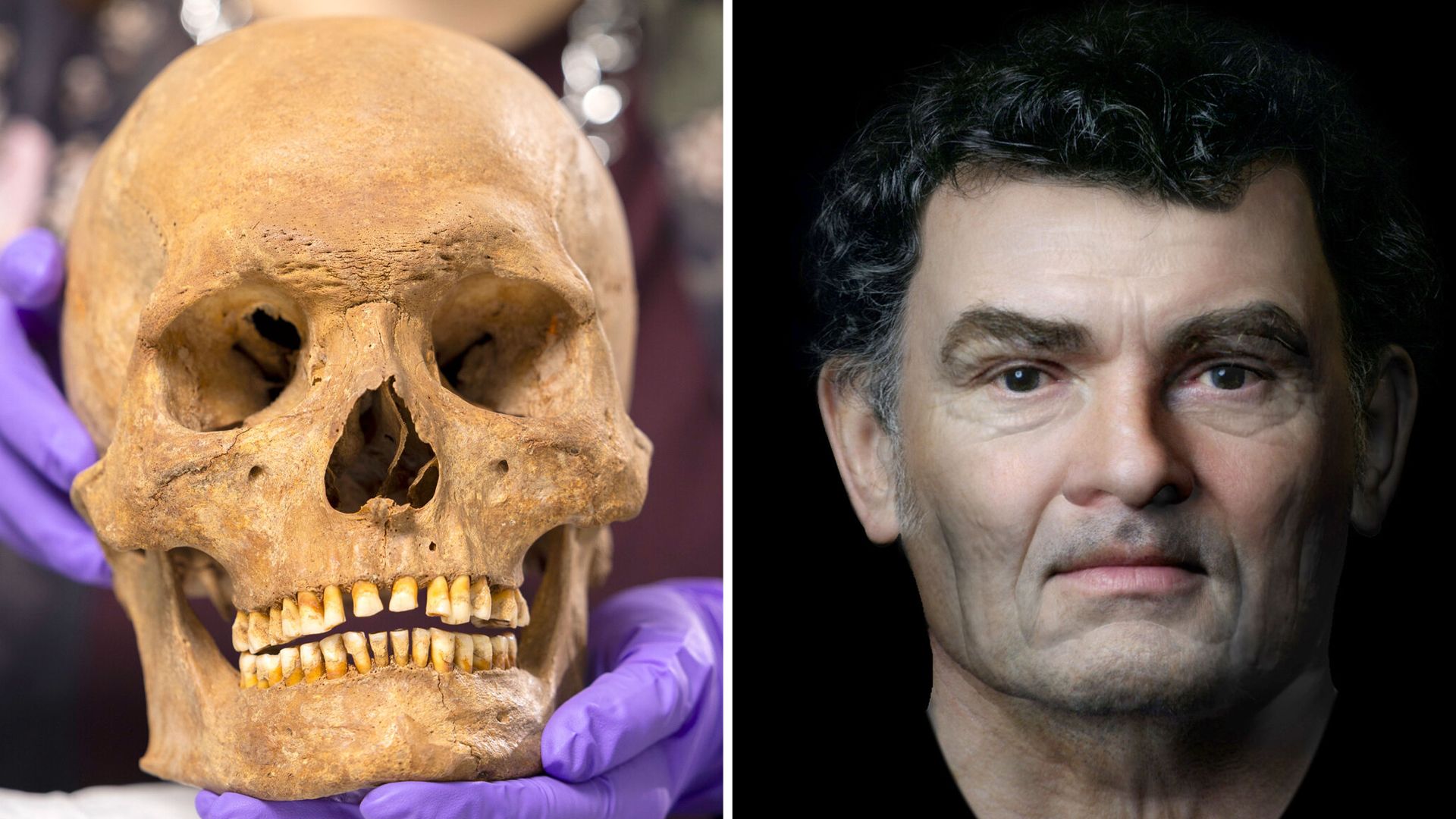
Archaeologists have unveiled the reconstructed face of a man who lived and died nearly two millennia ago on the Roman frontier in what is now Scotland. This remarkable reconstruction, derived from skeletal remains, offers a rare glimpse into the life and appearance of an individual who inhabited a turbulent borderland during the height of Roman Britain.
Unearthing a Life on the Edge of the Roman Empire
The man’s remains were discovered at a Roman frontier site in Scotland, a region known historically as the northernmost boundary of Roman influence in Britain. This frontier, marked by a series of forts, walls, and watchtowers, represented the Roman Empire’s efforts to control and monitor the tribal populations north of Hadrian’s Wall.
Living on this volatile border meant navigating a complex cultural landscape, where Roman soldiers and local tribes coexisted, clashed, and traded. The skeletal remains provide crucial evidence for understanding who inhabited these frontier zones and how they might have lived.
Experts used modern forensic techniques and 3D modeling to reconstruct the man’s face from his skull. This process involved meticulous analysis of bone structure to recreate muscle, tissue, and skin, resulting in a lifelike representation that bridges the ancient world and today.
The Significance of the Reconstruction
This facial reconstruction is more than a compelling visual; it humanizes a figure from a distant past often reduced to artifacts and ruins. The exhibition showcasing this image aims to connect visitors emotionally and intellectually with the realities of life on the Roman frontier.
By putting a face to the skeletal remains, researchers invite the public to consider the personal stories behind archaeological discoveries. The man’s identity remains unknown, but his reconstructed visage symbolizes the many individuals who lived through the complexities of empire, conflict, and cultural exchange.
Such reconstructions also contribute to broader historical narratives, shedding light on the diversity of people who lived in Roman Britain. They challenge simplistic views of Roman soldiers or local inhabitants by revealing the shared humanity beneath ancient bones.
What This Discovery Means for Understanding Roman Scotland
Roman Scotland represents a critical chapter in Britain’s ancient history, marked by military ambition, cultural interaction, and frontier resilience. This reconstruction enriches our comprehension of that era by providing tangible evidence of the people who shaped it.
The frontier was not merely a line on a map but a lived reality for communities dealing with Roman authority and indigenous traditions. The man’s facial reconstruction deepens public appreciation for the complexities of this historical period and the individuals caught within it.
As archaeological methods advance, similar reconstructions promise to reveal more about other forgotten lives from antiquity, enhancing our understanding of history’s human dimension.
Looking Ahead: Bringing Ancient Lives to the Present
The facial reconstruction will be a centerpiece of an upcoming major exhibition dedicated to exploring Roman Scotland and its frontier communities. This exhibit will combine artifacts, interactive displays, and expert insights to immerse visitors in the world of Roman-era Scotland.
By reviving the face of a man who lived nearly 2,000 years ago, the exhibition fosters a direct connection between modern audiences and ancient history. It underscores the enduring power of archaeology to transform bones into stories and history into lived experience.
Discoveries like this remind us that history is not just about dates and events but about people—real individuals who shaped and were shaped by their times. The reconstructed face stands as a testament to that enduring legacy.