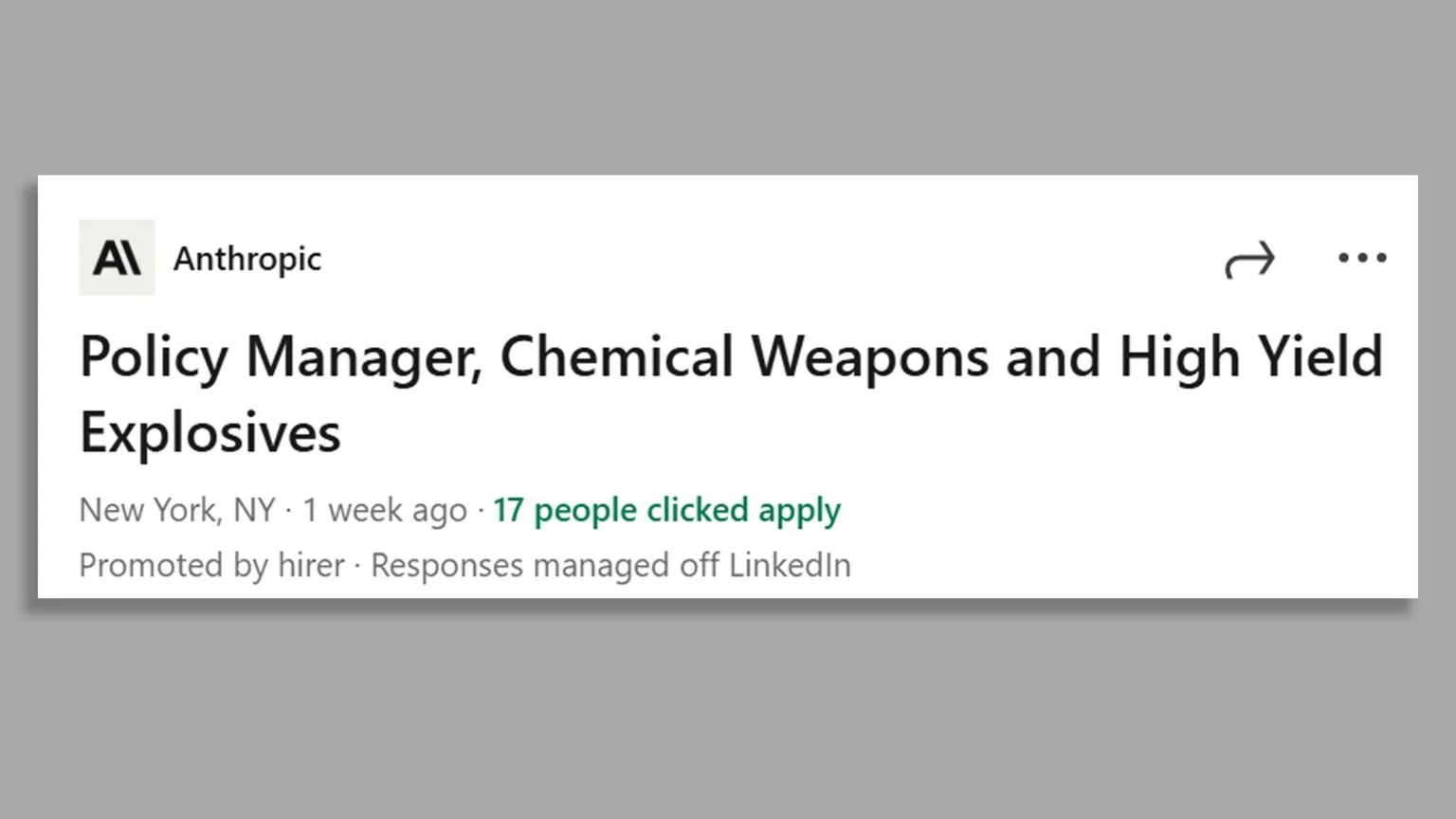
Anthropic, a leading US artificial intelligence (AI) company, has launched a critical recruitment drive for a specialist in chemical weapons and high-yield explosives. This strategic hire aims to safeguard against the potential “catastrophic misuse” of its AI technology, particularly concerning the creation or dissemination of knowledge related to chemical, radiological, or explosive weapons.
Why Anthropic Is Prioritizing Weaponry Expertise
The position reflects a proactive approach to limiting the misuse of AI by integrating expert oversight directly into the development process. Anthropic wants to ensure that its AI models cannot be exploited to generate instructions or facilitate the construction of dangerous weapons.
This move sets a precedent within the industry, as Anthropic is not alone in recognizing the risks. OpenAI, creator of ChatGPT, recently advertised a similar role focused on “biological and chemical risks,” offering a salary nearly twice as high, underscoring the importance and sensitivity of this work.
Challenges and Concerns Around AI Access to Weapons Knowledge
Despite these precautions, experts warn that incorporating weaponry expertise into AI development presents its own dangers. Dr. Stephanie Hare, a tech researcher and co-presenter of the BBC’s AI Decoded program, questions the safety of allowing AI systems to handle information about explosives and radiological weapons.
“Is it ever safe to use AI systems to handle sensitive chemicals and explosives information, including dirty bombs and other radiological weapons?” Dr. Hare asked. She highlighted a significant regulatory gap, noting there is currently no international treaty or regulation governing AI’s role in managing such hazardous knowledge. This lack of oversight means these developments are unfolding largely out of public view.
The broader AI sector has repeatedly sounded alarms about the existential risks posed by advanced AI technologies. Yet, regulatory and legislative responses have lagged behind, leaving a critical gap in global safety frameworks.
Geopolitical Stakes and Anthropic’s Legal Battle
The urgency surrounding AI weaponization and misuse has intensified amid escalating global tensions. The US government has actively engaged with AI firms while simultaneously conducting military operations, including in Venezuela and Iran.
Anthropic itself is entangled in a significant legal dispute with the US Department of Defense. The government has labeled Anthropic a supply chain security risk—placing it alongside companies like Huawei, which have faced blacklisting due to national security concerns. This designation stems from Anthropic’s firm stance against deploying its AI for fully autonomous weapons or mass surveillance of American citizens.
Dario Amodei, co-founder of Anthropic, publicly voiced in February that the technology was not yet reliable or safe enough for such militarized uses. Meanwhile, the White House has asserted that military AI applications will not be subject to tech companies’ governance.
In contrast, OpenAI has negotiated its own contract with the US government, though its AI systems remain unutilized in these contexts for now.
Despite these tensions, Anthropic’s AI assistant, Claude, remains operational and is integrated into systems run by Palantir. It is currently deployed in scenarios involving US and Israeli military activities concerning Iran, highlighting the complex role AI plays in modern conflicts.
What This Means for AI Safety and Global Security
Anthropic’s decision to recruit a weapons expert underscores the growing recognition within the AI industry that technology must be managed with unprecedented care. As AI systems become capable of generating detailed and potentially dangerous information, companies must embed ethical and security expertise at the core of their development.
However, without international regulation or transparency, the risk remains that AI could be exploited to amplify threats related to chemical, biological, radiological, and explosive weapons. The legal and geopolitical conflicts involving Anthropic exemplify the challenges tech companies face when their innovations intersect with national security concerns.
Moving forward, the global community will need to develop clear frameworks and cooperation to govern AI’s role in sensitive areas. Industry leaders like Anthropic are taking initial steps, but the conversation about AI safety and misuse is just beginning.

In summary, Anthropic’s weaponry expert hire signals an urgent call to action for responsible AI development amid escalating risks. Balancing innovation with security will be critical to preventing the catastrophic misuse of AI technologies worldwide.