

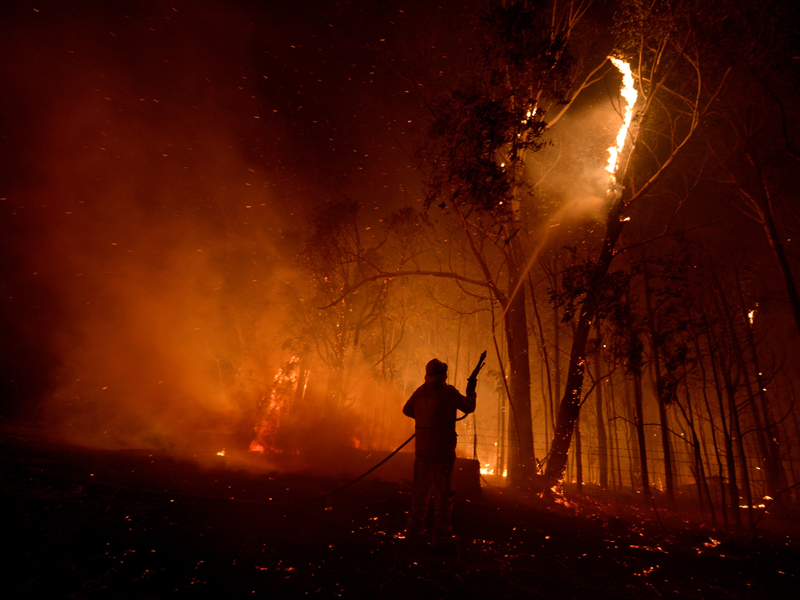
More than 80 intense bushfires continue to rage across the states of Victoria and South Australia, fueled by relentless temperatures soaring above 40 degrees Celsius (104 Fahrenheit). These extreme heat conditions have persisted for several consecutive days, creating a perilous environment where dry vegetation and strong winds combine to amplify the ferocity and speed of the fires.
Widespread Fires and Tragic Loss in Victoria
The state of Victoria, Australia’s second most populous region, is currently battling numerous active fire fronts. Among these devastating events, a tragic fatality has been confirmed. Victoria Police Chief Commissioner Ken Lay reported that one individual lost their life at their residence in Roses Gap, located within the Grampians region, northwest of Melbourne. Although the circumstances of the death were directly linked to the bushfires, further details have not been disclosed at this time.
Adding to the gravity of the situation, Commissioner Lay revealed that authorities have identified 12 of the ongoing fires as deliberately ignited. This points to an alarming factor of arson amid already catastrophic natural conditions. Arson detectives are rigorously investigating these cases, highlighting the critical role of law enforcement in preventing further human-caused fire outbreaks during such a vulnerable period.
The Grampians area, in particular, is now a hotspot of destruction. One blaze in this region has consumed over 52,000 acres of woodland. Victoria Fire Commissioner Craig Lapsley described the fire’s intensity by noting it has produced a towering convection column of hot air approximately seven miles high. This phenomenon not only exacerbates fire behavior but also generates its own lightning, which in turn sparks additional spot fires, complicating containment efforts.

Evacuations and Risks to Residents
In response to the rapidly evolving situation, emergency services have issued evacuation orders for residents living near the most dangerous fire zones, particularly within the Grampians region. Despite these warnings, some residents have chosen to remain behind to defend their homes from the encroaching flames. Commissioner Lapsley acknowledged their decision, emphasizing their right to stay but cautioning about the extreme risks involved.
“They have a right to do so,” Lapsley stated, “but they also take on that risk themselves.” He stressed that the fires are expected to be extraordinarily intense and unpredictable, especially during the afternoon when weather conditions typically worsen. The erratic nature of these bushfires raises the stakes not only for those staying behind but also for firefighting teams working to protect communities.
Historical Context and Why This Fire Season Is Alarming
The current fire conditions in Victoria are being compared to the catastrophic events of 2009, one of the darkest chapters in the state’s recent history. The 2009 wildfires, also known as the Black Saturday bushfires, resulted in the deaths of 173 people and the destruction of over 2,000 homes. These fires remain a haunting reminder of the vulnerability of Australian communities to extreme fire events, especially under conditions of drought and soaring temperatures.
The resurgence of such severe fire conditions underscores the ongoing challenges posed by climate change and seasonal weather patterns that create hotter, drier environments conducive to wildfires. The combination of natural factors and human actions, such as arson, complicates the task of fire management and prevention, placing immense pressure on emergency services and residents alike.
What This Means for the Future
The unfolding bushfire crisis in Victoria and South Australia highlights the urgent need for continued vigilance, effective fire prevention strategies, and robust community preparedness. Authorities are actively investigating arson cases, which if proven, could lead to tougher penalties and increased surveillance to deter deliberate fire-starting. Meanwhile, the severe weather conditions serve as a stark indicator of the heightened fire risk Australians may face in coming years.
For residents living in fire-prone areas, the current situation reinforces the importance of heeding evacuation orders and making informed decisions to protect life and property. Fire agencies continue to monitor the fires closely and deploy resources where needed, but the unpredictable nature of such large, intense fires means the situation remains fluid and dangerous.
As climate patterns shift and extreme heatwaves become more frequent, the lessons learned from this fire season will be critical in shaping future wildfire management policies and community resilience efforts across Australia.