

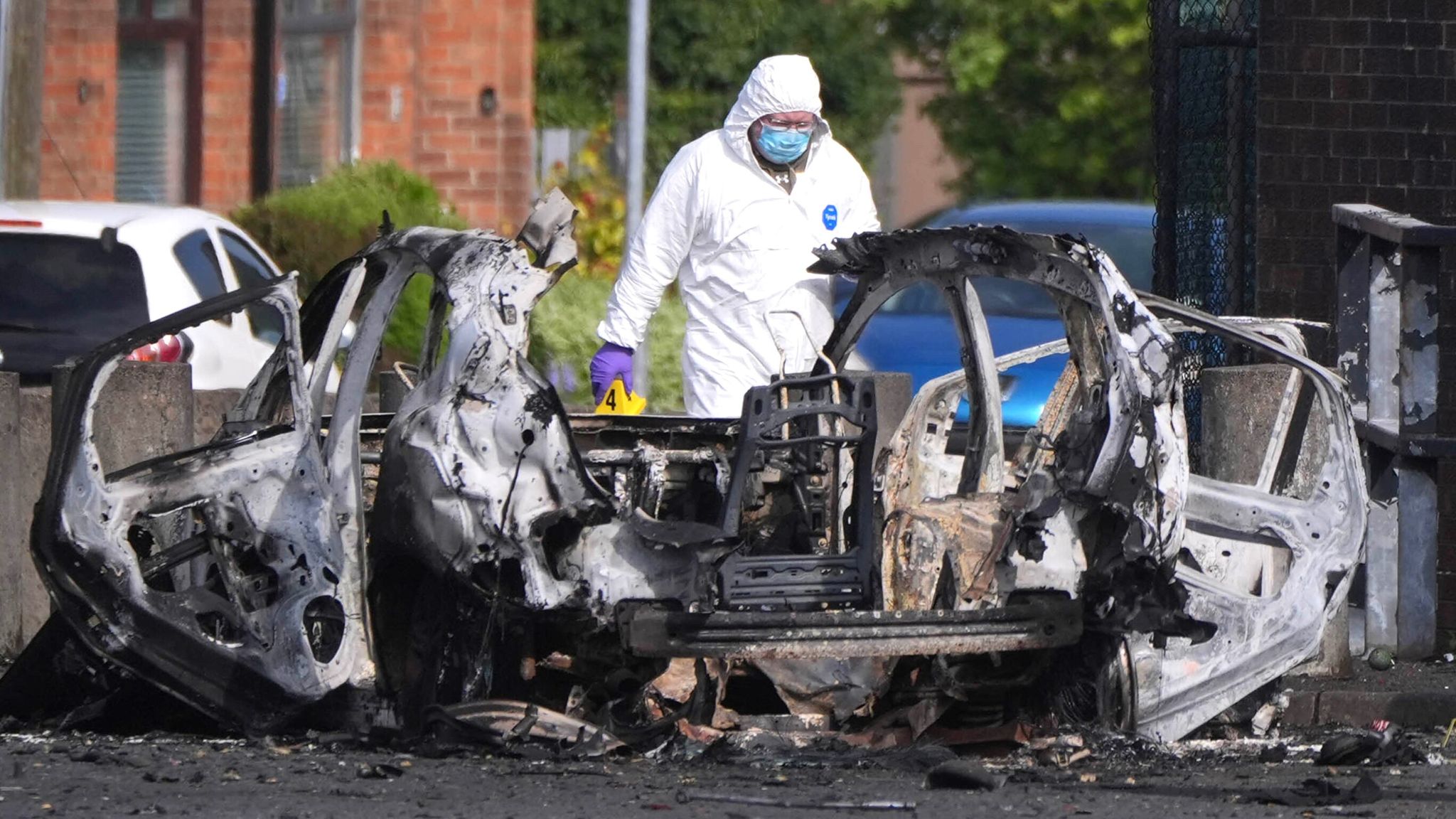
A harrowing explosion rocked Dunmurry, just southwest of Belfast, late Saturday night when a car bomb detonated near the local police station, forcing the urgent evacuation of residents—including two infants. The attack, which authorities promptly classified as attempted murder, has been linked to the dissident republican group known as the New IRA.
The Incident Unfolded: Hijacked Vehicle Turned Bomb
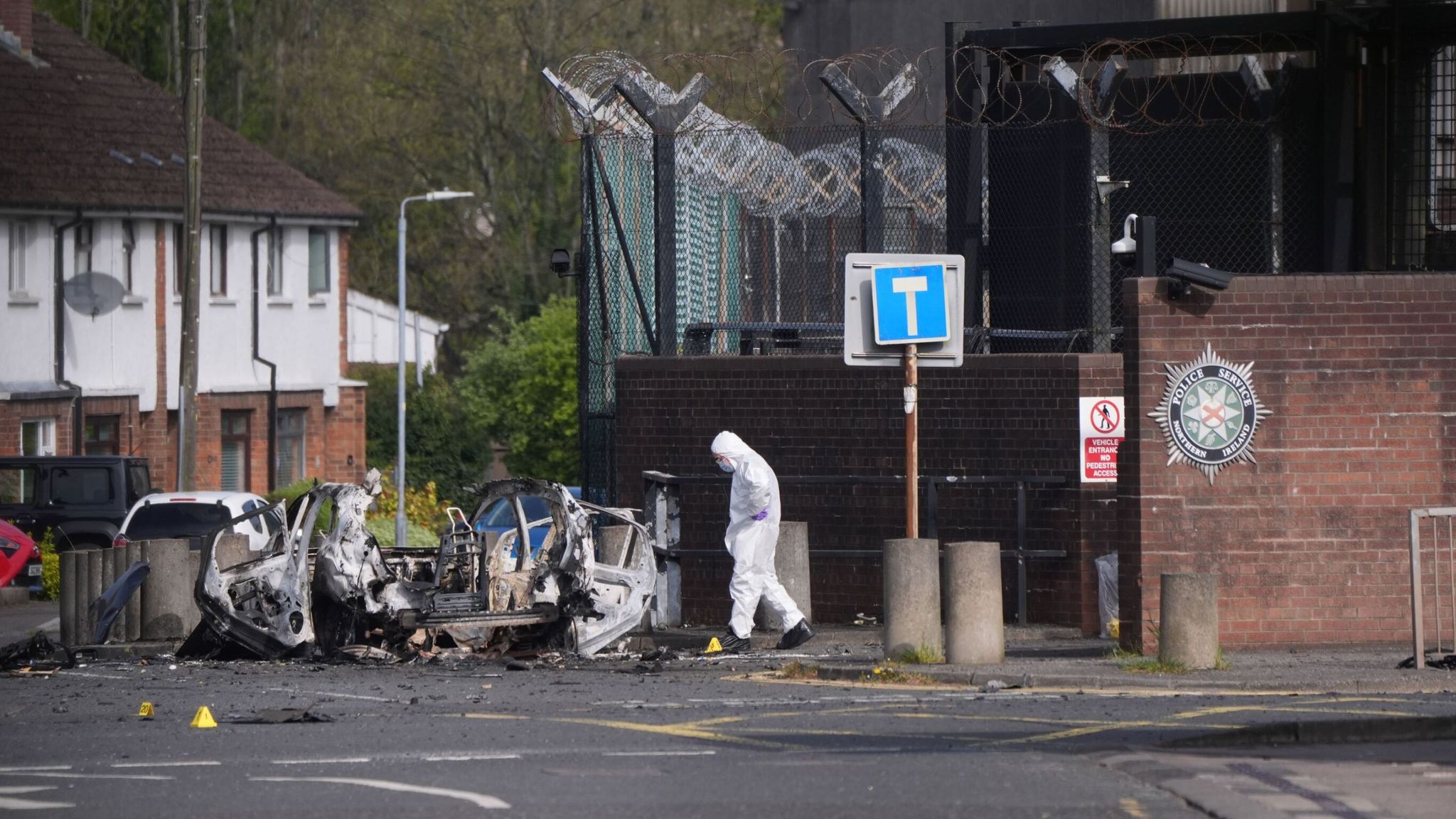
At approximately 10:50 p.m., the Police Service of Northern Ireland (PSNI) revealed that a delivery driver’s vehicle was hijacked in the Twinbrook area of west Belfast. Armed assailants forced the driver to transport a gas cylinder bomb concealed in the car’s boot to Dunmurry police station. Upon arrival, the vehicle was abandoned directly outside the station’s entrance.
Deputy Chief Constable Bobby Singleton described the swift and courageous response of officers who rushed into danger to evacuate nearby homes. “Officers immediately and courageously ran into danger, placing themselves in harm’s way,” Singleton said. Among those evacuated were several residents, including two babies, highlighting the personal risk and community impact of this attack.
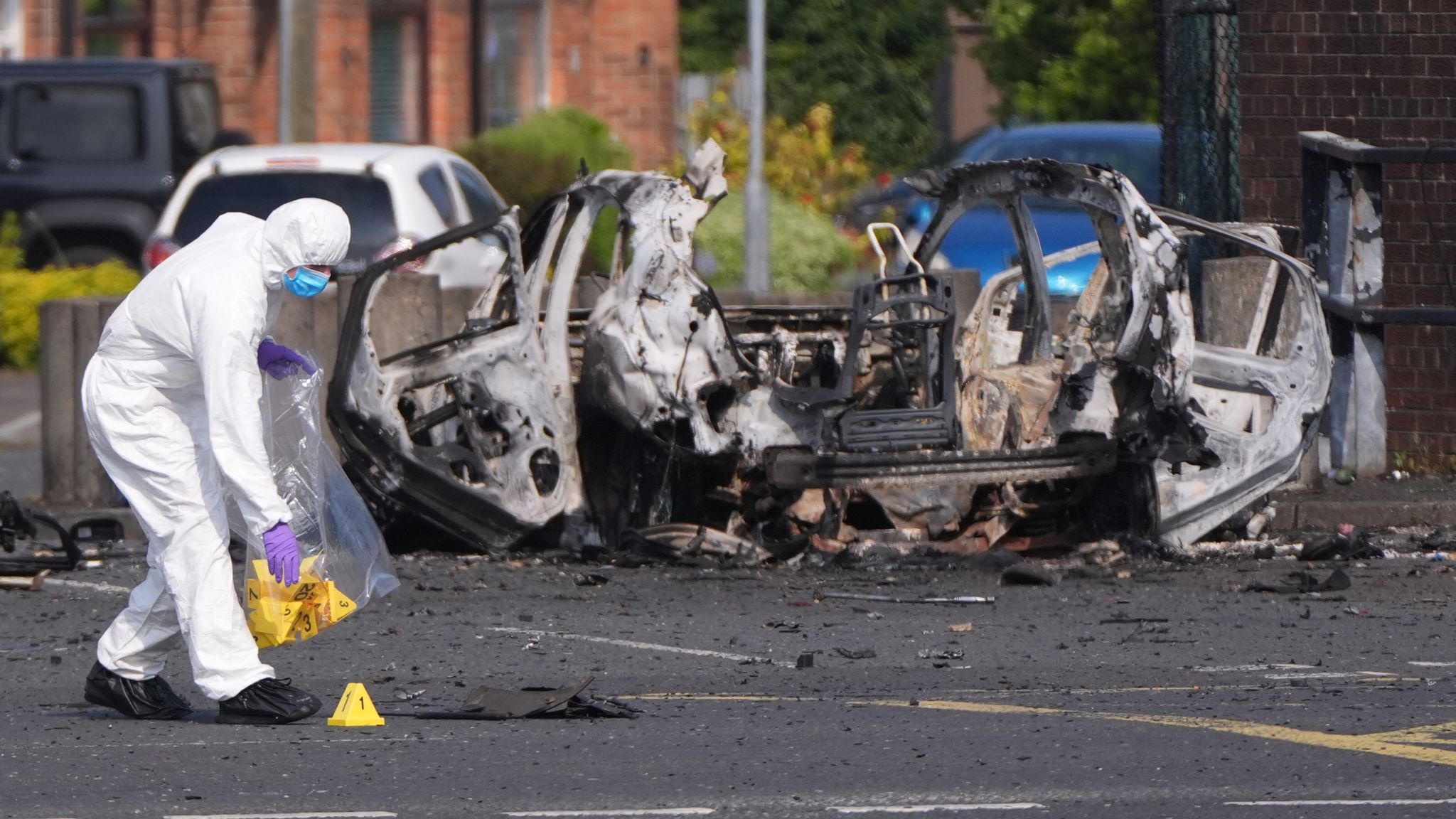
Moments after residents were moved to safety, the gas cylinder device exploded, engulfing the car in flames and scattering debris across the area. Remarkably, no one suffered injuries in the blast, a fact attributed to the rapid police action.
Context: Dissident Activity and Previous Attacks
The PSNI has drawn parallels between this incident and a similar attempted attack on Lurgan Police Station earlier this year. In March, a crude explosive device was forcibly delivered by a hijacked driver to Lurgan station, an attack also believed to have been orchestrated by dissident republicans.
The New IRA, identified as the most active dissident republican group in Northern Ireland, has claimed responsibility for multiple attacks in recent years. This faction emerged from splinter groups opposing the 1998 peace agreements and ceasefires, notably diverging from the Provisional IRA’s stance during the Troubles.
The legacy of violence connected to dissident groups is long and tragic. The Real IRA, predecessor to the New IRA, orchestrated the devastating 1998 Omagh bombing, the deadliest single incident of the Troubles, marking a dark chapter in Northern Irish history.
Official Reactions: Condemnation and Calls for Justice
Political and security leaders swiftly condemned the attack. Prime Minister Keir Starmer expressed his outrage, emphasizing that “those responsible will be brought to justice.” He extended his sympathies to the local community and the PSNI officers committed to their safety.
Brendan Mullan, chairman of the Northern Ireland Policing Board, underscored the deadly intent behind the attack, stating the device “was sent to kill officers and cause maximum harm.”
Michelle O’Neill, First Minister of Northern Ireland and a leading figure in Sinn Féin, denounced the perpetrators as disconnected from the community. She remarked, “They have no vision, no support, and have nothing to offer our society. Our communities deserve peace.”
Meanwhile, DUP leader Gavin Robinson condemned the incident as “deeply concerning” and urged a firm response to any attempts by dissident republicans to intimidate local populations and police forces.
The UK’s Northern Ireland Secretary Hilary Benn called the bombing a “shameless and cowardly attack,” reflecting widespread revulsion at the tactic of targeting innocent civilians and law enforcement alike.
Why This Matters: The Fragility of Peace and Security
This attack underscores the persistent threat posed by dissident republican groups in Northern Ireland. Despite decades of peace efforts and political progress since the Good Friday Agreement, these factions continue to challenge stability through violent means.
The targeting of police stations is particularly significant, as it aims to undermine the rule of law and intimidate communities dependent on security forces for protection. The involvement of innocent residents, including babies, in the evacuation amplifies the human cost and community trauma associated with such attacks.
Law enforcement’s rapid response not only prevented casualties but also sent a clear message about the resilience and bravery of officers working on the frontlines. The ongoing counter-terrorism investigation will seek to dismantle networks responsible for this and similar attacks, reinforcing the commitment to peace and safety.
Looking Ahead: Strengthening Community and Security
As forensic teams continue to analyze the wreckage, authorities face the dual challenge of ensuring public safety while fostering community trust. The collective condemnation by political leaders across the spectrum highlights a unified stance against violence and a shared aspiration for lasting peace.
For residents of Dunmurry and greater Northern Ireland, this incident serves as a stark reminder of the fragile nature of security and the ongoing vigilance required to protect it. The hope remains that through continued cooperation between police, government, and communities, such attacks will become relics of the past.