

A harrowing nighttime attack unfolded in Dunmurry, southwest of Belfast, when a car bomb detonated beside a police station, forcing the urgent evacuation of several residents—including two babies. The incident, which took place around 10:50 pm on Saturday, is being investigated as an attempted murder and is believed to be the work of the New IRA, according to the Police Service of Northern Ireland (PSNI).
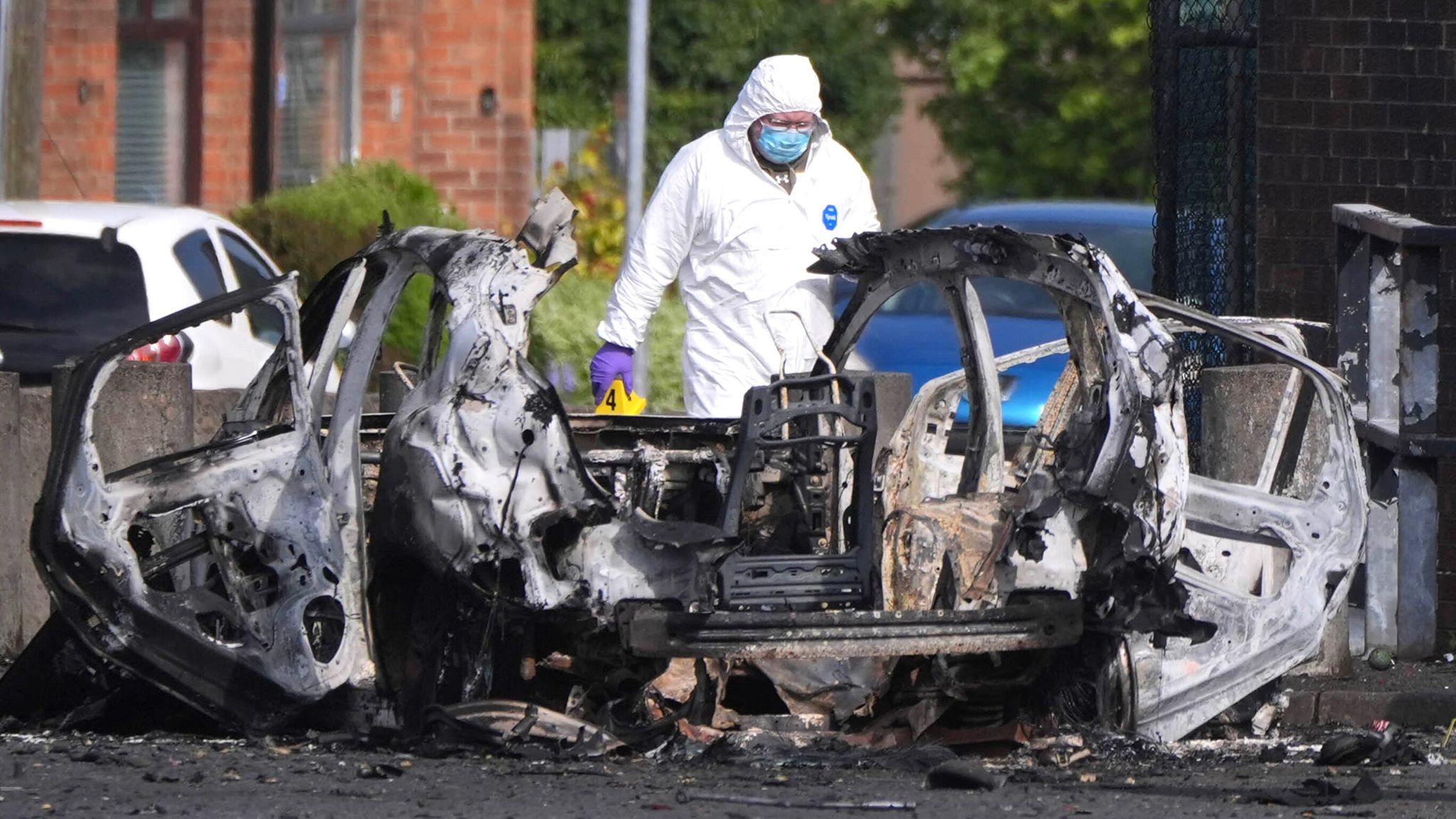
The Incident: Hijacked Car Used as a Bomb Outside Dunmurry Police Station
PSNI Deputy Chief Constable Bobby Singleton revealed critical details about the attack in a public statement. A delivery driver’s vehicle was forcibly hijacked in the Twinbrook area of west Belfast. The assailants placed a gas cylinder device in the car’s boot and ordered the driver to take it directly to Dunmurry police station.
Upon arrival, the vehicle was abandoned right outside the station’s front entrance. Officers on duty reacted swiftly and bravely, running toward the vehicle to evacuate nearby homes despite the imminent danger. Among those evacuated were several residents, including two infants.
Just as the evacuation was underway, the bomb detonated, engulfing the vehicle in flames and showering debris across the area. Fortunately, no one was physically harmed in the explosion. Mr. Singleton described the attack as “cowardly” and underscored the courage shown by officers who placed themselves in harm’s way to protect the community.
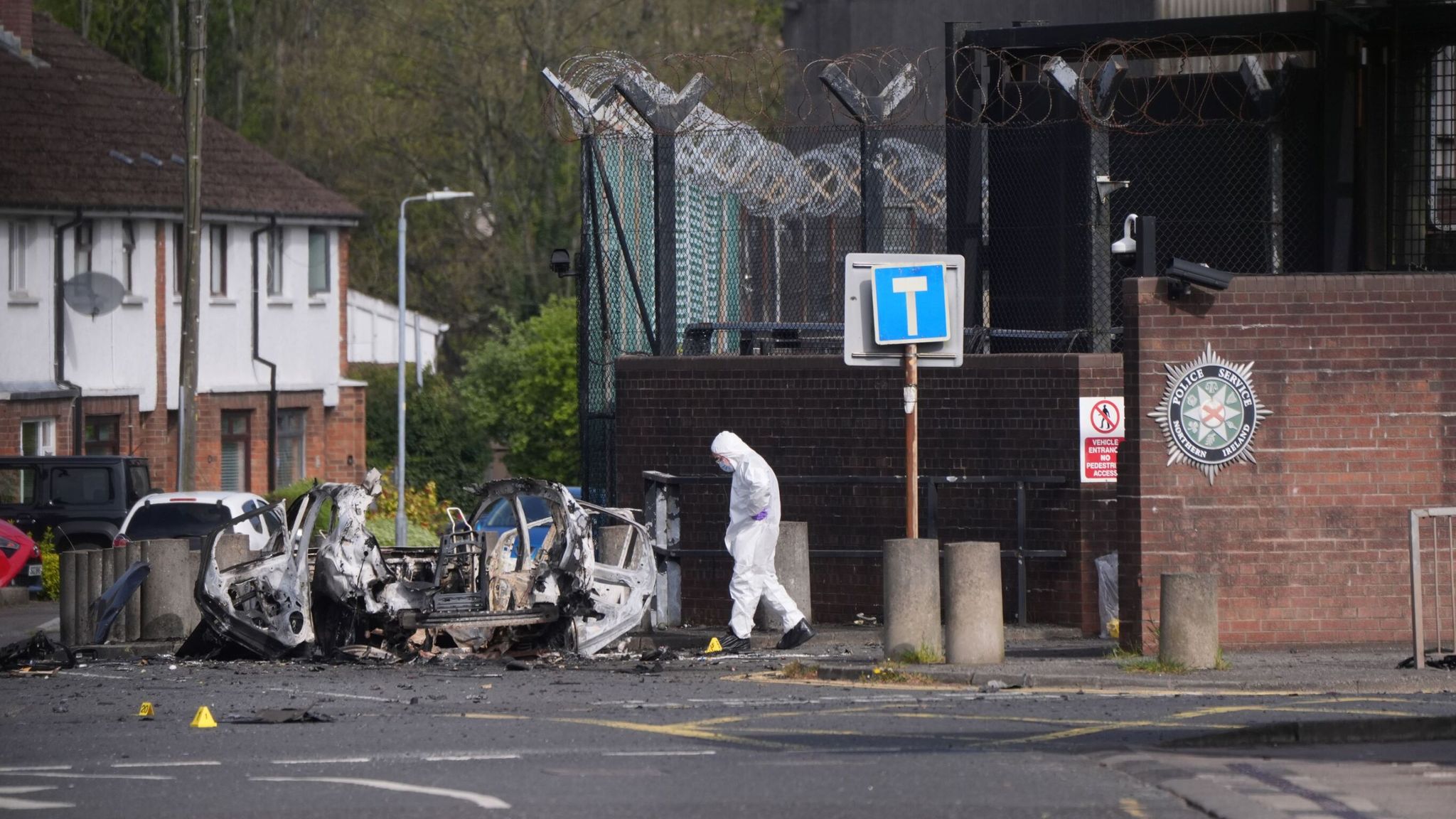
Context and Broader Implications: The Threat of Dissident Republican Groups
This attack bears chilling similarity to a previous incident at Lurgan Police Station in March, where a similar explosive device was forced onto police by hijacking a delivery driver. Both events are linked by the modus operandi and have led investigators to focus on the New IRA—a dissident republican group currently regarded as the most active terrorist faction operating in Northern Ireland.
The New IRA is a splinter from earlier republican paramilitary movements, including the Real IRA, which was responsible for the tragic 1998 Omagh bombing. Unlike the Provisional IRA, which agreed to a ceasefire in 1997, these dissident groups reject peace agreements and continue to pursue violent campaigns.
Authorities have placed the investigation under the jurisdiction of counter-terrorism police, signaling the gravity of the threat. The use of hijacked vehicles loaded with improvised explosive devices represents a disturbing escalation in tactics aimed at both law enforcement and the broader community.
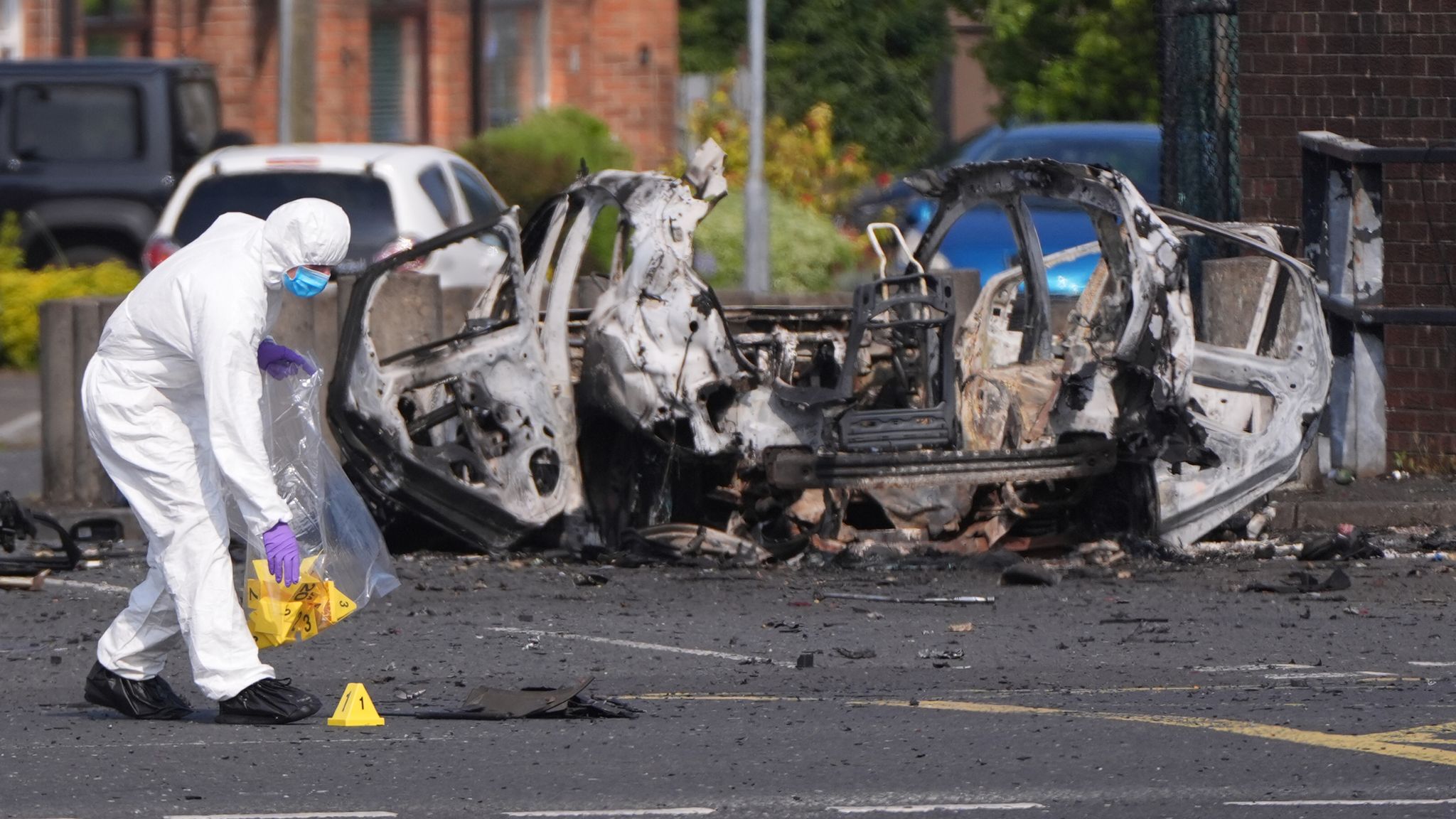
Political and Community Responses: Calls for Justice and Peace
Political leaders across Northern Ireland and the UK have united in condemnation of the attack. Prime Minister Keir Starmer expressed his outrage and vowed that those responsible “will be brought to justice,” emphasizing his thoughts are with the local community and the PSNI officers who risk their lives daily.
Michelle O’Neill, Northern Ireland’s First Minister and a prominent Sinn Féin figure, denounced the perpetrators, stating they “speak for absolutely no one” and have “nothing to offer our society.” She called on communities to reject violence and embrace peace.
Brendan Mullan, chairman of the Northern Ireland Policing Board, described the device as a deliberate attempt “to kill officers and cause maximum harm.” DUP leader Gavin Robinson urged the full force of the law to be applied if dissident republicans were behind the attack, highlighting the threat such violence poses to community stability.
UK Northern Ireland Secretary Hilary Benn labeled the incident “shameless and cowardly,” reinforcing the government’s commitment to tackling terrorism and ensuring public safety.
What This Means: The Ongoing Challenge of Security in Northern Ireland
This attack starkly illustrates the persistent danger posed by dissident republican groups in Northern Ireland, despite decades of peace efforts. The targeting of police stations is not only an assault on law enforcement but also a deliberate attempt to intimidate communities and undermine stability.
The evacuation of vulnerable residents, including babies, underscores the human cost and the high stakes involved in counter-terrorism operations. The response by PSNI officers highlights their dedication and the risks they face in protecting the public from evolving threats.
As investigations continue, authorities and political leaders face the delicate balance of maintaining security, upholding justice, and fostering peace in a region still grappling with the legacy of conflict. The community’s resilience and united condemnation of violence remain crucial in countering extremist agendas.
Full details of the investigation and any further developments have not yet been released.