More than a century ago, a live Somali village captivated hundreds of thousands of Edwardian visitors at Bradford’s Great Exhibition in 1904. Now, over 120 years later, a groundbreaking new exhibition in Bradford reexamines this controversial spectacle, shedding light on the complex realities of Britain’s colonial past and its lasting impact on the city’s cultural heritage.

The Somali Village: A Controversial Attraction at the 1904 Great Exhibition
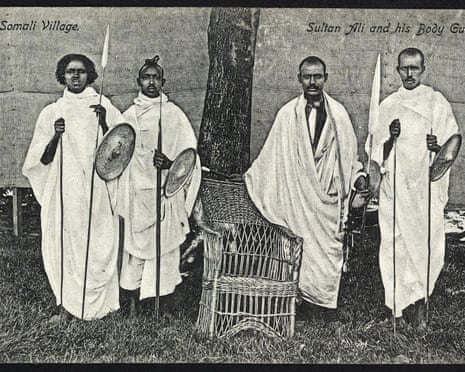
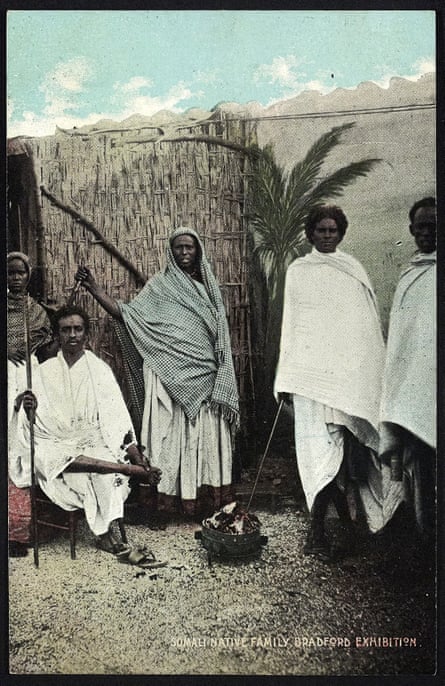
The 1904 display featured 57 Somali men, women, and children living in a recreated village environment, engaging in daily activities such as cooking, weaving, dancing, and religious education. Advertised as a rare glimpse into a “little known but interesting people,” the exhibit drew more than 350,000 visitors, becoming one of the most popular—and profitable—attractions of the event. The revenue generated helped fund Bradford’s Cartwright Hall art collection for decades.

Visitors observed the Somali community, recognized as Bradford’s first Muslim community, from May through October. The villagers slaughtered sheep, prepared meals, attended school, and studied Arabic and the Qur’an. Yet, behind this spectacle lay a far more complicated story of power, negotiation, and resistance.

Beyond the “Human Zoo”: Understanding the Somali Village’s Complex Legacy
Today’s curators challenge the simplistic label of “human zoo” often applied to colonial-era displays like the Somali village. Guest curator Abira Hussein explains that while the term highlights the violent exploitation inherent in such exhibitions, it risks obscuring the nuanced conditions that shaped the lives of those involved, including recruitment, labor dynamics, and negotiations.

Key figures such as the Somali troupe leader and broker Sultan Ali actively negotiated contracts, wages, and the sale of crafts to visitors. After a devastating fire destroyed four huts, the villagers protested for better compensation, receiving £15—equivalent to just over £1,600 today—which many considered inadequate. Some members chose to end their participation and return home, while others continued touring Europe and North America.

Rather than recreating the spectacle, the new exhibition centers the lived experiences of the Somali people and critically examines how British imperialism shaped Bradford’s wealth and cultural institutions.

“This is not a redisplay,” says Hussein. “It’s about thinking critically about why this display happened, how these people were framed, and the wider colonial systems that made it possible.”
Why This Exhibition Matters: Reckoning with Bradford’s Colonial Past
Bradford’s involvement in British colonialism remains largely unacknowledged, despite the city’s role in generating colonial wealth, particularly through wool production. Guest curator Yahya Birt, who discovered his family’s connection to the 1904 exhibition, emphasizes that colonial histories in Yorkshire extend beyond the commonly discussed cotton industry.

The exhibition also highlights how profits from the Somali village helped fund artworks such as a 1906 marble bust of Lister, known as Baron Masham, and a 1907 children’s book, The Magic Carpet by Arthur Rackham. These pieces underscore the tangible legacy of colonial exploitation within Bradford’s cultural institutions.

Lizzie Llabres, collections manager at Bradford District Museums and Galleries, remarks, “It’s about us, as an organisation, recognising our role in history and the relevance of the Somali village as Bradford’s first Muslim community.”
The exhibition explores how photography and postcards from the era reinforced the “white gaze,” shaping public perceptions of non-European peoples. “People had to be acculturated into seeing other people in this particular way,” Birt states.
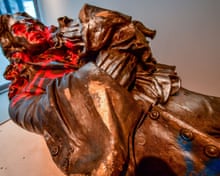
The display brings together a rich array of artifacts, including season tickets, commemorative badges, postcards, and archaeological finds from Lister Park, alongside Somali textiles, mats, fans, and baskets loaned by Culture House and Koor Archives—many of which have never before been exhibited in Britain.
“We’re not trying to paint a rosy picture,” Birt emphasizes, “There was exploitation and unequal power, but there was also resistance and negotiation,” Hussein adds.

Beyond the village itself, the exhibition tells the stories of Halimo Abdi Badal and Khadija Yorkshire, believed to be Bradford’s first recorded Muslim burial and birth, respectively. These narratives highlight one of the region’s oldest Black and Muslim communities.

Researchers hope descendants of those who lived in the Somali village will come forward to share memories, photographs, and oral histories, deepening understanding of this overlooked chapter.
Looking Forward: Confronting History to Shape Bradford’s Future
This exhibition serves as a vital opportunity for Bradford and the wider UK to critically confront the legacies of empire embedded in cultural institutions and local histories. By centering the voices and experiences of the Somali community, it challenges visitors to rethink familiar narratives and acknowledge the city’s colonial entanglements.

As Bradford reckons with its past, this project underscores the importance of uncovering hidden histories and fostering inclusivity. It invites ongoing dialogue about how colonialism shaped both cultural identity and economic wealth, encouraging a more truthful and comprehensive understanding of the city’s heritage.

For historians, residents, and visitors alike, the exhibition offers a powerful reminder: recognizing our role in history is essential to building a more equitable and informed future.