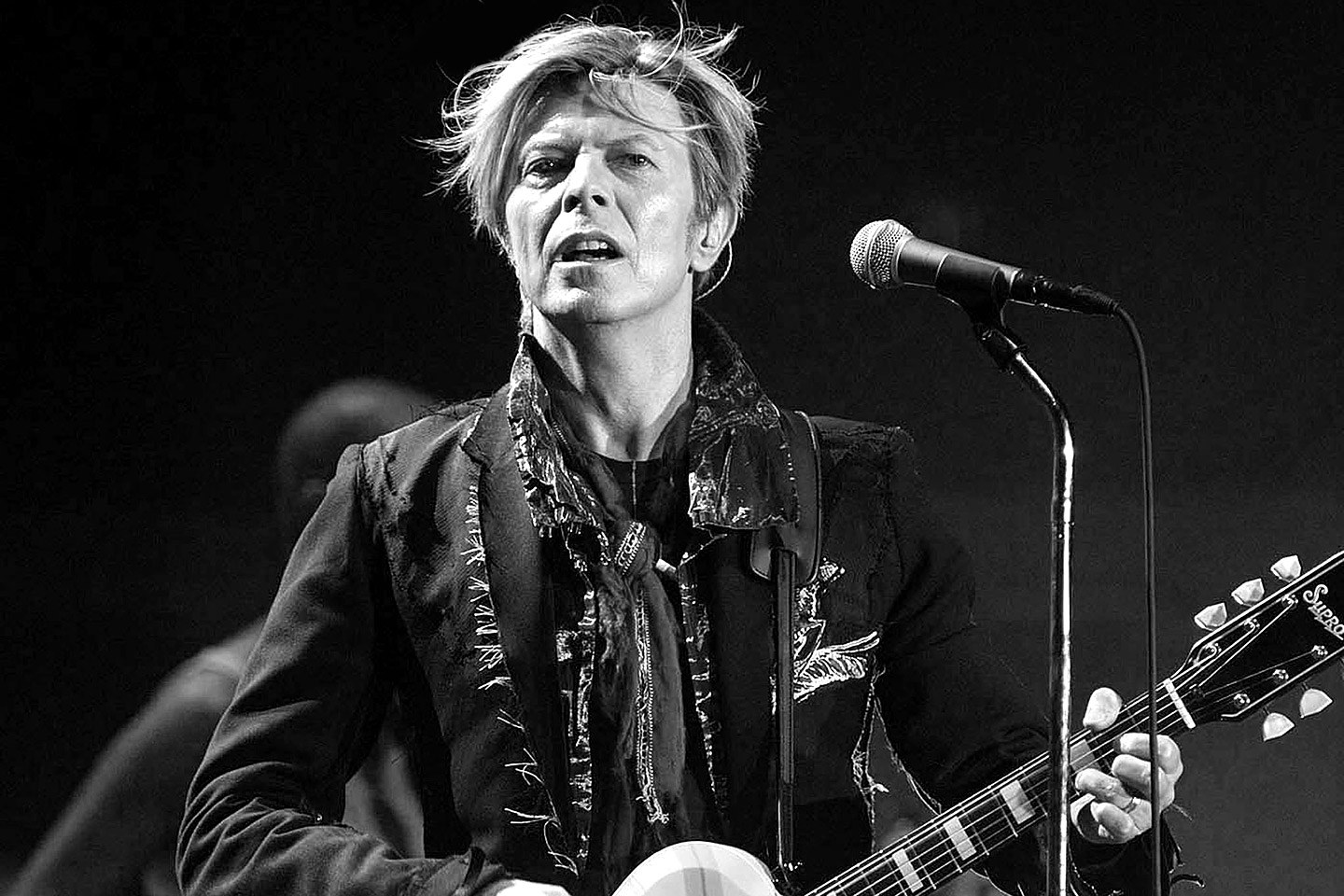
David Bowie’s final act was as profound and enigmatic as his legendary career: he released his 25th studio album, Blackstar, on his 69th birthday, just two days before his death. The music world was stunned when news broke that the iconic singer, songwriter, and cultural chameleon had succumbed to an 18-month battle with cancer, a struggle he had kept private. His passing marks the end of an extraordinary journey that transformed popular music and art for over five decades.
David Bowie’s Last Days and the Release of Blackstar
On Sunday, David Bowie died peacefully, surrounded by his family, as confirmed by his son, Duncan Jones, who posted a brief but heartfelt message on Twitter: “Very sorry and sad to say it’s true. I’ll be offline for a while. Love to all.” Official statements on Bowie’s Facebook and Twitter pages echoed this, urging fans worldwide to respect the family’s privacy during their time of grief.
Bowie’s final studio album, Blackstar, dropped on January 8th, coinciding with his 69th birthday. The seven-track album immediately climbed to number one on the charts, hailed by critics and fans alike as a poignant farewell. Produced by long-time collaborator Tony Visconti, who described the album as Bowie’s “parting gift” to the world, Blackstar showcases the artist’s innovative spirit until the very end.
The album’s lead single, “Lazarus,” contains haunting lyrics like, “Look up here, I’m in heaven, I’ve got scars that can’t be seen,” which many interpret as Bowie’s cryptic reflection on mortality and his impending death. The artwork, soundscapes, and themes of the album reveal an artist confronting his legacy with fearless honesty and creativity.

The Impact of Bowie’s Career and Legacy
David Bowie was a titan of music and culture, known for constantly reinventing himself and pushing artistic boundaries. Born David Robert Jones in post-war Brixton, South London, Bowie emerged during the vibrant 1960s R&B boom but soon transcended genre limitations. His career burst into global stardom with the creation of the glam rock persona Ziggy Stardust, a flamboyant alien rock star that captivated audiences and critics alike. Notably, Bowie shocked fans by “killing off” Ziggy Stardust at the height of his fame, demonstrating his unwillingness to be confined to any one image or sound.
Throughout his career, Bowie embraced a kaleidoscope of musical styles and personas, from the soulful art rock of the “Young Americans” era to the experimental Berlin Trilogy in the late 1970s, where he lived in West Berlin during the Cold War. His time in Berlin was not only artistically fruitful but culturally significant; Bowie’s 1987 concert in West Berlin drew thousands of East Berliners singing along from the other side of the Berlin Wall, symbolizing his unique role in bridging divides through music.
His influence extended beyond music. Bowie’s artistic vision and fearless experimentation inspired generations of artists, from Madonna to Iggy Pop, both of whom paid tribute to him following his death. Madonna called him a “game changer” whose spirit “lives on forever,” while Iggy Pop described Bowie’s friendship as “the light of my life.” Such testimonials underscore Bowie’s profound personal and professional impact on those around him.
A Private Battle and Public Mourning
Despite his global fame, Bowie remained notoriously private about his personal life, especially his health. Rumors about his condition circulated for years, but the singer kept his diagnosis closely guarded until his death. His ex-wife, Angie Bowie, who was participating in Celebrity Big Brother at the time, was informed discreetly by producers and chose to remain inside the house, highlighting the sensitivity surrounding his passing.
The outpouring of grief extended to the global music community and beyond. Ricky Gervais, who had convinced Bowie to cameo as himself on the sitcom Extras, tweeted, “I just lost a hero. RIP David Bowie.” Former NME editor Krissi Murison likened Bowie’s death to that of John Lennon, emphasizing his unparalleled significance to music fans worldwide.
Why David Bowie’s Death Matters
David Bowie was more than a musician; he was a cultural phenomenon who redefined what it meant to be an artist. His fearless reinvention, genre-defying music, and boundary-pushing theatrics challenged societal norms and expanded the possibilities of popular culture. Bowie’s death marks not only the loss of a gifted performer but the closing of a chapter in music history that shaped the landscape of rock, pop, and art for decades.
The release of Blackstar as a final statement serves as a powerful reminder of Bowie’s unwavering dedication to his craft, even as he faced death. It invites listeners to engage with themes of mortality, legacy, and transformation, hallmarks that defined Bowie’s artistic journey.
His influence continues to resonate in contemporary music and art, inspiring new generations to embrace creativity without fear. Germany’s acknowledgment of Bowie’s role in “helping to bring down” the Berlin Wall testifies to the broader social and political impact that art can have, illustrating how Bowie’s work transcended entertainment to touch lives and influence history.
As fans and fellow artists mourn, Bowie’s legacy endures through his vast catalog, groundbreaking style, and the indelible mark he left on culture. His life reminds us that true artistry involves constant evolution, courageous vulnerability, and the power to connect across divides.
David Bowie’s passing is a moment to reflect not only on a remarkable life but on the enduring power of music and art to inspire, challenge, and transform.