

Fly tipping has become a growing environmental menace across England, with illegal waste sites doubling in number and some “super sites” holding tens of thousands of tonnes of rubbish. In response, the government is poised to empower local authorities with new enforcement tools that compel offenders to clear their own dumped waste and face fines—without lengthy court battles.
Rising Waste Crime and Government Response
Illegal dumping of waste, or fly tipping, has surged alarmingly in recent years. The Environment Agency (EA) revealed it discovered 749 new illegal waste sites in 2024-2025—twice the amount from the previous year. Among these are several large-scale “super sites,” including one in Gloucestershire that, at its peak, received up to 50 vehicles dumping rubbish daily.
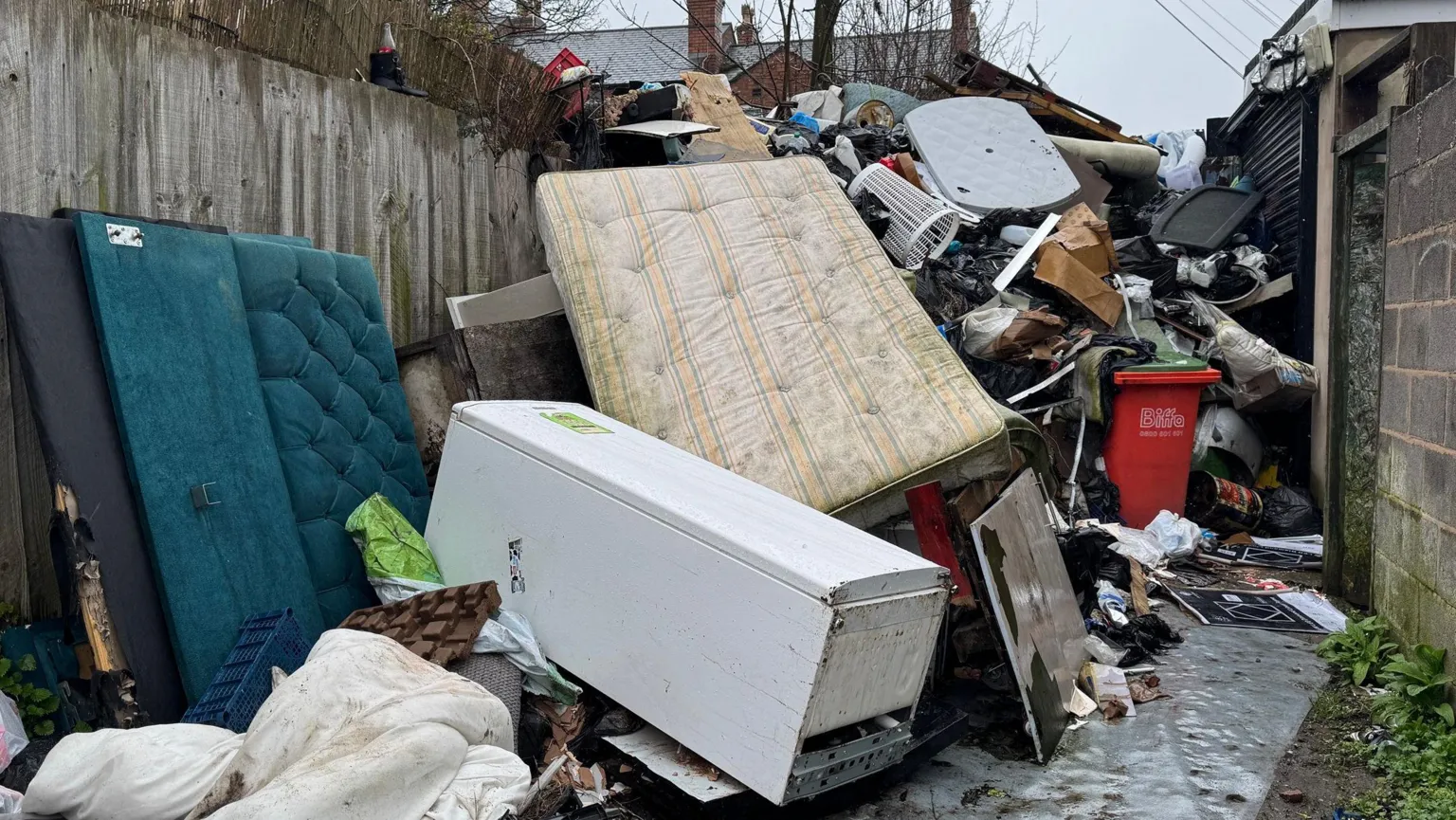
Such sites pose severe environmental hazards, blighting rural landscapes and burdening taxpayers with costly cleanups. The Environmental Services Association estimates tackling waste crime costs the economy around £1 billion annually in England alone.
In a bold move, Environment Secretary Emma Reynolds declared, “If you dump rubbish on our streets, you will be joining a clean-up squad and picking up the bill, not the taxpayer.” The government plans to grant both the Environment Agency and local councils greater powers to enforce penalties swiftly and effectively.
New Enforcement Powers: Community Service and Fines
The government’s forthcoming action plan aims to speed up the fight against fly tipping by allowing councils to issue conditional cautions. These cautions would enable offenders to avoid court but require them to complete 20 hours of unpaid community service cleaning up their illegal dumpsites and pay fines up to £300. Should offenders ignore these conditions, councils can still pursue prosecution through the courts.
Currently, councils can issue on-the-spot fines of £150 for littering, but these measures have limited impact on large illegal dump sites, which cost millions to clear. The new scheme targets smaller-scale fly tipping, while the Environment Agency will continue handling enforcement for sites exceeding 20,000 tonnes.
Mary Creagh, the nature minister, emphasized this division, explaining that the new powers focus on smaller sites to free up resources for tackling the more extensive, complex cases.
Moreover, the government is considering granting the Environment Agency police-style powers, including the ability to search premises without a warrant and arrest suspects linked to fly tipping. Drivers caught dumping waste may also face penalty points on their licenses, raising the stakes for offenders.
Challenges and the Need for Stronger Support
While the proposed measures reflect a tough stance, experts and local authorities stress that enforcement requires adequate resources and coordination. The Local Government Association (LGA) welcomed the proposals but cautioned that councils must receive sufficient funding and support to carry out these new powers effectively.
Arooj Shah, Chair of the LGA’s Neighbourhoods Committee, stated, “Councils want to work with government to tackle the scourge of fly tipping and protect our communities from environmental crime.” However, she also urged the government to review sentencing guidelines to ensure penalties reflect the severity of environmental harm caused by illegal dumping.
Enforcement faces practical hurdles. Identifying and prosecuting fly tippers is difficult, especially when waste criminals operate across county borders. Local police and crime commissioners have highlighted these challenges, underscoring the need for streamlined reporting systems and cross-jurisdictional cooperation.
Robyn Munt, vice-president of the National Farmers’ Union (NFU), hopes tougher powers will deter criminals but warns that only about one in 1,000 fly tipping incidents currently result in prosecution. She advocates for improved mechanisms to catch offenders early and prevent waste crime before it escalates.
Recently, the government doubled the Environment Agency’s Joint Unit for Waste Crime budget to £15.6 million for the current year, aiming to boost enforcement actions and arrests related to illegal waste dumping.
What This Means for Communities and the Environment
The government’s new approach signals a significant shift toward more immediate and practical consequences for fly tippers. By compelling offenders to clean their own mess and imposing quicker fines, authorities hope to reduce the backlog of cases bogged down in the courts and send a strong deterrent message.
For local communities, especially those near rural or countryside areas frequently targeted by illegal dumpers, these measures promise cleaner environments and less environmental damage. Yet success depends heavily on proper funding, effective collaboration between agencies, and public awareness.
By targeting both small-scale offenders and professional waste crime gangs with specialized enforcement, the government aims to tackle fly tipping comprehensively. However, experts warn that without a long-term, strategic approach involving law enforcement agencies like the National Crime Agency, fly tipping will remain a persistent problem.
As the government consults with councils and finalizes its action plan, the public can expect a more proactive stance against waste crime—one that holds offenders accountable, protects natural habitats, and reduces the financial burden on taxpayers.
Full details of the new enforcement framework and implementation timelines have yet to be released.