

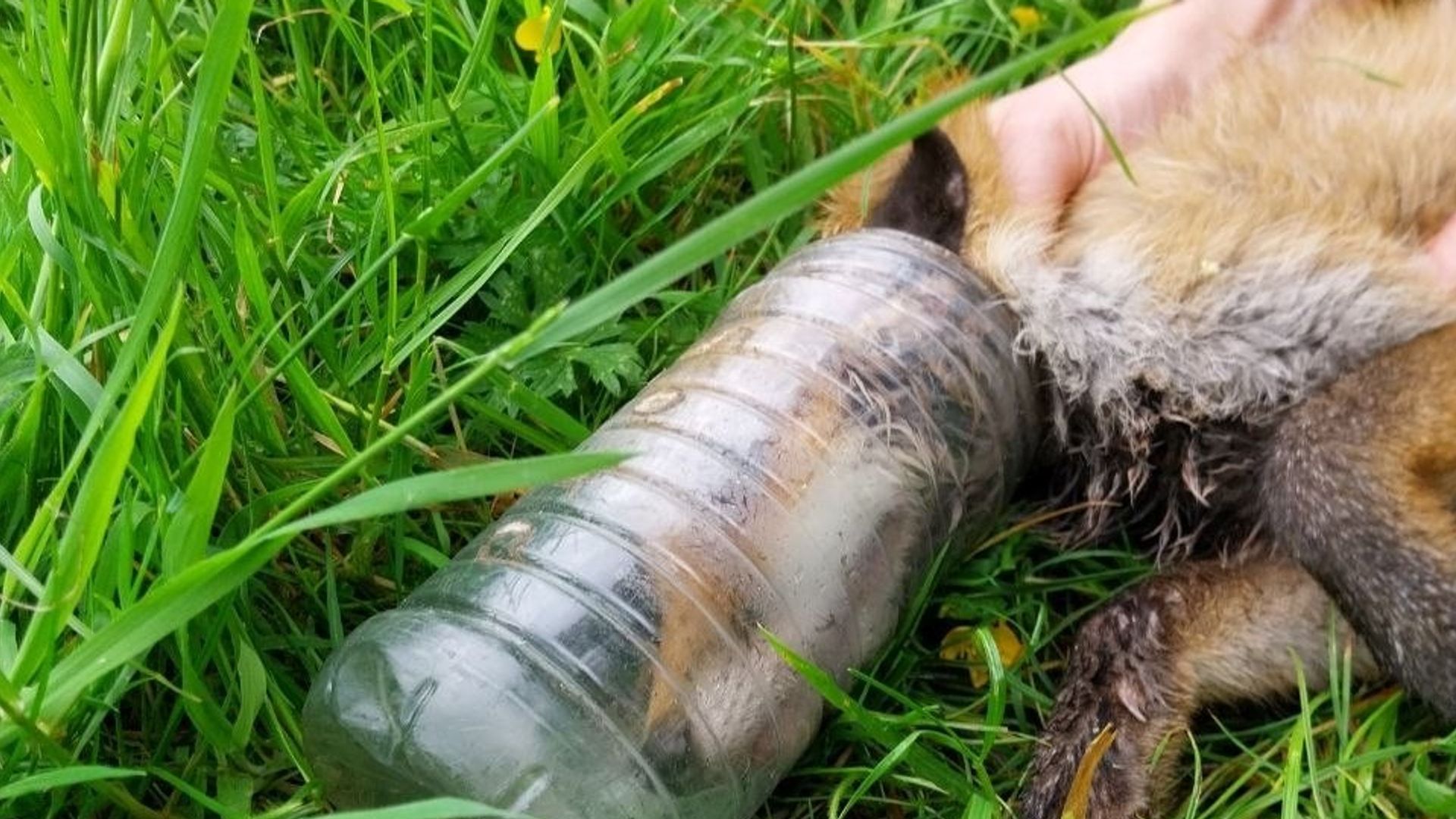
A desperate fox endured nearly two full days with its head lodged inside a discarded plastic bottle before rescuers finally intervened. This harrowing incident highlights the dangers wildlife face from human waste and the urgent need for responsible disposal of plastics.
The Fox’s Ordeal: Trapped and Vulnerable
Wildlife rescuers were alerted to a fox struggling in a local area, its head firmly stuck inside a transparent plastic bottle. The animal had been trapped for almost 48 hours, unable to free itself. During this time, the fox’s movement was severely restricted, leaving it vulnerable to predators, starvation, and dehydration.
Local residents who noticed the distressed animal immediately contacted animal welfare authorities. Volunteers and experts quickly mobilized to locate the fox and devise a plan to safely remove the bottle without causing further injury.
Challenges in Wildlife Rescue: Removing the Bottle Safely
Removing a foreign object from a wild animal requires skill and patience. The rescuers had to approach the fox calmly to avoid triggering a fight-or-flight response that could worsen the situation. Using specialized tools and protective gear, they carefully cut through the plastic while keeping the fox’s head steady.
Once freed, the fox was examined for cuts, abrasions, or other injuries caused by the bottle. Fortunately, aside from some minor scratches and signs of stress, the animal was in surprisingly good health. The rescue team then released the fox back into its natural habitat, where it could recover fully and continue its life undisturbed.
Why This Matters: The Impact of Plastic Pollution on Wildlife
This rescue underscores a growing global concern: plastic pollution severely threatens wildlife health and safety. Animals often mistake plastic debris for food or become accidentally trapped by discarded containers. Such incidents not only cause physical harm but can also lead to starvation, infection, and death.
Plastic waste in natural environments poses a dire risk to countless species, disrupting ecosystems and biodiversity. The fox’s ordeal serves as a powerful reminder of the consequences of careless littering and the critical need for robust waste management and environmental protection policies.
Communities and individuals play a vital role in reducing plastic pollution. Proper disposal, recycling, and choosing eco-friendly alternatives can significantly mitigate these risks. Wildlife conservation groups also stress the importance of public awareness campaigns to educate people on how their actions impact local fauna.
Looking Forward: Protecting Wildlife from Human Hazards
As urban regions expand into natural habitats, encounters between wildlife and human debris become increasingly common. Proactive measures such as regular clean-up drives, stricter regulations on plastic use, and support for wildlife rescue organizations are essential to prevent similar incidents.
Ultimately, this fox’s rescue is a hopeful story of human compassion and expertise overcoming the dangers posed by environmental neglect. Yet, it also serves as a call to action: protecting wildlife requires collective responsibility and sustained effort to ensure animals can thrive free from man-made hazards.
By addressing plastic pollution head-on, we can reduce wildlife suffering and preserve the delicate balance of nature for generations to come.