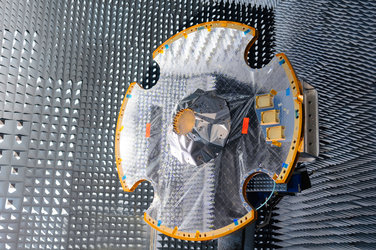
Europe has launched one of the most ambitious astronomical missions in history, deploying the cutting-edge Gaia space observatory to unravel the complex structure of our home galaxy. This groundbreaking telescope, boasting a billion-pixel camera, embarked on its journey from the Sinnamary launch complex in French Guiana, lifting off precisely at 9:12 a.m. UK time. The mission marks a pivotal moment for European space science, promising to deliver the most detailed and comprehensive star map ever created.
The Mission: Mapping the Milky Way with Unprecedented Precision
Gaia’s primary objective is to chart the positions and distances of over one billion stars scattered across the Milky Way, our galaxy. This ambitious goal far surpasses any previous star catalogues in scale and precision. By measuring stellar positions with extraordinary accuracy, Gaia will allow astronomers to reconstruct the galaxy’s three-dimensional structure and trace its dynamic history.
Unlike earlier surveys, Gaia’s measurements extend well beyond mere locations. It will also capture the motions of stars, revealing how the galaxy evolves over time due to gravitational interactions and other cosmic forces. These data will provide invaluable insights into the processes that shaped the Milky Way over billions of years.
The observatory’s powerful instruments are designed to detect subtle changes in star brightness and position, enabling the discovery of phenomena that have remained hidden until now. Among these are thousands of previously unknown celestial bodies, including distant planets orbiting other stars and small solar system objects such as asteroids.

Technological Marvel: The Billion-Pixel Camera and Beyond
Gaia represents a leap forward in space telescope technology, featuring a camera with over one billion pixels. This level of imaging capability allows it to capture incredibly sharp and detailed views of the stars, dwarfing the resolution of existing space observatories.
The observatory was launched aboard a reliable Soyuz rocket, a workhorse of space missions, which successfully delivered Gaia into its targeted orbit approximately 40 minutes after liftoff. The spacecraft’s design and instruments have been under development for more than two decades, demonstrating a remarkable commitment to precision engineering and scientific excellence by the European Space Agency (ESA).
With a mission lifetime expected to last at least five years, Gaia will continuously scan the sky, compiling a catalogue that no previous mission has matched. It is anticipated that the satellite will identify up to 50,000 exoplanets, planets located outside our solar system, vastly expanding our understanding of planetary systems beyond Earth.
In addition to stars and planets, Gaia will monitor transient astronomical events such as supernovae, the spectacular explosions marking the death of massive stars. These events are rarely observed in real time, and Gaia’s sensitivity could provide early warnings and detailed data on these cosmic cataclysms.
Why Gaia’s Mission Matters to Astronomy and Beyond
Gaia’s mission transcends mapping stars; it fundamentally enhances humanity’s grasp of the cosmos. By delivering a detailed and dynamic portrait of the Milky Way, Gaia will help answer profound questions about galaxy formation, stellar evolution, and the distribution of dark matter.
The satellite’s unprecedented ability to pinpoint stellar positions with micro-arcsecond accuracy means astronomers can test theoretical models of gravity and refine measurements of cosmic distances, which are crucial for understanding the scale and expansion of the universe.
Moreover, the discovery of thousands of new planets and small bodies will deepen our knowledge of the diversity and frequency of worlds in our galaxy, potentially guiding future missions in the search for habitable environments beyond Earth.
Gaia’s data will also serve as a foundation for countless scientific investigations for decades to come, offering a legacy that will shape the trajectory of astrophysics and space exploration.
As Gaia embarks on this monumental journey, its precise star map promises to transform our view of the cosmos, revealing the Milky Way’s intricate tapestry with clarity never before possible.