

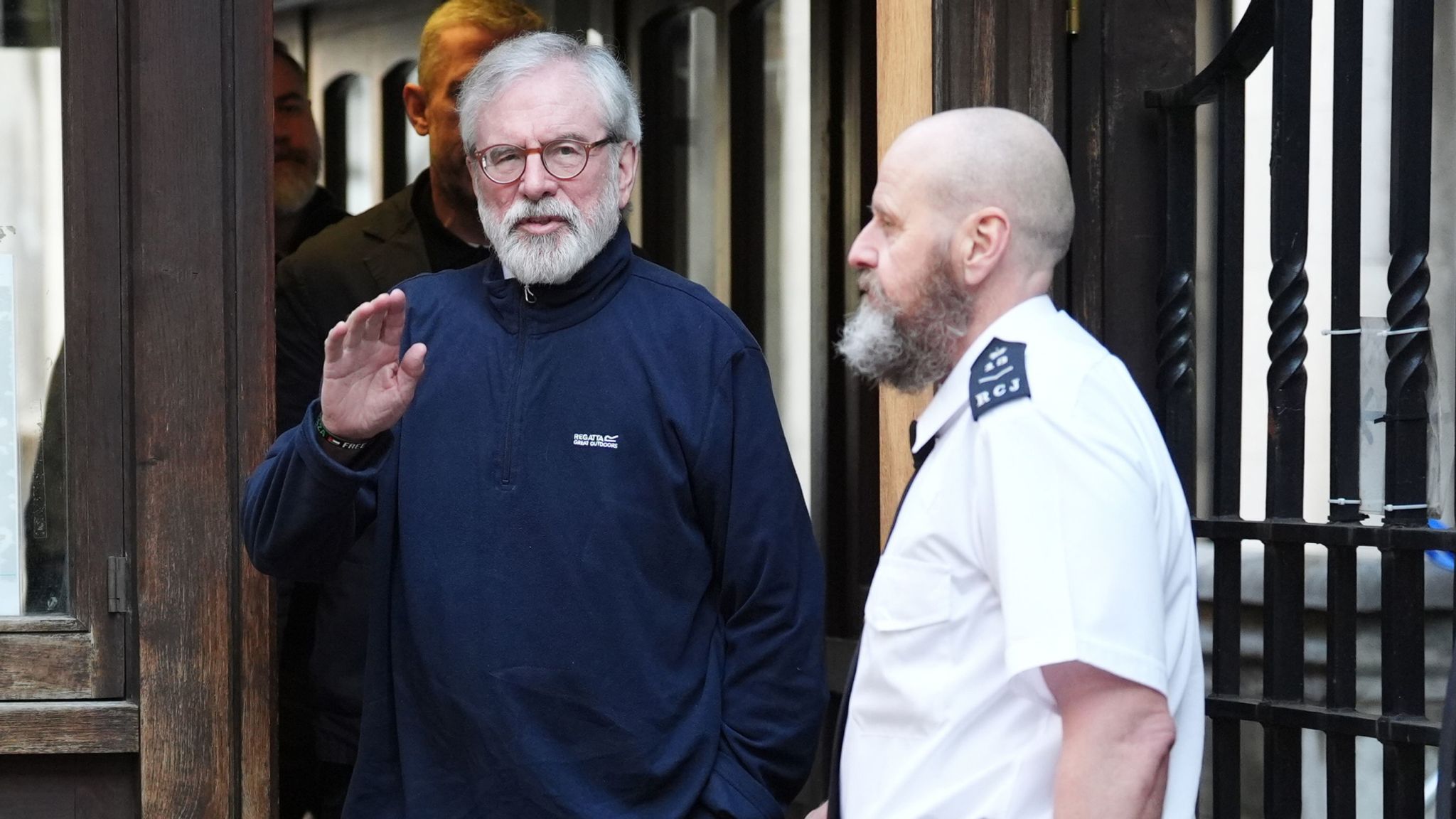
Gerry Adams stood firmly at London’s High Court this week to challenge long-standing accusations linking him to three deadly IRA bombings, declaring his presence was to “assert the legitimacy of the republican cause” and categorically reject any involvement in the attacks. The former Sinn Féin president faces a civil lawsuit brought by victims injured in bombings that marked some of the most turbulent years of Northern Ireland’s conflict.
The Civil Trial and the Allegations
The lawsuit targets Adams over three specific incidents: the 1973 Old Bailey bombing in London, the 1996 Docklands bombing, and the 1996 Manchester bombing. The three claimants—John Clark, Jonathan Ganesh, and Barry Laycock—each suffered injuries during these attacks and accuse Adams of being a senior figure in the Provisional Irish Republican Army (IRA) during the periods in question.
At 77 years old, Adams has been outspoken in court, maintaining he had “no involvement whatsoever” in the bombings and denying ever being a member of the IRA. He emphasized his respect for the victims of the wider Northern Irish conflict, acknowledging their suffering while reiterating his commitment to the republican cause and the right of the Irish people to self-determination.
“Irish people, especially Irish republicans, have had a bad experience of British courts,” Adams said. “I came to London to reject the allegations levelled against me and to assert the legitimacy of the republican cause and the right of the people of Ireland to be free.”
Legal Arguments and Delays in Bringing the Case
Adams’s legal team has questioned the timing of the claims, highlighting the significant delays in bringing this lawsuit decades after the events occurred. His barrister, Edward Craven KC, described the delay as “genuinely unprecedented in magnitude” and argued that the limited hearsay evidence offered fails to justify such a long postponement.
Craven urged the court to dismiss the case, warning that the trial risks becoming a “public-style inquiry” into Adams’s broader political and alleged paramilitary role rather than focusing strictly on the three bombings cited. He stressed the importance of confining the court’s deliberations to the specific incidents at hand.
Conversely, the claimants’ lead counsel, Anne Studd KC, argued that dismissing the case on procedural grounds would be unjust. She maintained that the claimants are legally entitled to pursue the matter and that the evidence presented forms a “jigsaw” demonstrating Adams’s position as a senior IRA figure during the relevant period.
Evidence and Political Context
In recent testimony, former British intelligence officers provided insights into Adams’s role in the conflict. One officer stated that Adams’s political achievements would have been impossible without his involvement in the IRA’s army council. Another officer reinforced this view, asserting that Adams’s status as a senior IRA figure was pivotal to the British, Irish, and US governments engaging with him during the peace negotiations that culminated in the Good Friday Agreement of 1998.
The Provisional IRA formally ended its armed campaign in 2005, marking a significant turning point in Northern Ireland’s journey toward peace. Yet, this trial revives contentious debates about the roles played by key figures during the Troubles, a conflict that lasted for three decades and claimed thousands of lives.
What This Means for the Republican Cause and Justice
This trial not only tests Adams’s personal legacy but also reflects the continuing struggle over how the Northern Irish conflict is remembered and adjudicated. The case highlights the complexities of seeking legal redress decades after political violence and the challenges courts face in balancing historical accountability with peace and reconciliation.
For many Irish republicans, Adams’s stance at the High Court represents a broader defense of their cause’s legitimacy amid allegations of terrorism. For the victims and their families, it is a quest for recognition and justice for the suffering inflicted during the Troubles.
The trial is scheduled to conclude on Friday, with a judgment expected to clarify the legal standing of these historic claims against one of the most prominent figures in Irish republican history.
Looking Ahead
Gerry Adams’s trial symbolizes a critical moment in addressing unresolved issues from Northern Ireland’s past. Its outcome could influence public discourse on accountability, the legacy of the Troubles, and the role of political leaders entwined with paramilitary activity. As the court weighs complex evidence and historical context, the broader implications for peace and justice in Ireland remain at stake.