

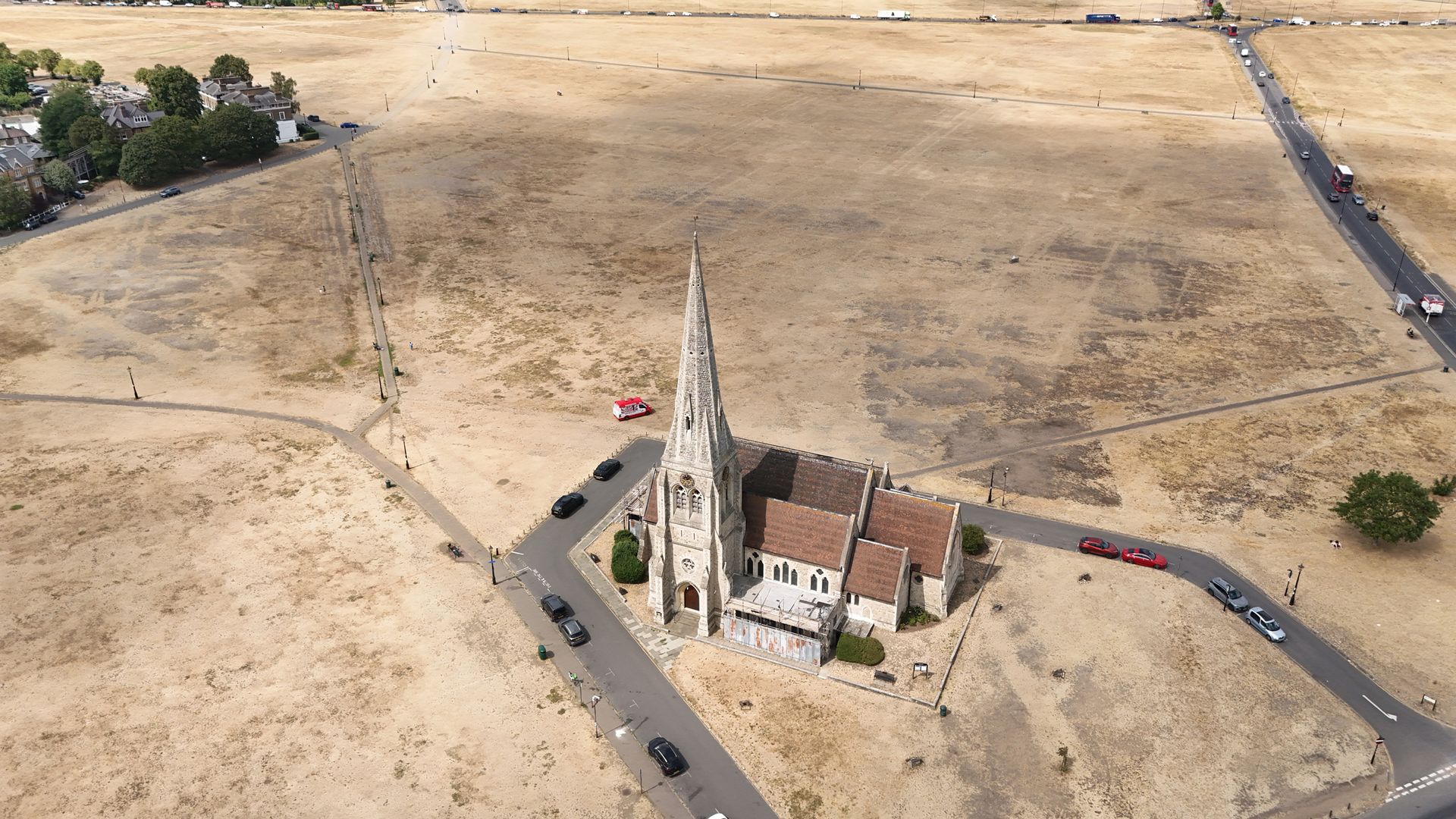
More than half of England now grapples with drought conditions as the country braces for its fourth heatwave of 2026. Persistent dry weather has left landscapes like London’s Blackheath parched, prompting the Environment Agency to escalate heat health alerts to amber in several regions. This intensifying climate challenge underscores mounting water scarcity concerns across England.
Worsening Drought Across England
The Environment Agency’s latest assessment reveals that drought conditions have expanded to cover approximately 50% of England. This is the result of several consecutive weeks of below-average rainfall combined with soaring temperatures that have accelerated soil moisture loss. Areas including parts of southeast England and the Midlands are among the hardest hit, with reservoirs and rivers running significantly low.
Blackheath, a large open space in London, starkly illustrates the drought’s impact. The grass has turned brittle and yellow, a visible sign of the prolonged dry spell that is now affecting urban and rural environments alike. This drought not only threatens natural ecosystems but also puts pressure on agricultural production and water supplies for millions of residents.
Heat Health Alerts and Rising Risks
In response to intensifying heatwaves, authorities have upgraded heat health alerts to amber in several English regions. This alert level signals an increased risk to vulnerable populations, such as the elderly, young children, and those with pre-existing health conditions. Medical professionals and local councils are ramping up advice and support to mitigate heat-related illnesses.
The forewarned fourth heatwave of the year is expected to bring soaring daytime temperatures, exacerbating existing drought conditions. Heatwaves not only elevate health risks but also increase demand for water and energy, further straining already limited resources. The combination of drought and extreme heat creates a complex challenge for emergency planners and water management agencies.
What This Means for England’s Water Future
England’s expanding drought area highlights critical vulnerabilities in the nation’s water infrastructure and climate resilience. With climate change driving more frequent and intense heatwaves, the traditional patterns of rainfall are shifting, making water scarcity a growing concern. Water companies are urging consumers to conserve water, while policymakers are exploring long-term strategies to secure sustainable water supplies.
Experts warn that without significant interventions, drought conditions could become a recurrent feature of England’s summers, impacting everything from agriculture and biodiversity to urban living standards. The Environment Agency continues to monitor the situation closely and coordinates with local authorities to manage water resources effectively during this period of stress.
As England faces these dual threats of drought and extreme heat, public awareness and proactive measures are essential. Conserving water, preparing for heat impacts, and supporting vulnerable communities will be crucial steps in navigating this challenging climate episode.
Looking ahead, the unfolding drought serves as a stark reminder of the urgent need to enhance climate adaptation strategies and invest in resilient infrastructure to safeguard England’s water security for years to come.