

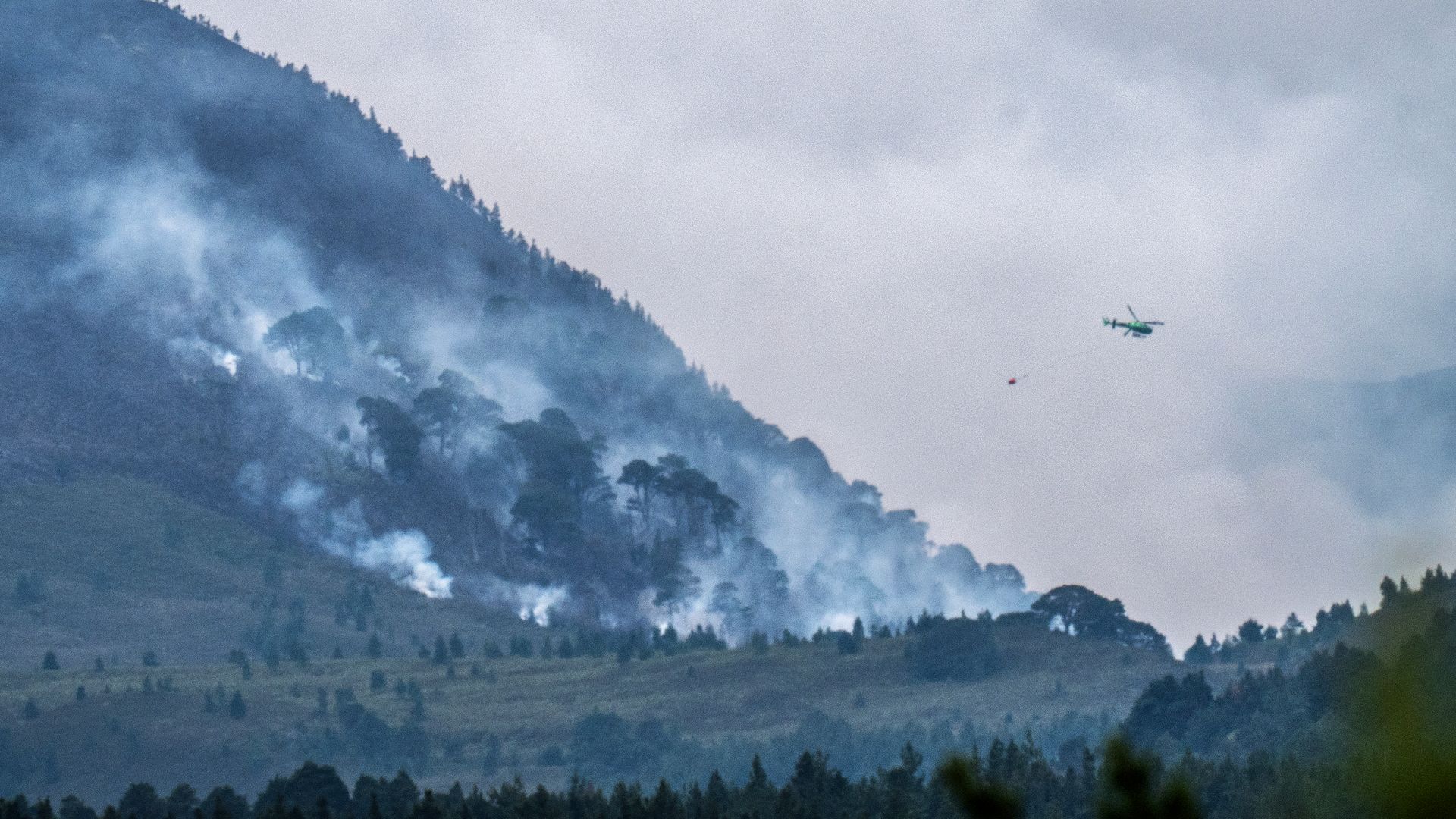
A fierce wildfire continues to rage for the third consecutive day within the United Kingdom’s largest national park, prompting a robust response involving over 50 firefighters and two helicopters engaged in relentless waterbombing operations.
Ongoing Battle Against a Relentless Wildfire
The extensive wildfire has engulfed a significant area of the national park, challenging firefighting teams who remain on high alert. With the fire persisting beyond 48 hours, emergency services have intensified their efforts, deploying aerial support alongside ground crews to contain the blaze.
More than 50 firefighters work tirelessly amid difficult terrain, coordinating with helicopter pilots to execute precise water drops. These aerial operations are critical in reaching hotspots inaccessible by land, helping to slow the fire’s spread and protect vulnerable landscapes.
Significance of the National Park and Impact of the Fire
The affected area lies within the UK’s largest national park, a cherished natural reserve known for its diverse wildlife, scenic beauty, and recreational opportunities. The wildfire’s impact threatens not only the environment but also the local communities and tourism economy that depend on the park’s preservation.
Wildfires of this magnitude disrupt ecosystems, endanger species habitats, and can lead to long-term ecological changes. The ongoing firefighting efforts aim to minimize damage, safeguard flora and fauna, and preserve the park’s natural heritage for future generations.
Challenges and What Lies Ahead
Firefighters face numerous challenges, including unpredictable weather conditions, rugged landscapes, and the fire’s intensity. The combination of ground crews and helicopter waterbombing represents a strategic approach to overcome these obstacles and contain the wildfire efficiently.
Authorities continue to monitor the situation closely, ready to deploy additional resources if necessary. Public safety remains a priority, with officials advising visitors and residents to stay clear of the affected zones while firefighting operations are underway.
Why This Matters
This wildfire underscores the increasing threat of large-scale fires to the UK’s natural environments, particularly amid changing climate patterns. The incident highlights the vital importance of rapid response capabilities, investment in firefighting infrastructure, and the need for ongoing awareness about wildfire risks.
Protecting the nation’s largest national park is crucial—not only for biodiversity but also for community well-being and economic vitality tied to tourism and outdoor activities. The resilience and coordination of firefighting teams serve as a testament to the commitment to preserving these invaluable natural spaces.
As efforts continue, the focus remains on extinguishing the wildfire swiftly and restoring the park’s ecosystem. Full details on the fire’s extent and containment progress have yet to be released, but the dedication of emergency responders offers hope for a positive outcome in the days ahead.