

The House of Lords has taken a decisive step by voting in favour of decriminalising abortion, following a similar decision by MPs last summer. This historic shift seeks to remove abortion from the scope of a 164-year-old Victorian law, aiming to modernise the legal framework surrounding reproductive rights in England and Wales.
Background: The Push to End Criminal Investigations Over Abortion
Labour MP Tonia Antoniazzi initiated the campaign to decriminalise abortion last year through an amendment to the Crime and Policing Bill. Her proposal intends to halt police investigations and prosecutions under the 1861 Offences Against the Person Act, a law that has been used to prosecute over 100 women in recent years. These prosecutions have drawn widespread criticism for criminalising women seeking abortions and healthcare providers.
This move gained momentum after a BBC investigation revealed the alarming number of criminal cases tied to abortion, sparking public debate about the outdated nature of the law. Advocates argue that continuing to treat abortion as a criminal offence jeopardises women’s health and well-being.
Despite vocal opposition from prominent figures such as the newly appointed Archbishop of Canterbury, Sarah Mullally, who warned that decriminalisation could erode existing safeguards, the majority of peers in the Lords supported the amendment.
Debate and Opposition in the House of Lords
Conservative peer Baroness Monckton of Dallington Forest led a challenge against Antoniazzi’s amendment by tabling an alternative proposal to reverse the Commons’ decision. She argued that the amendment was rushed through Parliament “after less than an hour of debate” and lacked the necessary scrutiny for such a profound change.
Baroness Monckton described the decriminalisation effort as a “radical proposal” unsupported by public demand and warned of possible “tragic consequences for women.” She was joined by the Archbishop of Canterbury, who expressed concerns that removing criminal penalties might weaken the enforcement of the 24-week abortion limit, potentially undermining the protection of human life.
Another Conservative peer, Baroness Lawlor, echoed these worries, condemning the amendment as a “bad clause” that could lead to “tiny lives being ended in the most cruel and painful way,” while potentially causing lifelong trauma for mothers.
On the other side, Labour peers including Baroness Neate defended the amendment, highlighting the connection between pregnancy and domestic abuse. She emphasised that “creating clinically unnecessary barriers to abortion helps abusers, not survivors,” advocating for easier access to abortion services to protect vulnerable women.
Ultimately, Baroness Monckton’s amendment was rejected by 185 votes to 148, reflecting broad support among the Lords to advance decriminalisation.
Additional Votes and Wider Implications
The Lords also debated a proposal to reinstate mandatory in-person consultations before prescribing abortion medication for home use. This was put forward by Conservative peer Baroness Stroud, who argued that face-to-face appointments are essential for medical professionals to accurately assess gestational age, potential health risks, and signs of coercion.
Currently, women under 10 weeks’ gestation can legally take prescribed abortion pills at home following a remote consultation, a measure introduced during the COVID-19 pandemic lockdown in March 2020. This policy was made permanent in 2022, allowing medical abortions up to nine weeks and six days of pregnancy.
The Lords rejected Baroness Stroud’s amendment by 191 votes to 119, maintaining the remote consultation system that supporters say increases accessibility and privacy for women.
Voices from Both Sides of the Debate
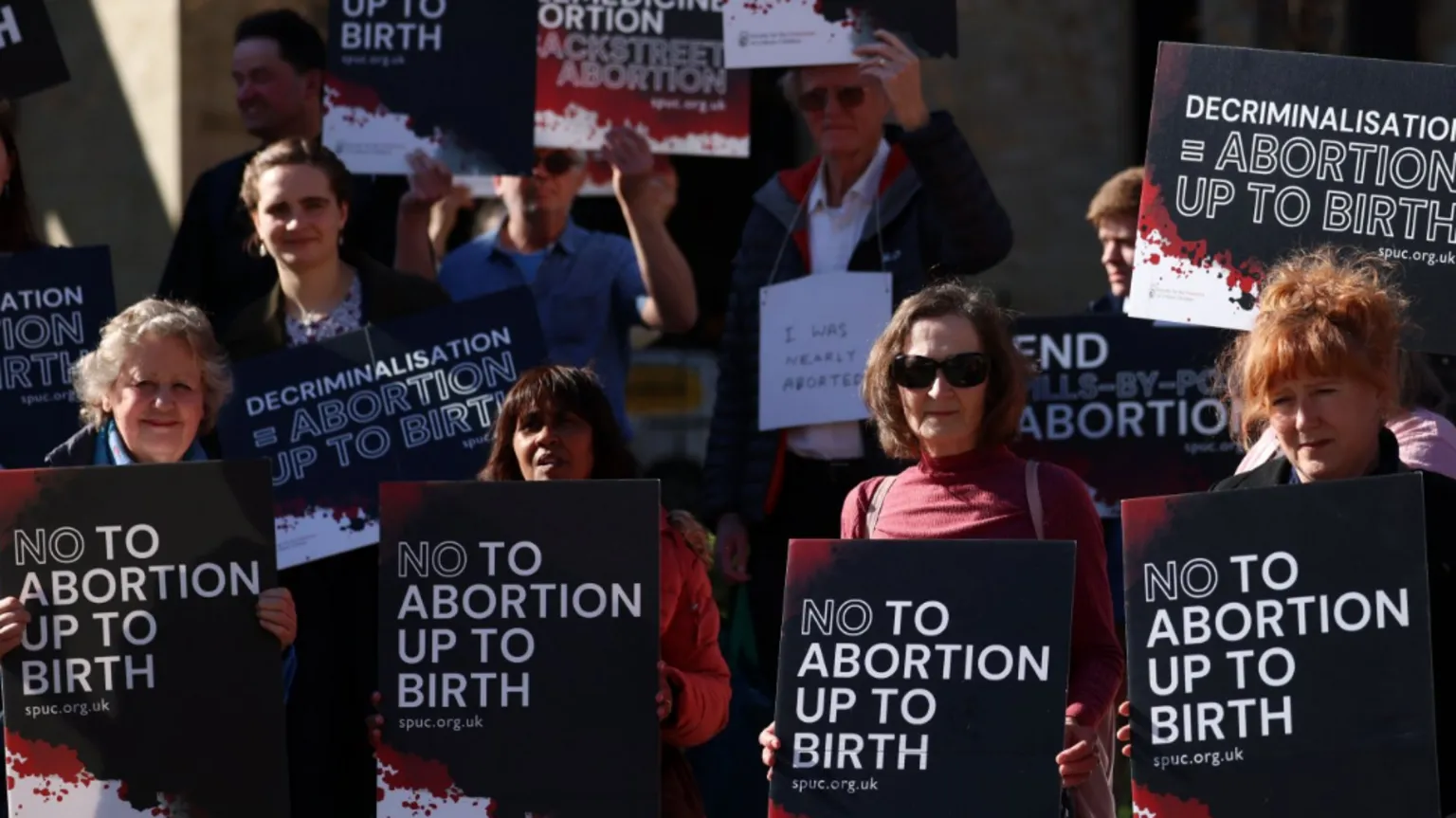
Pro-life campaigners gathered outside the House of Lords, holding banners and voicing their opposition. One activist, Sarah, expressed her conviction that “every child, from the moment of conception, is valuable in the eyes of God” and argued that abortion harms both women and unborn children. She shared her personal struggle with infertility, underscoring her belief in protecting all unborn lives.
Conversely, pro-choice advocates highlighted the anachronistic nature of the Victorian law. Louise McCudden, of abortion provider MSI Reproductive Choices UK, called the criminalisation of abortion “unacceptable” and stressed that it endangers women’s health. She urged the Lords to seize a “historic opportunity” to end prosecutions, pardon previously convicted women, and drop ongoing investigations.
McCudden also pointed to global trends, noting that while many countries—most notably the United States—are seeing rollbacks in reproductive rights, the UK Parliament’s vote represents a significant stand for women’s autonomy.

Why This Matters: The Future of Abortion Rights in the UK
Decriminalising abortion marks a pivotal moment in the UK’s approach to reproductive health and justice. By removing abortion from criminal law, the government acknowledges the need to treat it as a healthcare issue rather than a criminal offence. This change aims to reduce stigma, protect vulnerable women from prosecution, and ensure safer access to abortion services.
However, the debate underscores enduring tensions between safeguarding unborn life and protecting women’s rights. Opponents fear that decriminalisation could weaken existing safeguards, while supporters argue it removes unjust barriers and aligns the law with contemporary values and medical practices.
As the legislation progresses, the UK faces a critical juncture. How Parliament balances ethical, legal, and medical considerations will shape women’s healthcare for decades to come.
Full details on the implementation and wider legal reforms remain forthcoming, but this vote signals a transformative shift towards modernising abortion laws and prioritising women’s autonomy and safety.