The 2012 Olympic men’s basketball tournament in London promises fierce competition, but the United States team faces an unexpected challenge: injuries that have significantly altered their lineup and given their rivals renewed optimism. While the USA squad has long been regarded as the dominant force in international basketball, a series of key absences has cast doubt over their ability to maintain supremacy in this prestigious event.
USA Basketball’s Dominance and Current Challenges
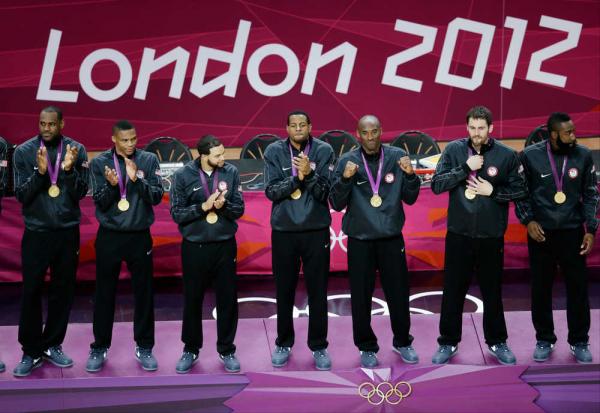
Arriving in London as the reigning Olympic champions, the United States men’s basketball team carries an imposing legacy. Since 2006, the team boasts a remarkable 54-1 win-loss record in international play, underscoring its status as the gold standard. This dominance was reinforced with a triumphant gold medal performance at the 2008 Beijing Olympics, a victory that restored American pride after a disappointing bronze finish at the 2004 Athens Games.
The 2012 roster features some of the sport’s most electrifying talents, including global superstars Kobe Bryant and LeBron James. The squad is a blend of experience and proven success, with five players who secured gold in Beijing and another five who contributed to the USA’s conquest at the 2010 FIBA World Championship. Such a collection of elite athletes would typically intimidate any opponent.
Yet, the team’s depth has been compromised by the absence of several prominent stars. Notable players like Dwyane Wade, Dwight Howard, and Blake Griffin have been sidelined due to injuries, creating a significant void, particularly in terms of size and interior presence. This deficiency in big men is a critical concern, as it deviates from the traditional roster construction that has often overwhelmed opponents with both skill and physicality.
Oklahoma City Thunder forward Kevin Durant openly acknowledged the challenge, stating, “Nobody is going to be intimidated by us, especially since everybody has been saying we are so small and that we don’t have any big guys so they think it’s going to be easier to beat us than it was before.” Despite the skepticism, Durant emphasized the team’s unity and determination: “We know it is going to be tough but we are looking forward to every game. I love this group of guys, everybody plays together, we play hard.”
__IMAGE_PLACEHOLDER_1__
International Competition and Rising Threats
The United States is not the only powerhouse vying for Olympic glory. Several international teams are poised to exploit the USA’s vulnerability and challenge their dominance.
Spain, the European champions and silver medalists from the 2008 Beijing Olympics, stand out as the foremost threat. Their squad is led by Pau Gasol, a Los Angeles Lakers forward whose skill and leadership have been instrumental in Spain’s ascent as a basketball powerhouse. Spain’s ability to combine tactical discipline with individual talent makes them a formidable adversary, especially given the USA’s current lack of size.
Another significant contender is Argentina, the surprise gold medalists from the 2004 Athens Olympics. Maintaining continuity, Argentina boasts five veterans from that historic team, including the exceptional guard Manu Ginobili. Their experience and cohesion present a unique challenge, as their veteran presence can stifle opponents with savvy play and strategic execution.
France was also expected to mount a strong challenge, but their preparations have been hampered by injury and fitness concerns. These setbacks have tempered expectations for the French squad, showcasing the unpredictable nature of international basketball competition and the fine margins that differentiate contenders from challengers.
__IMAGE_PLACEHOLDER_2__
What This Means for the 2012 Olympic Basketball Tournament
The injury-induced adjustments to the USA team have injected a fresh narrative into the Olympic basketball competition. While the Americans remain favorites due to their unparalleled talent and history of success, the altered roster composition invites greater parity among the top teams.
The United States no longer possesses the intimidating frontcourt size that has traditionally been a cornerstone of their game plan. This forces the team to adapt, emphasizing speed, shooting, and teamwork to overcome physical mismatches. Such a shift will test not only individual skill but also the coaching staff’s ability to strategize effectively under pressure.
For opponents, the USA’s diminished size is an opportunity to exploit interior matchups and control the paint. Teams like Spain and Argentina, with their experienced big men and cohesive units, will seek to capitalize on this advantage. The absence of dominant American centers opens the door for more contested games and potential upsets.
Nevertheless, the competitive spirit and resilience of the USA team should not be underestimated. Their determination to uphold national pride and Olympic legacy is a powerful motivator. As Kevin Durant highlighted, chemistry and effort will be crucial factors in their pursuit of a third consecutive Olympic gold medal.
__IMAGE_PLACEHOLDER_3__
In summary, the 2012 Olympic men’s basketball tournament promises to be one of the most compelling in recent memory. The United States faces the dual challenge of overcoming injuries and adapting their style, while international rivals prepare to seize the moment. Fans around the world can anticipate intense, high-quality basketball filled with strategic adjustments, veteran leadership, and the relentless drive for Olympic glory.