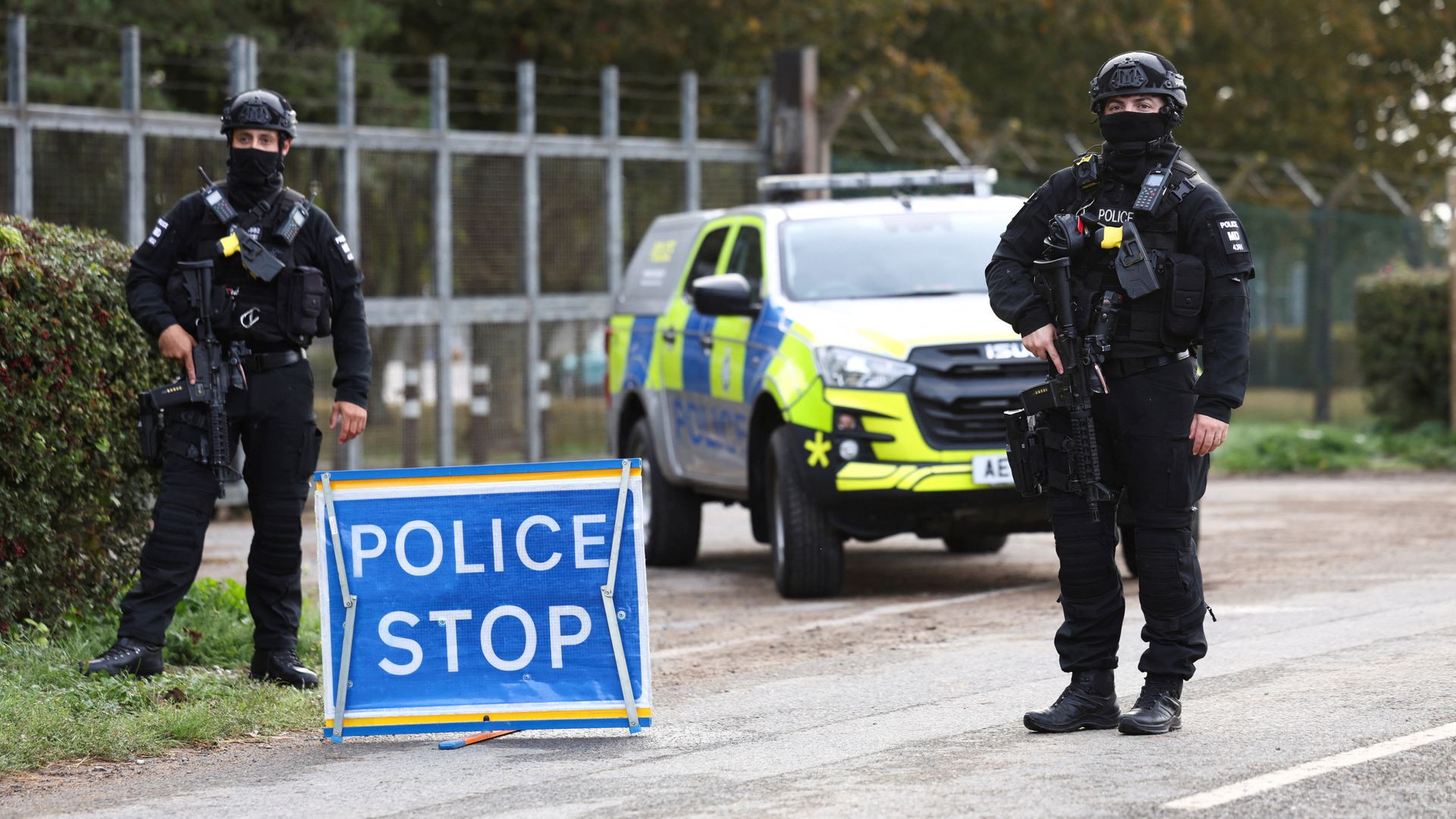
“Do we need to think about moving away?” This question echoes through the tightly knit Jewish community of Golders Green, north London, following a harrowing stabbing attack that has shaken residents to their core. Two men were stabbed in an incident widely perceived as antisemitic, leaving many questioning their safety in a neighborhood once considered a sanctuary.

The Stabbings and Immediate Aftermath
The attack occurred shortly after 11 a.m. on a typically busy stretch of Golders Green Road, an area known for its thriving Jewish shops, synagogues, and community centers. Witnesses reported seeing a 45-year-old man running along the road wielding a knife, allegedly targeting Jewish individuals. Police quickly responded, and the suspect resisted arrest, reportedly attempting to stab officers before being subdued with a stun gun.

Two victims—a man in his 70s and another in his 30s—were rushed to hospital and remain in stable condition. The police established a large cordon, sealing off the area as two helicopters monitored the scene from above. Nearby shops, including a butcher, hairdresser, and pharmacy, stood behind the police barriers, with residents and onlookers assembling around the perimeter.
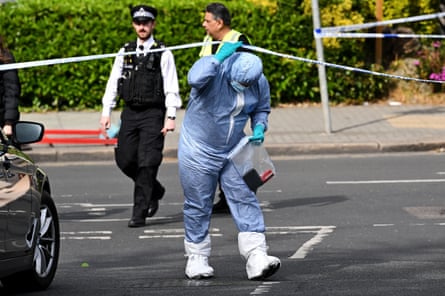
The atmosphere was tense yet controlled, with volunteers from the British Jewish emergency response team assisting both police and community members. Despite the disruption, businesses further up Golders Green Road stayed open, with customers continuing their routines amid the heightened security.

Community Shock and Growing Anxiety
Local residents and members of the wider British Jewish community expressed profound shock and sorrow, coupled with a mounting sense of vulnerability. Baruch Stern, owner of Gross Butchers near the scene, voiced a deep unease shared by many: “People feel scared, people feel unsafe. People think, is it really the place for me to be here? Is the UK safe for Jewish people, or is it something we need to think about, moving away?”
Stern highlighted a recurring frustration with political leadership: “The community constantly receives encouraging messages from Westminster about combating antisemitism, but what we really need is action, not just words.”

Dov Forman, a 22-year-old King’s College London student who rushed to the scene, conveyed a grim resignation. “No one finds this shocking anymore. We all knew this was coming. It was never a question of if there would be another attack, only when.” He reflected on his family’s history, saying, “My great-grandmother survived Auschwitz and came here hoping to live freely as a Jewish person. It’s heartbreaking that many of her descendants now question whether they can continue to live here.”
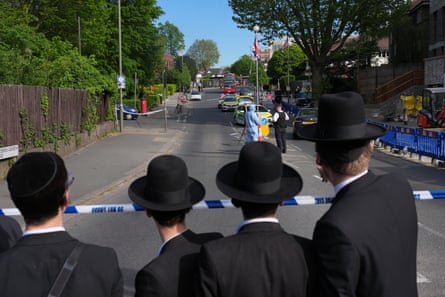
Jacob Lipsy, a lifelong Golders Green resident, recounted his brother’s attempt to chase the attacker. He noted a disturbing shift in the local atmosphere: “The area was getting more hostile. I worry for my children’s future.” Lipsy emphasized the need for political accountability, urging leaders to reconsider their rhetoric to prevent further hostility. “Living within the Jewish bubble feels safe for now, but outside it, danger lurks.”

Israel Morgenstein, who has lived in the area for 15 years, echoed this unease, stating, “We are thinking now that maybe it’s time to go home. We don’t feel safe. The police are doing an amazing job, but they are not trained for this kind of situation—that’s our worry.”
Why the Incident Matters and What Comes Next
Experts and community leaders warn that this attack is part of a disturbing trend of antisemitic violence in London and across the UK. Sam Adler, a property developer, connected the stabbings to a broader climate of normalized hatred. “When antisemitism is allowed to fester unchecked, when mobs march through London and hatred toward Jews is tolerated, this is the inevitable outcome.”

Adler acknowledged the community’s resilience, remarking, “Historically, Jews have always bounced back stronger. But there is also a deep anger. We feel the government’s failure to confront antisemitism head-on encourages this violence.”
The Right Rev Dr Anderson Jeremiah, the Bishop of Edmonton and a Golders Green resident, expressed his personal shock: “I was walking on that same street just an hour before the attack. It is devastating that such hatred has manifested so violently in our community. I am relieved the victims are receiving care, but the impact is profound.”
Looking Ahead: A Community at a Crossroads
The Golders Green stabbings represent more than a single act of violence—they symbolize a growing alarm within Britain’s Jewish population about their future safety and belonging. As fear and grief ripple through this historic community, calls for stronger government action and political responsibility grow louder.
For many, the question remains stark: is the UK still a safe home for Jewish people, or is relocation becoming an unavoidable consideration? While community resilience remains strong, the incident underscores the urgent need for coordinated efforts to confront and dismantle antisemitism in all its forms.
As Golders Green grapples with these challenges, the broader British society faces a critical moment to reaffirm its commitment to protecting minority communities and fostering an environment where all citizens can live without fear.