

Liberal Democrat leader Sir Ed Davey has positioned his party as the sensible middle ground amid rising political polarization, emphasizing the Lib Dems as a credible alternative to the “extremes” represented by Reform UK and the Green Party. His comments came as the party recorded significant local election gains across England and Scotland, underscoring a shift in voter sentiment away from the traditional two-party dominance.
Lib Dems Make Notable Local and Scottish Parliament Gains
In the recent local elections, the Liberal Democrats secured an impressive net gain of 153 councillors in England. Among their key victories was winning control of the councils in Stockport and Portsmouth, two strategically important areas that signal growing Lib Dem influence beyond their traditional strongholds.
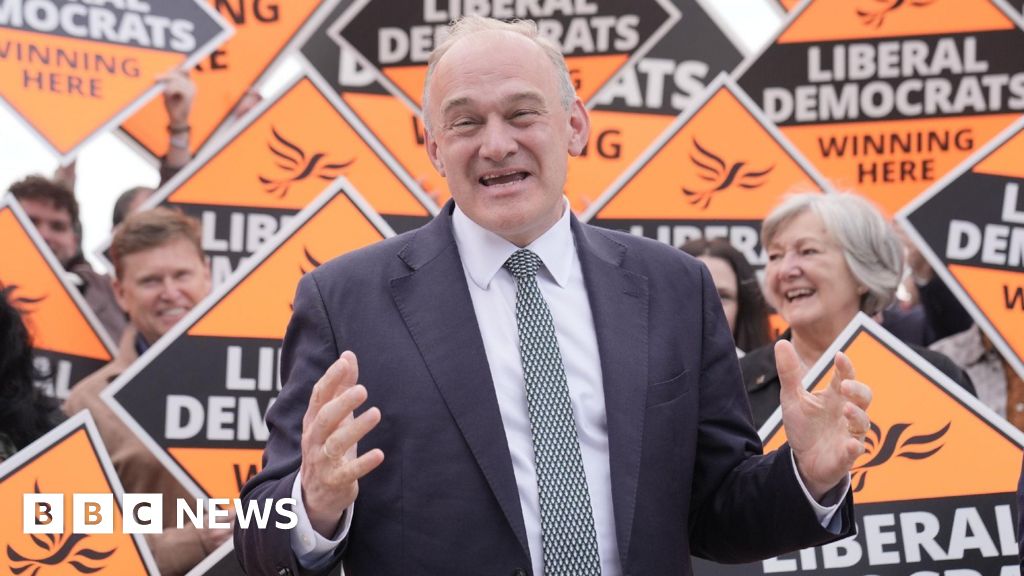
In Scotland, the party’s momentum continued with the acquisition of six additional seats in the Scottish Parliament, marking their best performance in nearly two decades. This breakthrough in Scotland is particularly notable given the dominance of the Scottish National Party and Labour in recent years.
Despite these gains, the Lib Dems faced challenges from other emerging political forces. While Reform UK and the Green Party achieved even larger increases in councillors, the Lib Dems mainly capitalized on a decline in support for the two major parties—Labour and the Conservatives—rather than expanding their base substantially.
Challenges from Reform UK and Greens Highlight a Fragmented Political Landscape
The local elections exposed the fragmentation of British politics, with parties on both the left and right fringes making significant inroads. In Hull, for example, a surge by Reform UK saw the Lib Dems lose control of the council, illustrating the volatility and unpredictability of voter allegiance in some regions.
Similarly, attempts by the Lib Dems to expand in traditionally Conservative areas such as Hampshire were thwarted by the rise of Reform UK, led by former Brexit Party figure Nigel Farage. This development revealed the complexities facing the Liberal Democrats as they seek to reclaim ground in a crowded political field.
Ed Davey’s Vision: Stability Amid Political Flux
Speaking during a visit to Edinburgh, Sir Ed Davey framed his party as the voice of reason in a turbulent political environment. “There’s no doubt that British politics is in flux,” he stated, highlighting how the breakdown of the old two-party system has left many voters searching for meaningful change.
Davey contrasted the Lib Dems’ approach with the populist extremes of Reform UK on the right and the Greens on the left. He argued that the Liberal Democrats represent “change that is true to British values,” appealing to voters wary of radical shifts on either side of the spectrum.
“Many people voted for that type of change and I’m going to champion that,” he pledged, underscoring his commitment to presenting the Lib Dems as a principled, pragmatic alternative.
What This Means for British Politics
The recent election outcomes underscore a significant realignment in British politics. The decline in support for Labour and the Conservatives indicates voter dissatisfaction with traditional party politics, while the rise of Reform UK and the Greens reflects growing appetite for more radical alternatives. In this context, the Liberal Democrats’ steady gains suggest a persistent, if measured, hunger for moderate change.
Sir Ed Davey’s emphasis on British values and a centrist position aims to consolidate this middle ground. However, the Lib Dems face the challenge of sustaining momentum amid the competing pressures of populist movements and a fragmented electorate.
Critics have questioned whether the Lib Dems can maintain their upward trajectory, but Davey points to the party’s consistent progress: this marks the eighth consecutive year of net gains in English council elections and a historic performance in Scotland. These achievements reinforce the party’s potential to influence the next phase of British politics.
Looking Ahead: The Future of the Lib Dems
As Britain’s political landscape continues to evolve rapidly, the Liberal Democrats seek to solidify their identity as the stable yet progressive alternative. Their success in local councils and Scottish parliamentary seats provides a foundation for expanding influence nationally.
Whether the Lib Dems can convert these electoral gains into broader support in future general elections remains an open question. What is clear, however, is that the party’s message of moderation and principled change resonates with a significant portion of the electorate disillusioned by extremes on both sides.
In a time of political uncertainty, the Liberal Democrats under Ed Davey’s leadership are determined to offer voters a clear, hopeful path forward—one that balances reform with tradition and pragmatism with vision.