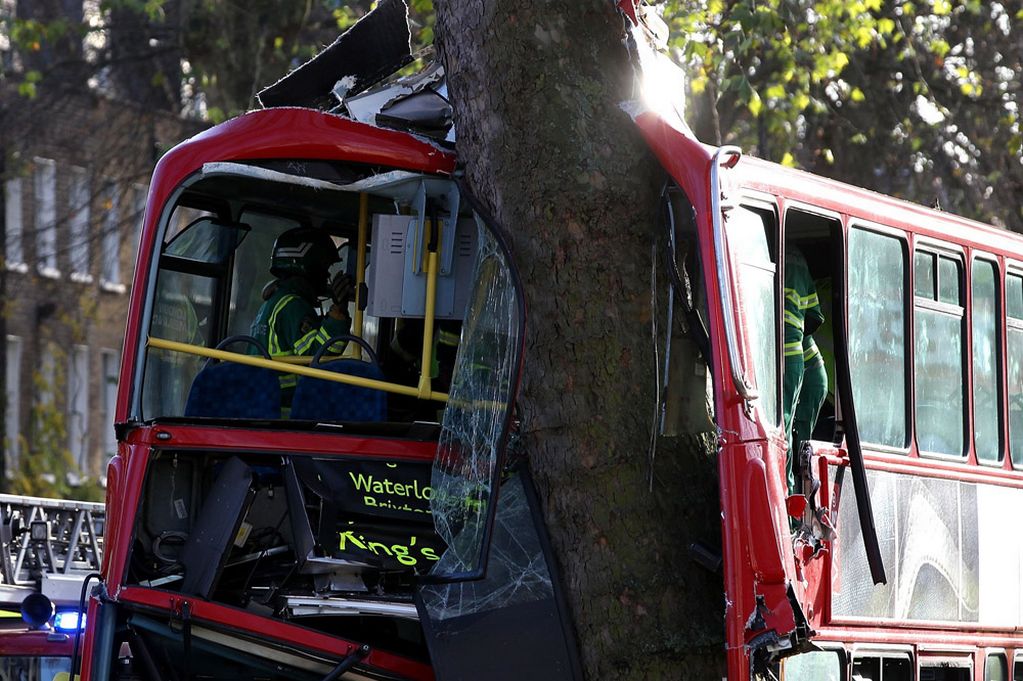
A devastating crash involving a London double-decker bus has left 32 passengers injured, including seven with serious wounds, after the vehicle collided with a tree in south London. This alarming incident unfolded on a busy morning, disrupting traffic and prompting an intense emergency response.
The Crash and Immediate Emergency Response
The accident occurred at approximately 10.50am on Kennington Road, in close proximity to the Imperial War Museum. The bus involved was the number 59 route, traveling towards King’s Cross. Eyewitness accounts describe a sudden, violent collision that left the front of the bus severely damaged, effectively wrapped around the massive trunk of a roadside tree.
Emergency crews from the London Fire Brigade and the London Ambulance Service rushed to the scene, where they faced the daunting task of rescuing trapped passengers. Many were pinned inside the wreckage, requiring firefighters to use hydraulic cutting tools to breach the bus’s bodywork and free those inside.
Clive Robinson, a representative from the London Fire Brigade, detailed the challenges faced during the rescue operation. “The actual floor of the bus was starting to collapse, so we had to shore that up to safely extract passengers,” he explained. Firefighters also deployed ladders to reach individuals stranded on the upper deck, emphasizing the complexity of the rescue.
The last two individuals to be pulled from the wreckage were a 19-year-old woman and a man, both reported to be among the most seriously injured. Their extraction marked a critical phase in the operation and highlighted the severity of the crash.

Details on the Injuries and Those Affected
Among the 32 injured passengers, seven sustained serious injuries ranging from major head trauma to severe limb damage. According to Kevin Brown from the London Ambulance Service, the casualties presented a range of injuries, from minor bumps and bruises to critical conditions requiring urgent hospital care.
Notably, two police officers were among the passengers on the bus at the time of the collision. One officer was reported to have a suspected broken arm, while the other was also taken to hospital for treatment. Earlier police updates indicated that two individuals were in critical condition, underscoring the gravity of some injuries.
Medical teams worked swiftly to triage and transport the wounded, coordinating care across multiple hospitals in London. The presence of emergency personnel on scene ensured victims received immediate attention despite the chaotic circumstances.

Investigation Underway and Impact on Transport
The bus involved in the crash was operated by Arriva, a major London bus company. In response to the incident, Transport for London (TfL) pledged a thorough investigation to determine the cause of the crash and to prevent future occurrences.
Mike Weston, TfL’s director for buses, stated, “Our first concern is, of course, for the driver, passengers, and others involved in this incident. There will be a thorough investigation into this incident as a matter of urgency.” This assurance reflects the importance of accountability and safety within London’s extensive public transportation network.
Currently, police have not established the cause of the collision. They are reviewing closed-circuit television (CCTV) footage from inside the bus as part of their inquiry. Chief Superintendent Glyn Jones emphasized, “At this stage we don’t know what’s caused the collision – that is subject to an ongoing investigation.”
The crash resulted in the closure of Kennington Road in both directions, forcing several bus routes, including numbers 3, 59, 159, and 360, to be diverted. This disruption added to the morning rush hour chaos and highlighted the wider impact of such incidents on London’s transport infrastructure and commuters.
Why This Incident Matters
This crash underscores the vulnerability of public transport passengers and the critical importance of rigorous safety standards. London’s bus system serves millions daily, and incidents like this raise pressing questions about vehicle maintenance, driver training, and roadside hazard management.
The swift and coordinated emergency response demonstrated the city’s capacity to handle major accidents, but also revealed challenges in accessing and rescuing passengers from double-decker buses. The structural damage to the bus, including the collapsing floor, points to potential areas for engineering review to enhance passenger safety in future collisions.
Furthermore, the ongoing investigation will have implications for transport policy and operational procedures. Understanding the causes, whether mechanical failure, driver error, or external factors, is vital for developing preventive strategies. For passengers and Londoners at large, this incident serves as a sobering reminder of the risks inherent even in routine travel.
As authorities continue their inquiry, the focus remains firmly on supporting those injured and restoring confidence in London’s public transport system. The lessons learned here will influence how safety measures evolve to protect passengers and ensure that such a severe accident is not repeated.