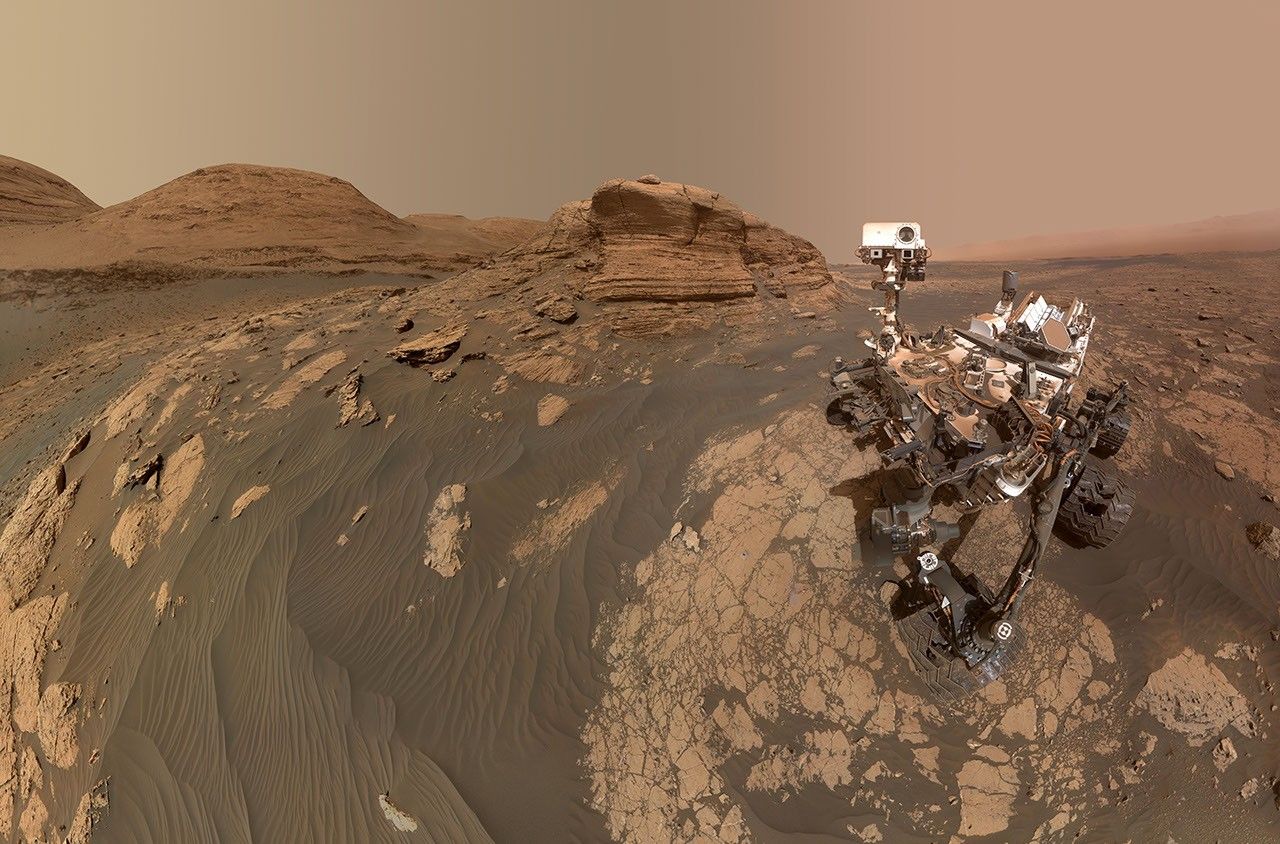
On the 4,877th Martian day of NASA’s Curiosity rover mission, the rover captured detailed images of a rock that had caused a rare mechanical hiccup on its drilling system. The rock, dubbed “Atacama”, got stuck on the drill bit at the end of Curiosity’s robotic arm, prompting engineers to undertake a careful operation to free it.
The Incident with the Atacama Rock
On April 25, 2026, Curiosity’s drill encountered an unexpected obstacle when a piece of rock adhered to the drill bit, temporarily halting its sample collection process. The rock’s size and shape caused it to lodge firmly, a situation that required a strategic response from the rover’s Earth-based engineering team.
Over several days, engineers at NASA’s Jet Propulsion Laboratory (JPL) worked meticulously to reposition Curiosity’s arm and activate the drill’s vibration mechanism. This methodical approach finally succeeded in detaching the rock on May 1, allowing the rover to resume its scientific operations without damage to its equipment.
Details About the Atacama Rock
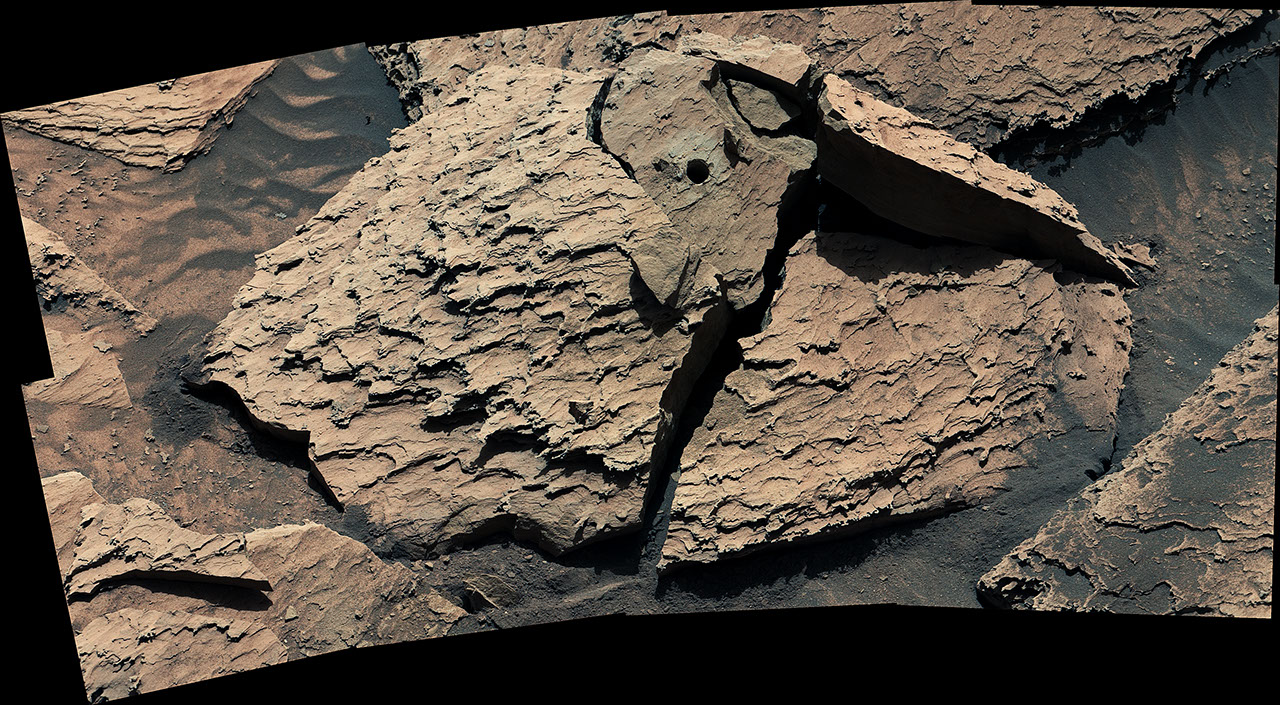
The rock known as Atacama measures approximately 1.5 feet (about 46 centimeters) in diameter at its base and is around 6 inches (15 centimeters) thick. On Earth, this rock would weigh close to 28.6 pounds (13 kilograms), though its weight on Mars is roughly one-third of that due to the planet’s lower gravity.
What makes this rock particularly significant is the circular hole created by Curiosity’s drill, clearly visible in the images taken after the rock detached. This hole marks another successful drilling attempt, despite the temporary setback caused by the rock’s unexpected behavior.
The images of Atacama were captured by Curiosity’s Mast Camera, or Mastcam, on May 6, 2026. Engineers stitched together eight separate images to create a high-resolution mosaic that was then color-balanced to simulate the daylight conditions on Earth, helping scientists analyze the rock’s texture and composition more accurately.
Curiosity’s Mission and Technology
Curiosity was developed and is managed by NASA’s Jet Propulsion Laboratory in Pasadena, California, under the oversight of the California Institute of Technology (Caltech). Since landing on Mars in August 2012, Curiosity has been exploring the Martian surface to assess the planet’s past habitability and geological history.
The Mastcam, designed and operated by Malin Space Science Systems in San Diego, serves as Curiosity’s primary imaging system. It provides critical visual data that helps scientists understand Mars’ diverse terrain and identify rocks and soil for further study.
This incident with the Atacama rock highlights the challenges of operating complex machinery remotely on another planet. Despite these hurdles, Curiosity continues to deliver invaluable scientific data and stunning imagery that deepen our understanding of Mars.
Why This Matters
Curiosity’s ability to overcome equipment challenges like the Atacama rock jam demonstrates the robustness and adaptability of NASA’s Mars exploration technology. Each drill sample and image helps piece together Mars’ environmental story—its climate shifts, water history, and potential to support life.
Understanding how the rover’s drill interacts with different rock types also informs the design and operation of future missions, including the upcoming Mars Sample Return efforts and human exploration plans. The Atacama incident serves as a valuable case study in dealing with unexpected obstacles millions of miles away.
Looking Ahead
As Curiosity moves forward on its journey across the Martian surface, scientists and engineers will continue to monitor its instruments closely, ready to adapt and troubleshoot as necessary. The resilience shown in overcoming the Atacama rock challenge underscores the mission’s ongoing success and the spirit of exploration that drives humanity’s quest to understand the Red Planet.