Nvidia, the tech giant renowned for its cutting-edge graphics processors, has unveiled a revolutionary AI-driven graphics technology promising to elevate video game visuals to Hollywood-level photorealism. However, despite the company’s high expectations, this bold innovation has ignited a fierce backlash from gamers and industry professionals alike.
What Is Nvidia’s DLSS 5 and Why Does It Matter?
At the heart of this debate lies DLSS 5 (Deep Learning Super Sampling 5), Nvidia’s latest graphics enhancement tool slated for release this autumn. Announced at Nvidia’s flagship annual conference in Silicon Valley, the company claims DLSS 5 represents its most “significant breakthrough” in computer graphics since the advent of real-time ray tracing in 2018.
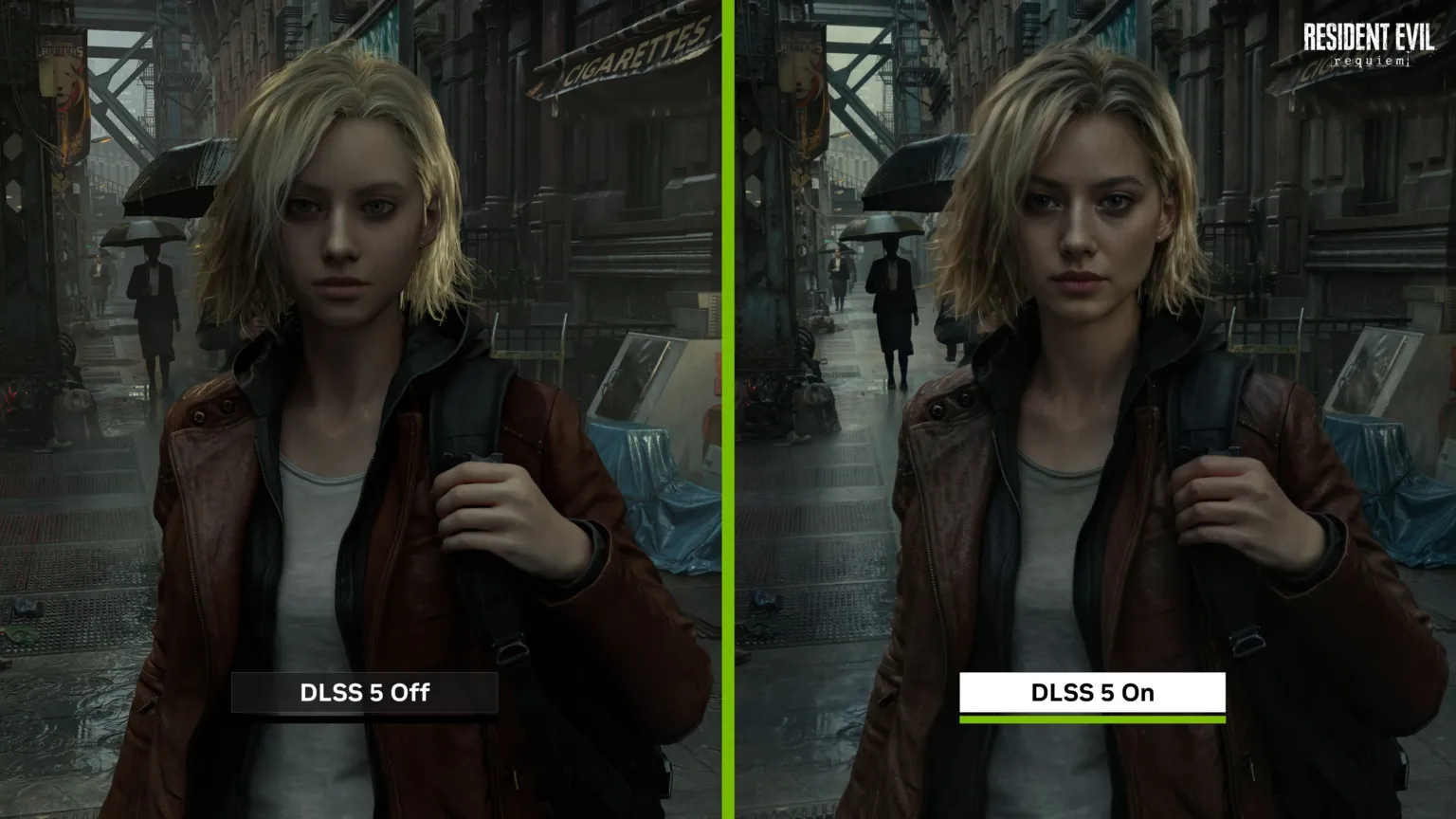
DLSS 5 leverages artificial intelligence to transform game graphics by rendering ultra-realistic details such as hair, fabric, skin textures, and environmental lighting. This technology aims to produce cinematic-quality visuals that were previously achievable only through expensive Hollywood special effects.
In promotional images shared with media outlets, DLSS 5 dramatically enhanced the appearance of characters and environments in popular titles like Resident Evil Requiem and Hogwarts Legacy. The tool’s ability to create lifelike lighting and textures captivated some observers, showcasing a potential leap forward in gaming immersion.
Mixed Reactions: Praise Meets Criticism
Despite Nvidia’s enthusiasm, the gaming community’s response has been far from unanimous. Many gamers and industry insiders argue that DLSS 5’s AI enhancements strip away the artistic character and individuality that define video game visuals.
Video game critic Alex Donaldson commented on social platform Bluesky that while DLSS 5 significantly improves environmental visuals, the character models appear “uncanny and weird,” suggesting the AI-generated graphics risk eliminating creative expression.
Concept artist Jeff Talbot of Gunfire Games voiced stronger opposition, stating, “This is NOT the direction games should be going in. Each DLSS 5 shot looked worse and had less character than the original.” His critique highlights a concern that AI’s influence might homogenize game aesthetics, reducing the unique artistic touches players have come to cherish.
These critical voices reflect broader unease within the gaming community about the growing reliance on AI-generated content. Controversies have erupted over studios using AI for graphics, with some developers scrapping projects or promising to restrict AI’s role following backlash from fans and critics.
Industry Support and the Future of AI in Gaming
Despite the criticism, major publishers and developers have embraced Nvidia’s DLSS 5 technology. Companies such as Bethesda, CAPCOM, and Warner Bros. Games back the innovation, seeing it as a tool to push the boundaries of immersive gameplay.
Charlie Guillemot, co-CEO of Vantage Studios—developers of Assassin’s Creed Shadows—defended DLSS 5, explaining how the advanced rendering capabilities enhance lighting, materials, and character realism. He said, “It’s letting us build the kind of worlds we’ve always wanted to,” underscoring AI’s potential to redefine game design and player engagement.

The debate over AI in gaming echoes wider industry tensions. Some studios have faced criticism for incorporating AI-generated art, leading to project cancellations and award disqualifications. For instance, Clair Obscur: Expedition 33 was stripped of its Indie Game Awards title after revelations about AI experimentation, even though the content was not ultimately used.
Meanwhile, other sectors, including Hollywood, experience similar conflicts. AI tools, once scorned during recent strikes, are now integral to Oscar-winning film productions, reflecting a complex balance between innovation and tradition.
What This Means for Gamers and Developers
The introduction of DLSS 5 signals a pivotal moment for the gaming industry, highlighting both the exciting possibilities and the challenges posed by AI integration. For gamers, the promise of hyper-realistic graphics could transform immersion, making virtual worlds more lifelike than ever before.
However, as critics warn, there’s a risk that AI’s influence might erode the handcrafted artistry that gives games their unique charm and emotional resonance. Striking a balance between technological advancement and artistic integrity will be crucial as developers navigate this new frontier.
Nvidia’s DLSS 5 exemplifies the cutting edge of AI-powered graphics technology, but its reception underscores the importance of preserving creativity and player experience in an era increasingly shaped by artificial intelligence.
As this technology rolls out later this year, the gaming community will watch closely to see whether DLSS 5 fulfills its promise of revolutionary visuals or becomes a cautionary tale about the limits of AI in art.