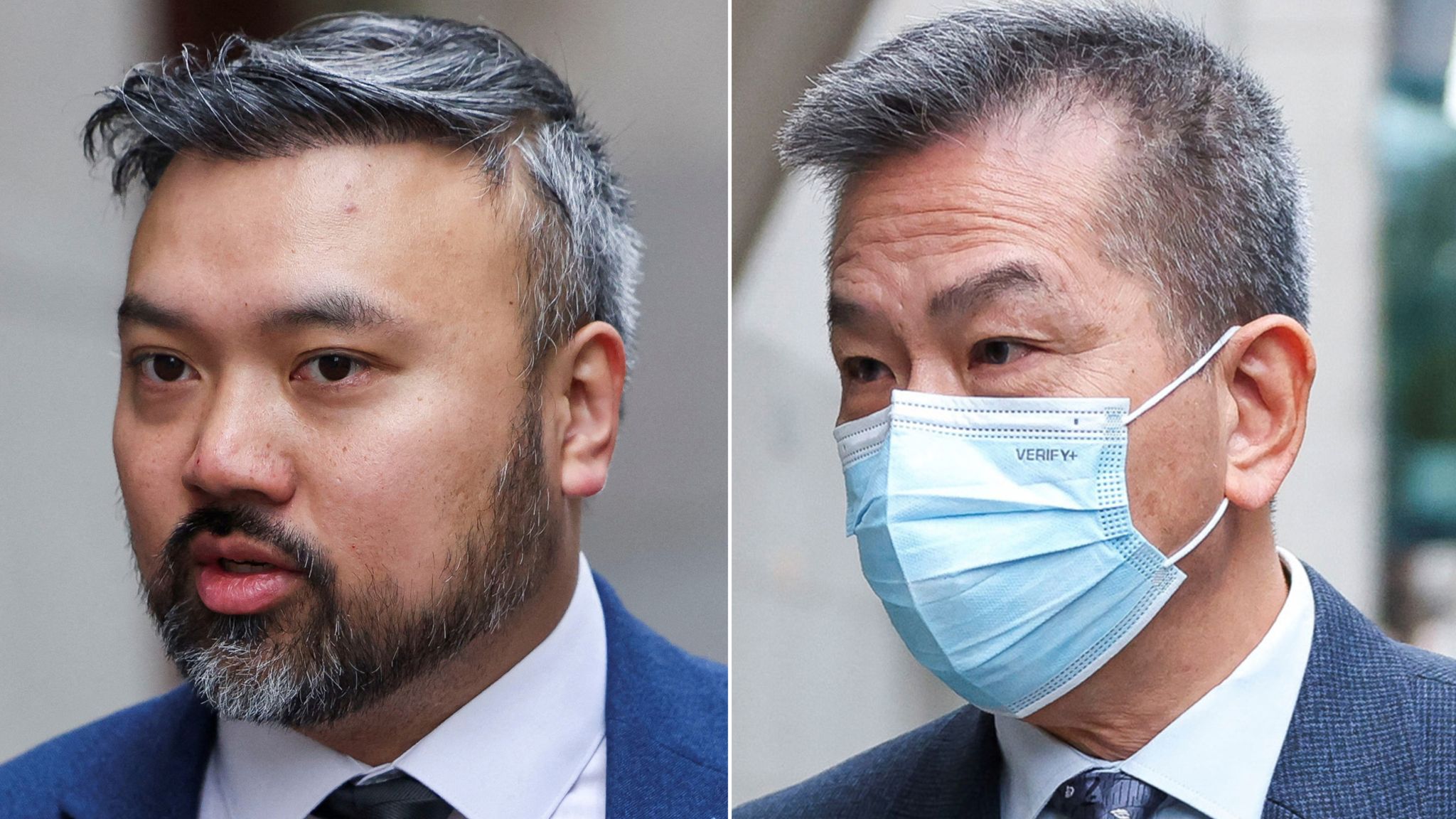
Billy Yuen, a 64-year-old retired police officer, has firmly denied accusations of leading a Chinese government spy ring in London, insisting he is “quite a boring guy” and has nothing to hide. The allegations, heard at the Old Bailey, claim that Yuen orchestrated covert activities from the Hong Kong Economic and Trade Office (HKETO) in Bedford Square, central London.
The Spy Ring Allegations and Yuen’s Defense
Yuen faces serious charges of running a spy network allegedly connected to the Chinese government. Prosecutors claim he “tasked” Peter Wai, 39, a UK Border Force officer from Staines, Surrey, to carry out surveillance on dissidents living in the UK and to pursue a substantial £16 million debt owed to a Chinese businesswoman. Wai, who also served as a special constable for the City of London Police, is accused alongside Yuen of assisting Chinese intelligence through information gathering, surveillance, and deceptive acts under the National Security Act 2023.
However, Yuen vehemently rejects these accusations. He explained to investigators that his return to work after retirement was driven solely by personal reasons—specifically, his wife’s frustration with him being at home all day. “Hand on my heart, I have nothing to hide,” Yuen told police after his arrest, emphasizing his straightforward character and denying any espionage activities.
Yuen described himself as deeply connected to both the UK and Hong Kong. “I love the UK. If you ask me which place I love more, I love UK. I’m not telling you lies,” he said. Although he acknowledged his fondness for Hong Kong, he expressed a stronger attachment to Britain, where his children studied and where he currently resides with his family.
Yuen’s Background and Role at the Hong Kong Economic and Trade Office
Billy Yuen’s career spans 37 years in the former Royal Hong Kong Police Force, where he reached the rank of superintendent and worked in specialized units such as the Marine headquarters and traffic technology development. After retiring in 2015 with a pension of approximately £4,600 per month and owning property in Hong Kong, Yuen had no financial necessity to continue working.
Despite this, his wife encouraged him to find a job to stay active. She noticed an advertisement for an office manager role at the HKETO in a Chinatown newspaper, and Yuen applied. His official title was “administrative division head,” responsible for managing the historic 266-year-old office building on Bedford Square, recruiting staff, and overseeing finances.
Yuen’s interaction with Peter Wai originated from a chance meeting in a Chinatown restaurant. Wai presented himself as a superintendent and a security consultant, which impressed Yuen given their shared policing backgrounds. Yuen hired Wai to provide close protection security for the HKETO, and the two reportedly became friends.
Legal Proceedings and What Lies Ahead
Alongside Yuen, Peter Wai denies all charges related to espionage and misconduct. Wai specifically faces accusations of misconduct in public office for allegedly conducting unjustified searches of Home Office databases. Both men maintain their innocence, contesting any involvement with Chinese intelligence operations.
The trial remains ongoing at the Old Bailey, where further evidence and testimonies are expected to unfold. The case highlights the increasingly sensitive concerns around foreign influence and espionage within the UK, particularly relating to Chinese government activities on British soil.
Why This Case Matters
The allegations against Yuen and Wai underscore the growing tensions between the UK and China over espionage and national security. The UK government’s recent National Security Act 2023 reflects heightened vigilance against foreign interference, especially in light of geopolitical friction and concerns about protecting dissidents abroad.
This case also exposes the complexity of loyalty and identity for individuals with ties to both the UK and Hong Kong. Yuen’s insistence on his affection for the UK, coupled with his long service in Hong Kong’s police force, illustrates the nuanced personal narratives behind such high-profile accusations.
As the trial continues, it will be crucial to observe how the court balances evidence of alleged espionage against Yuen’s claims of innocence and personal character. The outcome will have significant implications for UK-China relations and the broader debate on security and civil liberties.
Looking Ahead
For now, Billy Yuen remains a figure caught between two worlds—accused of espionage but portraying himself as an ordinary man caught in extraordinary circumstances. The trial’s progression will shed more light on the truth behind these claims, while reinforcing the UK’s commitment to safeguarding national security in an era of complex international challenges.