

Waste management companies are increasingly turning to robotic technology to tackle persistent labor shortages and improve efficiency in sorting facilities. However, these innovations are far from plug-and-play solutions—they require vast amounts of data and careful training to operate effectively.
Training Robots: More Than Just Plug and Play
Many industry insiders caution against the misconception that robotic systems in waste sorting can simply be connected and run flawlessly. In reality, these robots demand extensive data inputs and continuous fine-tuning before they become truly effective.
One notable example is the use of a system known as HoloLab, which integrates data from multiple cameras to train a robot named Alpha. This system functions by providing real-time warnings about incoming waste items, guiding the robot’s arms for precise picking, and flagging any sorting errors when items remain unpicked on the conveyor belt.
Every day, thousands of waste items pass through the system, generating millions of data points that feed back into Alpha’s learning algorithms. This high-volume data stream allows the robot to continually improve its sorting accuracy and efficiency, although the initial training phase can be time-consuming.
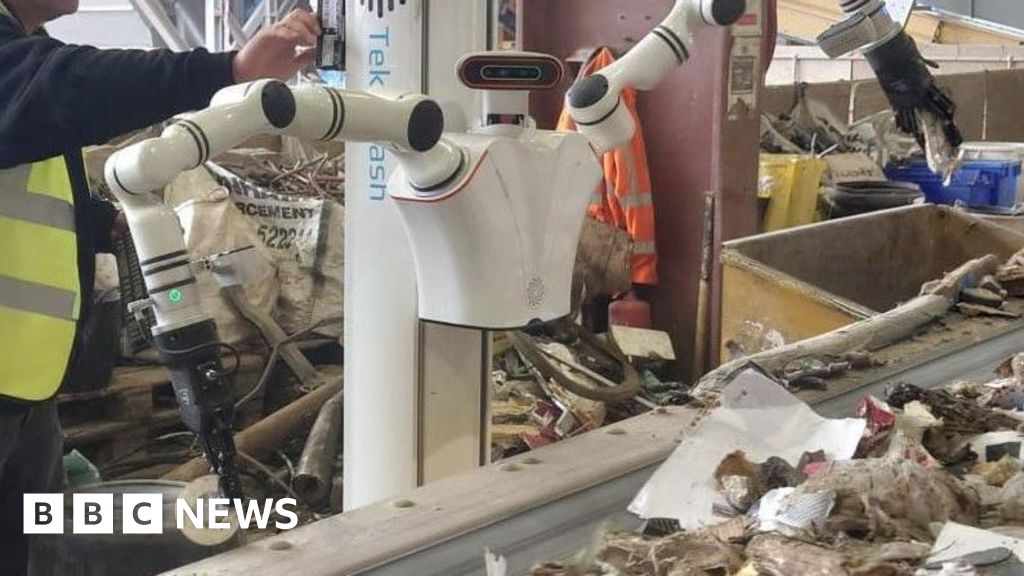
The Advantages of Humanoid Robots in Waste Plants
Chelsea Sharp, plant finance director and granddaughter of the company’s founder, Tom Sharp, highlights the operational benefits of humanoid robots in waste sorting facilities. Unlike human workers, these robots can operate non-stop—24 hours a day, seven days a week—without taking breaks, calling in sick, or requesting vacation.
“The attraction of a humanoid is that you can put it here and it stays here. It will pick all day, 24 hours a day, seven days a week. It’s not going to apply for a holiday, it’s not going to have a sick day,” Sharp explains. This continuous operation translates into greater throughput and consistency, crucial factors for waste management firms struggling to maintain staffing levels.
For companies facing persistent recruitment challenges, robots offer a reliable, scalable workforce that can alleviate pressure on human employees and help meet growing waste processing demands.
Custom Solutions: Building Smarter Plants with Advanced Technology
Beyond humanoid robots, some firms are investing in bespoke waste sorting plants or retrofitting existing facilities with cutting-edge equipment from specialized providers. One such company is Colorado-based AMP Robotics, which operates three of its own plants and supplies advanced sorting technology to dozens of facilities across Europe, the UK, and worldwide.
AMP Robotics CEO Tim Stuart explains that their systems utilize innovative methods such as air jets to precisely guide recyclable materials into designated chutes. This technology enhances sorting accuracy and overall plant efficiency, complementing robotic picking arms and AI-driven recognition systems.
These tailored solutions require significant upfront investment and customization but promise long-term gains in operational performance, waste diversion rates, and labor cost savings.
Why Robotic Automation Matters for the Waste Industry
The waste management sector faces mounting challenges—from labor shortages and fluctuating recycling markets to increasingly stringent environmental regulations. Robotics and AI-powered sorting systems offer a transformative path forward by automating repetitive, labor-intensive tasks and improving sorting precision.
While the technology is not yet a simple “plug and play” fix, ongoing advancements in data-driven training and machine learning are steadily increasing the capabilities of robotic systems. As these solutions become more reliable and cost-effective, they are poised to reshape waste facilities worldwide.
For waste management companies, embracing automation is no longer just an option—it’s essential for staying competitive, meeting regulatory demands, and ensuring sustainability goals.
In summary, robotic automation in waste sorting represents a critical evolution for the industry, unlocking new efficiencies amid workforce challenges and environmental pressures. Continued innovation and data-driven refinement will be key to realizing its full potential in the years ahead.