

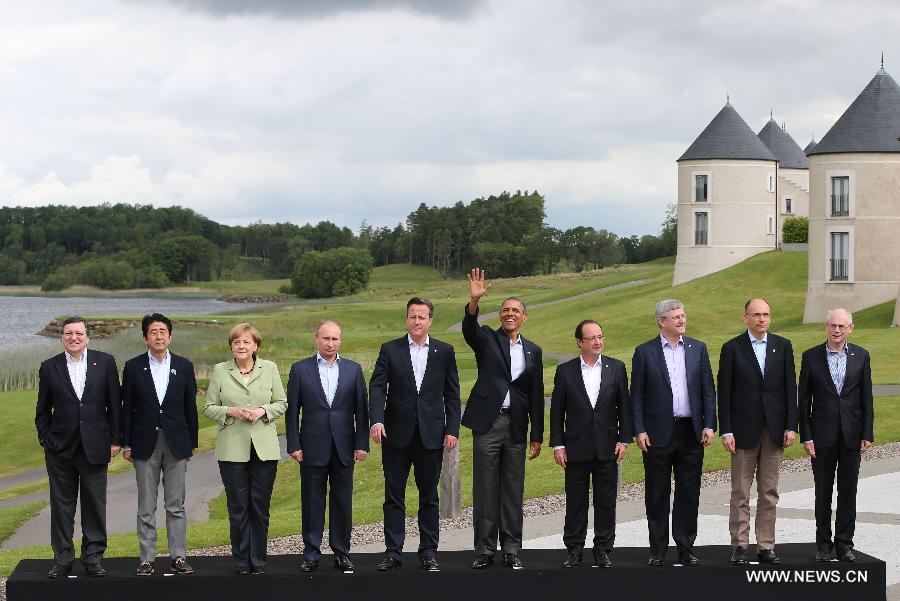
Global leaders of the Group of Eight (G8) convened in the picturesque setting of Lough Erne, Northern Ireland for the pivotal second and final day of their summit, intensifying discussions on several pressing international challenges. This high-profile gathering brought together the heads of state from the world’s major advanced economies, focusing on critical issues such as taxation reform, transparency in financial dealings, and global counterterrorism efforts.
Key Discussions and Diplomatic Engagements
One of the most significant topics dominating the summit was the ongoing crisis in Syria. The conflict, which has resulted in extensive humanitarian suffering and geopolitical tension, formed a central theme of discussions, particularly during a high-level bilateral meeting between Russian President Vladimir Putin and U.S. President Barack Obama on Monday evening. This dialogue was further extended during a working dinner with other G8 leaders, underscoring the urgency and complexity of the Syrian situation.
Despite profound differences in their approaches to the Syrian conflict, both Putin and Obama publicly acknowledged a shared commitment to halting the violence and preventing further loss of life. At a joint press conference, President Putin emphasized their mutual objective: “Our positions do not fully coincide, but we are united by the common intention to end the violence, to stop the number of victims increasing in Syria, to resolve the problems by peaceful means, including the Geneva talks.”
President Obama echoed this sentiment, highlighting the importance of diplomatic efforts: “We agreed to push the process of peace talks and encourage the parties to sit down at the negotiation table, organize the talks in Geneva.” This planned Geneva summit aims to bring together Syrian government representatives and opposition forces in a bid to find a peaceful resolution to the protracted conflict.
However, the summit also revealed stark contrasts in the international community’s stance on Syria, particularly concerning the use of chemical weapons. The United States announced that it would begin supplying arms to Syrian opposition groups after obtaining evidence it claims proves the Assad regime’s use of chemical weapons against rebels. This move marks a significant escalation in US involvement.
Russia, on the other hand, dismissed these claims as unsubstantiated, criticizing the evidence as weak and disputing the US narrative. This divergence highlights the complex geopolitical rift between these two powerful nations and illustrates the challenges in forging a unified international approach to the Syrian crisis.
British Prime Minister David Cameron described the evening’s Syria discussions as “encouraging,” reflecting cautious optimism that diplomatic channels remain open despite the disagreements. Cameron also brought to the forefront another critical agenda item: the fight against offshore tax evasion.
Taxation, Transparency, and Counterterrorism: Core Summit Priorities
The G8 leaders are intensifying efforts to enhance global financial transparency, particularly focusing on cracking down on tax havens such as Bermuda, the Cayman Islands, and the Isle of Man. These jurisdictions have long been criticized for facilitating tax avoidance by multinational corporations and wealthy individuals, undermining the tax bases of many countries.
Prime Minister Cameron, a vocal advocate for tax justice, is pushing for stronger international cooperation to compel governments and financial institutions in these offshore centers to disclose more detailed tax-related information. Such transparency is seen as essential to combatting tax evasion and ensuring fairer taxation systems worldwide.
In addition to taxation, the G8’s morning sessions concentrated on counterterrorism strategies. Given the persistent threat posed by global terrorist networks, the summit provided a platform for member nations to coordinate intelligence sharing, enhance border security, and develop cooperative measures aimed at preventing terrorist activities. Tackling extremism remains a top priority, reflecting the ongoing security concerns that transcend national borders.
Other Notable Developments and Security Measures
The first day of the summit marked a milestone in transatlantic trade relations, with formal negotiations launching on a comprehensive free trade agreement between the European Union (EU) and the United States. This ambitious initiative aims to eliminate trade barriers, harmonize regulations, and stimulate economic growth on both sides of the Atlantic, potentially shaping global commerce for years to come.
The summit’s location at the exclusive Lough Erne resort has been secured with intense vigilance, deploying approximately 8,000 police officers to maintain safety and order. This extensive security operation reflects the high stakes involved, given the presence of numerous world leaders and the sensitive nature of the discussions underway.
__IMAGE_PLACEHOLDER_1__
Why This Summit Matters
The 2013 G8 summit at Lough Erne represents more than just a periodic meeting of powerful nations; it serves as a crucial forum for addressing some of the most daunting challenges facing the international community. From attempting to broker peace in Syria to combating global tax evasion and terrorism, the summit’s outcomes have far-reaching implications.
The candid yet cautious dialogue between leaders like Putin and Obama underscores the complexities of international diplomacy in a fractured world. Although consensus remains elusive on many fronts, the commitment to pursue negotiations in Geneva offers a glimmer of hope for progress in Syria.
Simultaneously, the push for greater financial transparency and cooperation on counterterrorism demonstrates the G8’s recognition that economic justice and security are deeply intertwined. These efforts aim to build a more equitable and safer global environment, benefiting citizens far beyond the summit’s immediate participants.
As the summit concludes, the international community will be watching closely to see how the promises and plans articulated in Northern Ireland translate into tangible actions. The challenges are formidable, but the G8 leaders’ willingness to engage on these critical issues reflects an ongoing dedication to shaping a more stable and just world order.