

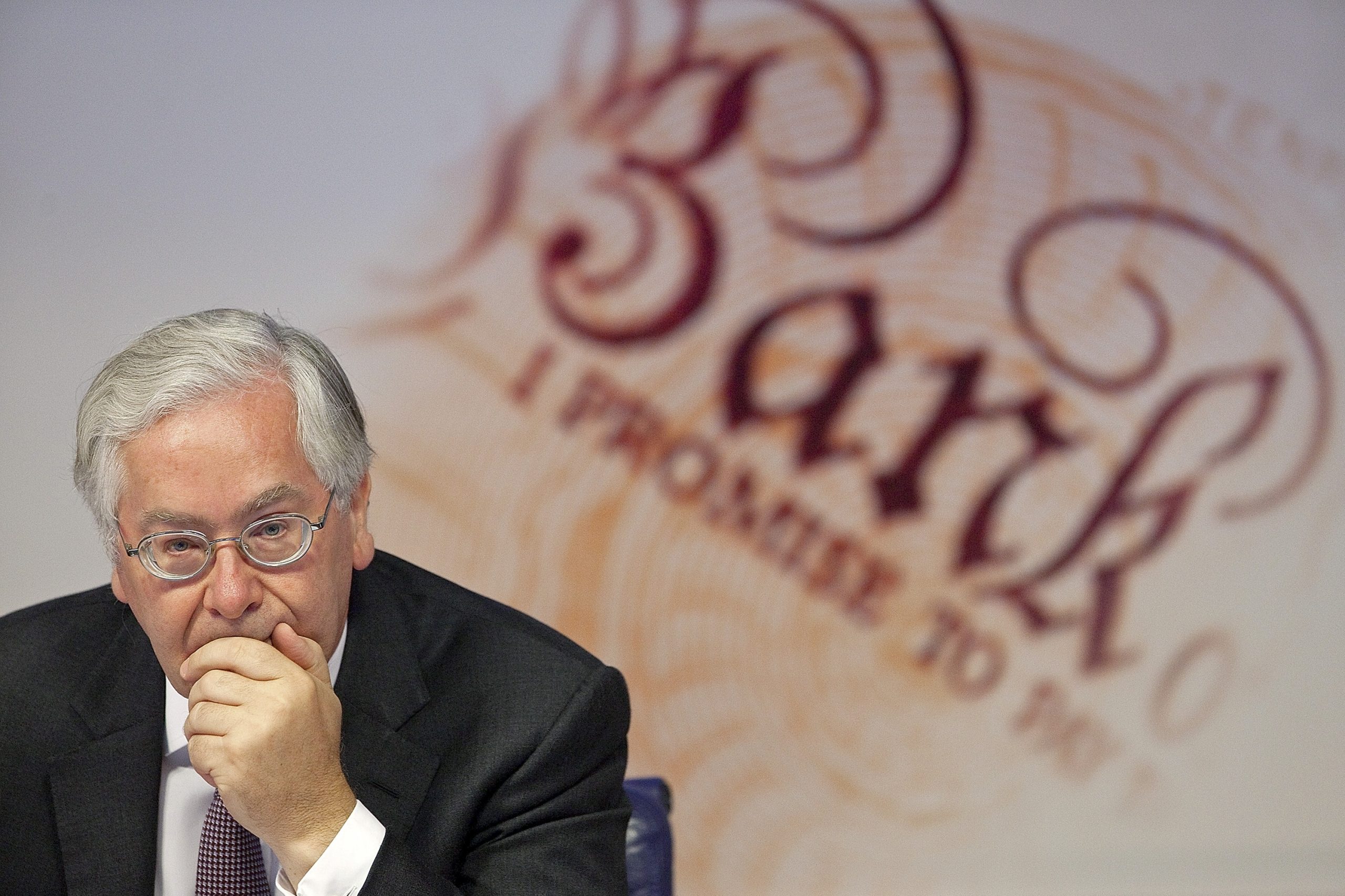
Sir Mervyn King, the Governor of the Bank of England, has issued a cautious warning about the UK economy’s trajectory as it approaches the final quarter of 2012. Despite the encouraging news that the country emerged from recession in the third quarter, signs now point to a potential contraction in GDP once again in Q4. This unexpected development underscores the fragility of the economic recovery and highlights several challenges that may delay sustained growth.
Uncertain Economic Growth and the Challenges Ahead
Following the release of the Bank of England’s quarterly inflation report, Sir Mervyn King acknowledged the difficulty in accurately predicting the true path of the UK’s Gross Domestic Product (GDP). While the Office for National Statistics estimated a 1% rise in GDP during the third quarter, this growth was largely inflated by one-off factors that are unlikely to be repeated. As a result, King warned that the “headline growth is consequently likely to fall back sharply in Q4,” raising the possibility that the UK economy could contract again before achieving a stable recovery.
This volatility in GDP figures reflects the broader uncertainty about the sustainability of the UK’s economic rebound. The Bank of England has responded to these concerns by revising its GDP forecasts downward for the upcoming quarters. This adjustment signals a more cautious outlook, suggesting that earlier expectations for a rapid recovery may have been overly optimistic. The inherent complexity of economic forecasting during turbulent times makes it challenging for policymakers and investors alike to chart a clear course forward.
__IMAGE_PLACEHOLDER_1__
The Impact of a Strong Pound and Inflationary Pressures
One significant factor that Sir Mervyn King identified as dampening the UK’s economic prospects is the strength of the British pound sterling. While a strong currency can sometimes signal economic resilience, in this context it poses a challenge by undermining the competitiveness of UK exports. A robust pound makes British goods and services more expensive on the global market, which can reduce demand and slow the recovery of export-driven sectors.
Alongside currency concerns, the Bank of England has raised its inflation forecast. Unexpectedly large increases in energy prices have pushed the Consumer Price Index (CPI) higher than anticipated. The Bank now projects that CPI inflation will return to its 2% target a full year later than initially expected, illustrating that inflationary pressures remain a persistent issue for the economy.
The Bank’s updated inflation projections show that CPI is expected to fall to around 1.8% in two years’ time, but the delay in reaching this target could impact household spending power and business costs in the meantime. Elevated inflation, coupled with modest economic growth, poses a difficult balancing act for monetary policymakers as they seek to stimulate the economy without exacerbating price rises.
__IMAGE_PLACEHOLDER_2__
Monetary Policy and the Role of Quantitative Easing
In response to the economic challenges, the Bank of England’s Monetary Policy Committee (MPC) has maintained its commitment to quantitative easing (QE) as a tool to support growth. Sir Mervyn King stressed that the Committee has not lost faith in QE’s effectiveness in stimulating the economy. However, he pointed to the recent decision to transfer QE proceeds to the Treasury as effectively equivalent to conducting an additional round of asset purchases.
This transfer, combined with the Bank’s upward revision of inflation forecasts, contributed to the decision not to introduce further asset purchases during the latest MPC meeting. The Bank’s approach reflects a cautious stance, balancing the need to provide economic stimulus while managing inflation risks. This delicate equilibrium demonstrates the complexity of monetary policy in an environment where growth is sluggish and inflation remains above target.
Following these comments, sterling experienced volatility in currency markets. The pound declined against the US dollar, reaching a daily low of $1.5862, while it strengthened against the euro, moving to its highest level since early November at 80.35 pence. These currency fluctuations underscore the sensitivity of the UK economy to global financial conditions and the influence of central bank communications on market sentiment.
__IMAGE_PLACEHOLDER_3__
Why This Matters and What Lies Ahead
The insights shared by Sir Mervyn King paint a nuanced picture of the UK economy as it navigates the aftermath of recession. The prospect of a GDP contraction in the fourth quarter despite a temporary rebound in Q3 highlights the uneven and fragile nature of the recovery. Factors such as a strong currency, inflationary pressures, and cautious monetary policy decisions create a complex environment for businesses, consumers, and policymakers.
For businesses, the challenge lies in adapting to a competitive landscape where export demand may be constrained by the strong pound. Consumers face the squeeze of higher energy costs and inflation, which could dampen spending and slow growth in domestic sectors. Policymakers must carefully balance stimulus measures with inflation control to foster a sustainable economic revival.
Looking forward, the Bank of England’s cautious forecasts suggest that a robust recovery may take longer to materialize than initially hoped. Stakeholders across the UK economy will need to monitor inflation trends, currency movements, and policy decisions closely as these elements will heavily influence economic performance in the coming months.
Ultimately, the Bank of England’s latest assessments underscore the importance of vigilance and flexibility in economic policymaking. While temporary improvements offer hope, the road to steady growth remains uncertain and demands careful management of competing risks.