

Imagine capturing images not with a camera lens, but through the invisible bombardment of cosmic rays high above Earth’s atmosphere. This is exactly what Tom Liggett, a photography student at Arts University Bournemouth, has achieved with an innovative fusion of art and science.
Transforming Cosmic Radiation into Art
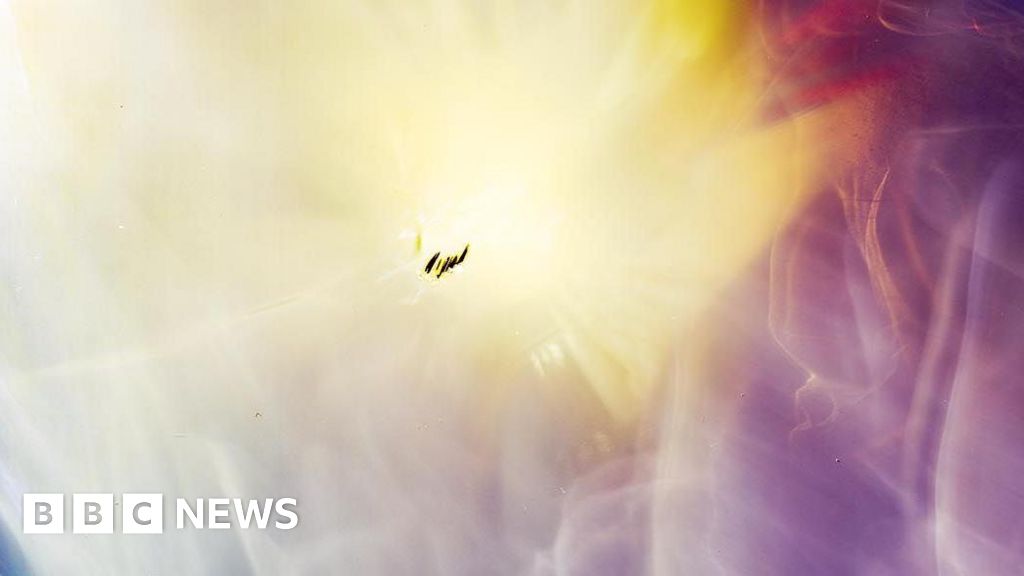
Tom Liggett, pursuing a BA (Hons) in Photography, has developed an extraordinary method of producing photographs using cosmic rays instead of traditional light exposure. His process involves sending sealed bags containing blank photographic film to the edge of space via helium balloons. At altitudes approximately three times higher than commercial airliners fly, the film is exposed to cosmic radiation present in the upper atmosphere.
This exposure results in striking, abstract patterns emerging directly on the undeveloped film. Unlike conventional photography, where light forms the image, here cosmic rays—high-energy particles originating from outer space—interact with the film emulsion, imprinting unique and unpredictable designs. According to Liggett, this technique is believed to be a world first, pioneering a new frontier in photographic art.
The Journey of the Film to the Edge of Space
The technical aspect of Liggett’s project is as fascinating as the art it produces. The helium balloon carrying the film ascends beyond the Earth’s protective atmosphere, reaching altitudes around 30 kilometers. At this height, the balloon eventually bursts, and the bag containing the film descends safely back to the ground via parachute.
Once retrieved, Liggett develops the film in a darkroom, revealing intricate patterns created exclusively by cosmic radiation interactions. This process challenges the traditional notion of exposure and image creation in photography, opening the door to exploring natural phenomena as a creative medium.
Liggett reflects on the inspiration behind his project: “It started with the wild question of what would happen if I sent a negative of film into space. The chances of it not working were very high because, as far as I know, no one’s ever achieved it before.” His willingness to experiment despite uncertainty underscores the innovative spirit driving this project.
Why This Innovation Matters
Photographers often worry about unintended exposure of film to radiation, especially when passing through airport X-ray scanners, which can damage undeveloped film. Liggett’s project flips this concern on its head by deliberately using cosmic radiation as a creative tool. This approach not only highlights the unseen impact of cosmic rays on photographic materials but also deepens our understanding of how natural forces interact with human technology.
Moreover, Liggett’s work bridges art, physics, and space science, demonstrating how interdisciplinary approaches can yield groundbreaking results. It invites artists and scientists alike to reconsider the boundaries of their fields and explore new methods of expression and discovery.
Looking Ahead: The Future of Cosmic Ray Photography
Tom Liggett’s pioneering technique could inspire further exploration into space-based artistic processes. As balloon and satellite technologies become more accessible, artists may increasingly experiment with cosmic phenomena to create unique visual narratives.
This project sets a precedent for harnessing natural cosmic forces in creative practices, suggesting exciting possibilities for future collaborations between art and science. Liggett’s journey serves as a reminder that curiosity and innovation can push the limits of traditional mediums, transforming the invisible into tangible works of art.
What this means: Liggett’s cosmic ray photography not only revolutionizes how images can be created but also encourages us to look up and appreciate the invisible energies that constantly surround our planet. His work challenges the photography community to rethink exposure and image-making, potentially inspiring a new genre where space itself becomes the artist’s studio.