

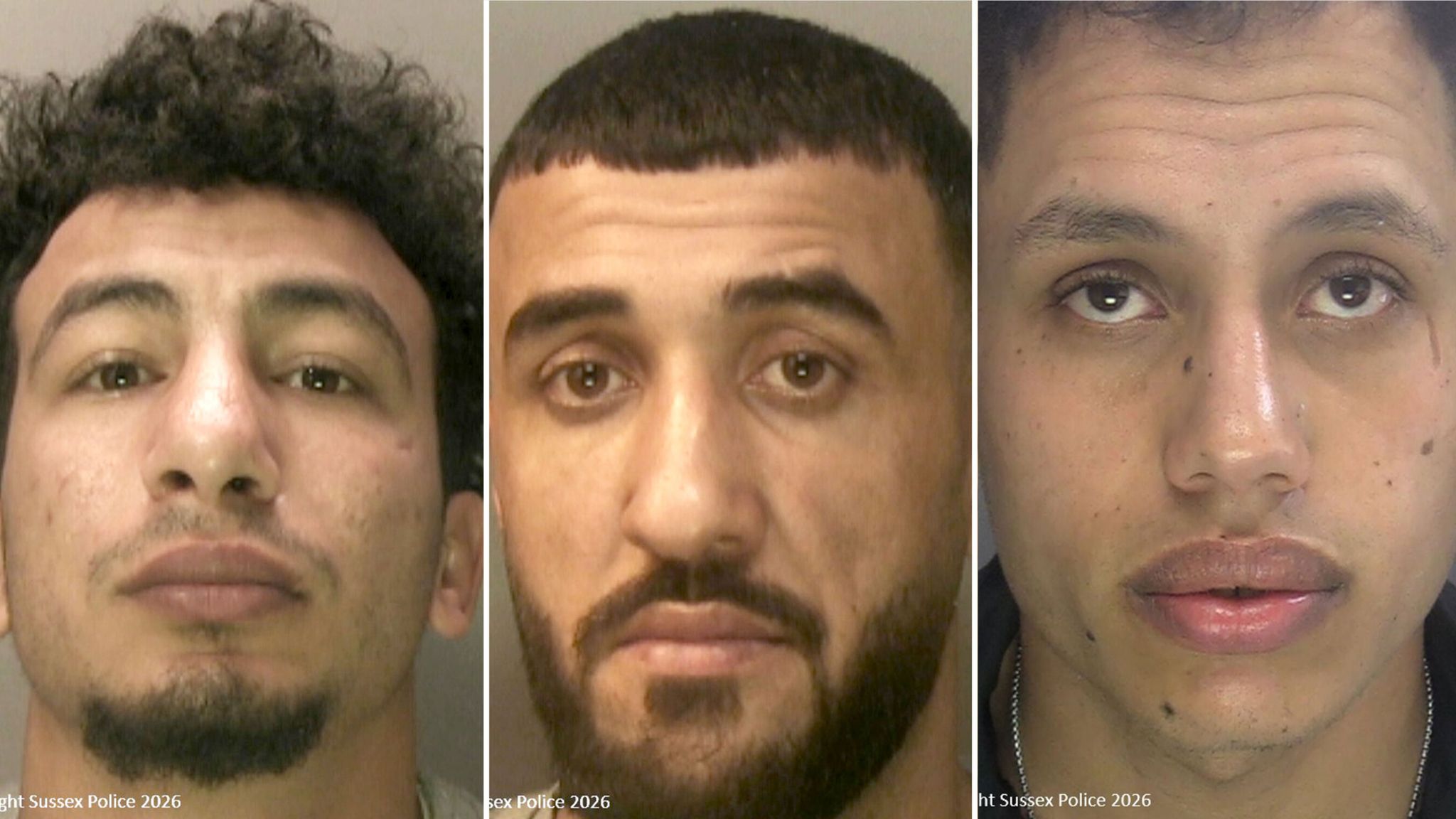
In a harrowing case that unfolded at Hove Crown Court, two asylum seekers have been found guilty of repeatedly raping a woman on a Brighton beach, while a third man—allegedly convicted of murder in Egypt—filmed the assault. The verdicts, delivered after five weeks of trial and over 12 hours of jury deliberation, exposed a chilling episode of predatory violence against a vulnerable woman.
The Assault on Brighton Beach
The victim became separated from her friends during a night out. The court heard she was found “staggering in the street,” alone and “incapacitated,” making her an easy target for the three men. Ibrahim Alshafe, 25, from Egypt, and Abdulla Ahmadi, 26, from Iran, forcibly took her behind a beach hut where they subjected her to multiple rapes. Moments later, Karin Al-Danasurt, 20, also Egyptian, arrived and recorded the attack on video.
Despite vehement denials that the encounter was non-consensual—claiming the woman approached them and engaged willingly—the jury rejected their defense. The victim’s testimony described the assault as violent and degrading. She recounted being spat on, slapped, kicked, and having her throat grabbed, with the attackers laughing throughout. The footage shown in court depicted her falling to the ground twice, underscoring her incapacitated state during the attack.
Alshafe was seen in the video smiling and sticking his tongue out, a disturbing display of callousness. Meanwhile, Al-Danasurt, who claimed he was attempting to stop the assault by filming it, was found guilty of all four counts of rape as a secondary participant due to his role in encouraging and documenting the violence.
Legal Proceedings and Evidence
The prosecution, led by Hanna Llewellyn-Waters KC, described the attack as “cynical, predatory and callous,” emphasizing that the defendants saw the victim merely as “meat” for their gratification. The woman, visibly emotional during her testimony, stated, “It wasn’t consensual… they are evil and they have ruined my life.” She also revealed the torment of reliving the assault, saying, “It’s the filmer’s face I see every time I close my eyes, laughing at me.”
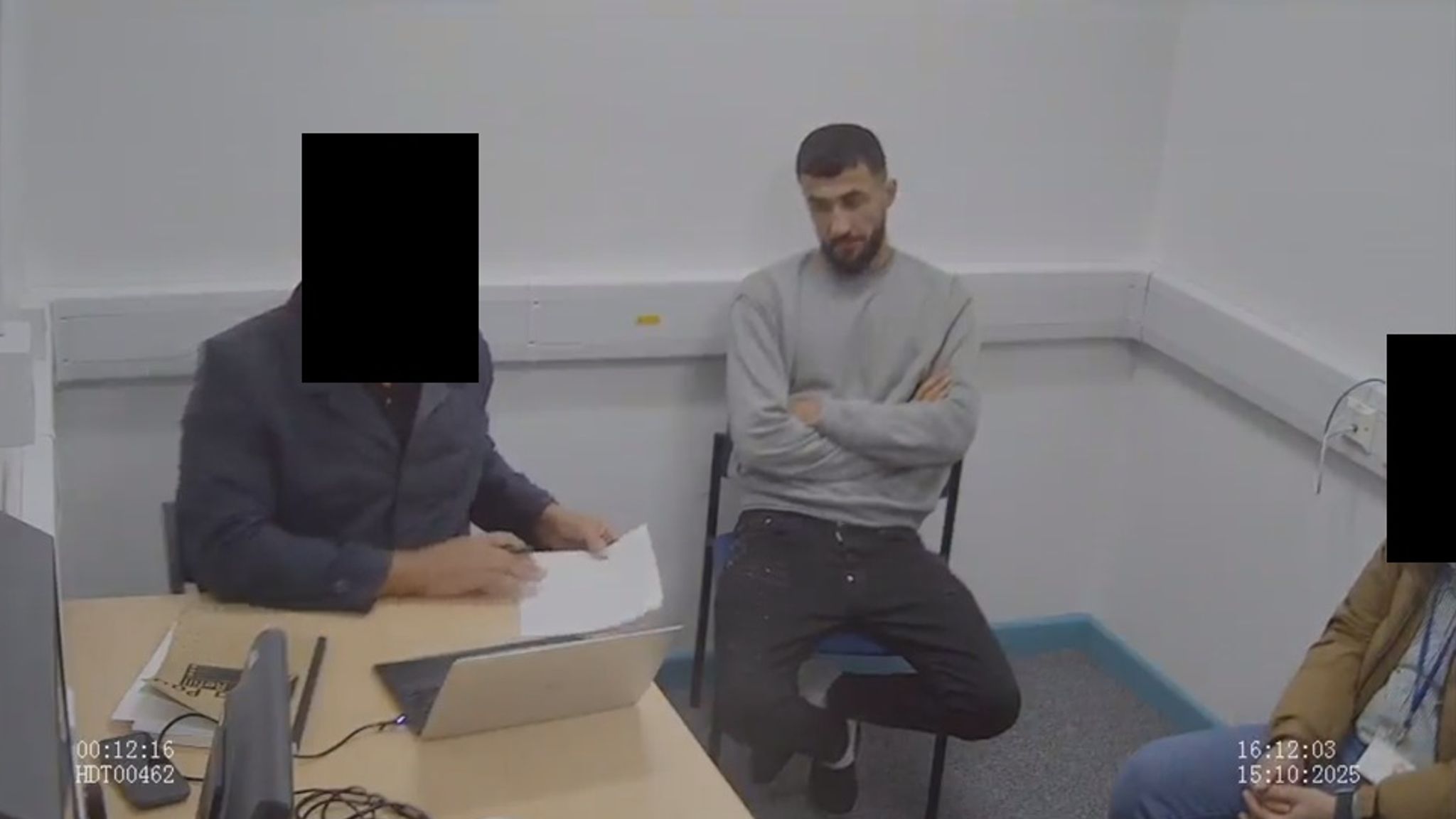
The victim’s police interview, recorded shortly after the incident, painted a grim picture of her ordeal. She described waking up on the beach, fearing for her life, overwhelmed by voices she could not control. Moments after escaping the men, she found her friends and was “wailing and hysterical,” visibly traumatized.
Crucial evidence included CCTV footage from a nearby nightclub where the men scanned their IDs upon entry. This footage helped identify the suspects, who were subsequently arrested. DNA samples from Alshafe and Ahmadi matched those taken from the victim, confirming their involvement. Al-Danasurt’s DNA was inconclusive, but his role in filming the attack cemented his guilt.
Background of the Defendants and Sentencing
The court revealed that all three men were asylum seekers living in hotel accommodation near Horsham, West Sussex. Alshafe and Ahmadi had arrived in the UK via France on a small boat in June 2025, while Al-Danasurt had entered the country in October 2024.
Controversy surrounded Al-Danasurt’s past when prosecutors alleged he had a murder conviction in Egypt. However, the judge later removed this evidence after his defense argued the conviction belonged to his brother, not him.
The three men are scheduled for sentencing on 15 July at the same court. Following sentencing, Border Security and Asylum Minister Alex Norris confirmed the Home Office will seek to deport the convicted men.
Why This Case Matters
Detective Chief Superintendent Richard McDonagh praised the victim’s courage in coming forward, acknowledging the strength it took to report the crime and endure a lengthy investigation. He emphasized the importance of ensuring safety for women and girls, stating, “Women and girls should be able to feel safe in public and in private, at any time of the night or day.”
While Brighton remains a city that prides itself on safety and inclusivity, this brutal attack serves as a stark reminder of the ongoing challenges law enforcement and communities face in protecting vulnerable individuals from predatory offenders.
Bringing these perpetrators to justice highlights the critical role of vigilance, support for victims, and robust legal action in combating sexual violence. As the sentencing approaches, communities await a firm response that reinforces the message: such crimes will not be tolerated.
Looking Ahead
This case underscores the necessity for continued investment in public safety measures, victim support services, and thorough immigration and asylum protocols. It also reveals how quickly vulnerable individuals can fall prey to exploitation, especially when alone or impaired.
As the UK government moves to deport these men post-sentencing, the case raises broader questions about asylum screening, integration, and community safety—topics likely to remain in the national conversation.
The victim’s resilience and the swift actions of police and prosecutors demonstrate that while such crimes are devastating, justice can prevail when survivors are supported and perpetrators are held accountable.