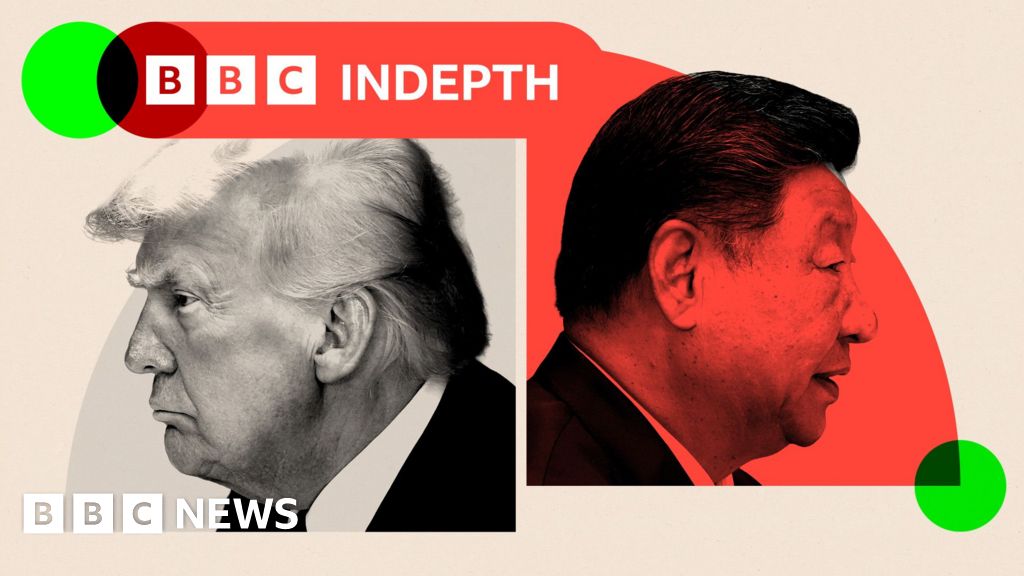
The upcoming visit of Donald Trump to China arrives amid a tense backdrop of US-Taiwan-China relations, with potential to shape diplomatic dynamics for the foreseeable future. After the US announced an $11 billion arms deal with Taiwan last December—provoking strong backlash from Beijing—Trump’s contrasting stance on Taiwan’s security has sparked debate over America’s true commitment to defending the island.
What’s Behind the US-Taiwan-China Tensions?
Last year, the US government inked an $11 billion arms agreement with Taiwan, a move interpreted by China as a provocative challenge to its claim over the island. China views Taiwan as a breakaway province and has consistently condemned any foreign military support for the island as interference in its internal affairs.
In contrast, Trump has publicly downplayed the likelihood of the US engaging militarily to defend Taiwan. He has repeatedly suggested that President Xi Jinping considers Taiwan to be a part of China, framing the issue as a matter for China’s leadership to decide.
Trump’s remarks reveal a pragmatic, if controversial, approach: “He considers it to be a part of China,” Trump said of Xi. “That’s up to him, what he’s going to be doing.” This stance diverges from previous US administrations’ more explicit commitments under the Taiwan Relations Act, which obligates the US to provide Taiwan with defensive capabilities.
Adding complexity, Trump has accused Taiwan of not fairly compensating the US for its security guarantees. He criticized Taiwan for failing to “give us anything,” while also imposing a 15% tariff on Taiwanese goods last year. Furthermore, Trump has accused Taiwan of stealing semiconductor technology from the US, reflecting ongoing economic and technological tensions.
Diplomatic Signals Ahead of the Visit
As Trump prepares for his China trip, the Taiwan issue remains a focal point for both sides. Senator Marco Rubio, a prominent voice in US foreign policy, confirmed that Taiwan will be discussed during the visit. However, Rubio emphasized the importance of avoiding new tensions between the US and China over the island.
“We don’t need any destabilizing events to occur with regards to Taiwan or anywhere in the Indo-Pacific,” Rubio said, highlighting the mutual benefits of maintaining stability in the region for both superpowers.
China, for its part, has signaled that Taiwan is a non-negotiable priority. Chinese Foreign Minister Wang Yi expressed hope that the US would make “the right choices” during a recent phone call with Rubio, underscoring Beijing’s insistence on respect for its territorial claims.
In recent months, Beijing has intensified military pressure on Taiwan, conducting nearly daily sorties of warplanes and naval vessels around the island. This show of force aims to deter Taiwan’s pursuit of independence and challenge US influence in the Indo-Pacific.
Why This Matters: The Stakes for Global Stability
The Taiwan issue encapsulates one of the most sensitive flashpoints in US-China relations. How Trump navigates this during his visit could set the tone for years, influencing not only bilateral ties but the broader strategic balance in the Indo-Pacific.
A peaceful approach could reduce the risk of military escalation and foster cooperation on other contentious matters like trade and technology. Conversely, missteps or ambiguous commitments risk emboldening either side to take aggressive actions, destabilizing the region and complicating global security.
For Taiwan, the visit represents a critical moment. The island’s security and international standing hinge on how the US and China manage their rivalry. Taiwan’s semiconductor industry, vital to global supply chains, adds another layer of economic significance to these geopolitical calculations.
Ultimately, Trump’s visit is more than a diplomatic event—it is a test of how the world’s two largest economies can manage one of the most volatile territorial disputes of the 21st century. The outcomes will reverberate well beyond Asia, shaping international relations and economic partnerships worldwide.