

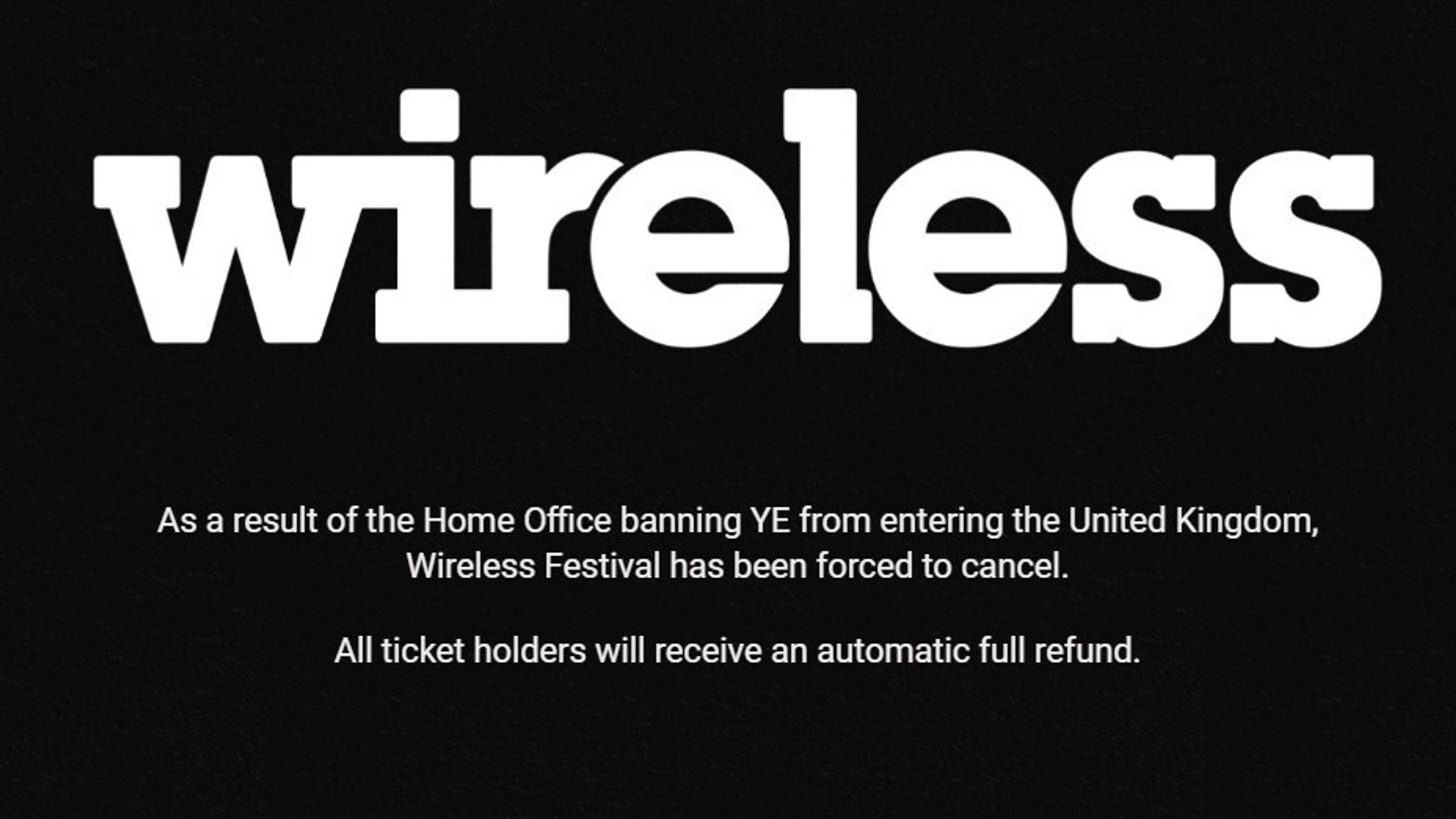
The 2024 Wireless Festival in London has been abruptly cancelled following the UK government’s decision to deny rapper Kanye West, also known as Ye, entry into the country. This unprecedented move came amid widespread backlash against the festival’s choice to book West as the headliner for all three nights, sparking intense controversy over his recent antisemitic remarks and public conduct.

Government Blocks Kanye West Over Public Safety Concerns
The UK Home Office withdrew West’s electronic travel authorisation (ETA), officially barring him from entering the country. Officials cited that his presence “would not be conducive to the public good,” a phrase used in government policy to justify banning foreign nationals whose presence could lead to public disorder or harm community cohesion.
This ban arrived after West’s series of highly controversial actions and statements. Over the past year, he has faced heavy criticism for antisemitic comments, including promoting Nazi symbolism and posting offensive social media content. His accounts have been repeatedly suspended or removed by various platforms.
Festival organisers from Festival Republic confirmed the cancellation shortly after the government announcement. They explained that tickets sold during the presale phase – released just hours earlier – will be fully refunded. Their statement read: “The Home Office has withdrawn Ye’s ETA, denying him entry into the United Kingdom. As a result, Wireless Festival is cancelled and refunds will be issued to all ticket holders.”
Widespread Backlash and Sponsor Withdrawals
The festival’s cancellation followed mounting pressure from multiple quarters. Major sponsors such as Pepsi, Rockstar Energy, and Diageo pulled their support in the days leading up to the event, citing concerns over associating with West amid his ongoing controversies.
Political leaders and community groups also condemned the booking. Prime Minister Keir Starmer publicly denounced the decision to invite West, tweeting: “Kanye West should never have been invited to headline Wireless. This government stands firmly with the Jewish community, and we will not stop in our fight to confront and defeat the poison of antisemitism.”
Phil Rosenberg, president of the Board of Deputies of British Jews, welcomed the government’s intervention but expressed regret that the situation escalated to this point. He stated, “Wireless has now been cancelled, but it should never have reached this point. The situation could and should have been resolved much earlier.” Rosenberg emphasized that music festivals must remain inclusive spaces free from individuals who have a history of promoting hate and division.
Festival Republic’s Response
Festival Republic revealed that they had consulted “multiple stakeholders” before booking West and that no concerns were raised at that time. They reiterated their condemnation of antisemitism, describing it as “abhorrent” and acknowledged the profound impact of West’s statements on communities affected.
In a statement attributed to West, he expressed a desire to change and to meet members of the UK Jewish community “in person, to listen.” He admitted that “words aren’t enough” and pledged to demonstrate change through actions. Nevertheless, many critics remained unconvinced of his intentions.
Legal Grounds for the Ban and What It Means
The Home Office holds discretionary power to refuse entry to foreign nationals if their presence is deemed harmful to “the public good.” This authority typically addresses serious concerns such as national security threats, extremism, or criminal conduct. In West’s case, the government acted swiftly after initially granting his ETA online, with ministers intervening to reverse the decision following the escalating controversy.
This decision sets a significant precedent, highlighting the government’s willingness to intervene in high-profile cultural events when public safety and social harmony are at risk. It also sends a clear message that hate speech and extremist views will not be tolerated, even when they come from globally influential figures.
Why This Matters
The Wireless Festival cancellation underscores the growing scrutiny on artists’ social and political stances, especially when their actions have the potential to fuel division or hatred. Music festivals have long been celebrated as spaces of celebration, diversity, and unity. Booking decisions now face increased responsibility to consider the broader societal impact beyond commercial appeal.
For the UK music industry, this episode serves as a cautionary tale about vetting artists and gauging public sentiment. It also reflects broader societal demands for accountability and respect toward minority communities, particularly in an era marked by rising concerns over hate speech and discrimination.
While West’s future in the UK remains uncertain, the Wireless Festival’s cancellation marks a pivotal moment where cultural institutions, government policies, and community values intersect. It highlights that public safety and social cohesion take precedence over entertainment when these values are at risk.
Full details about any future plans for the Wireless Festival or West’s potential return to the UK have not yet been released.