The United Kingdom has deployed three of its four nuclear-armed submarines at sea, underscoring the nation’s ongoing commitment to maintaining a continuous at-sea nuclear deterrent. This significant operational posture reflects the strategic importance the UK places on its submarine-based defense capabilities amid evolving global security challenges.
Current Status of the UK’s Nuclear Submarine Fleet
The UK operates a fleet of four Vanguard-class submarines, each equipped with Trident ballistic missiles capable of delivering nuclear warheads. These submarines form the backbone of the country’s nuclear deterrent, ensuring that at least one is always on patrol to provide an unbroken deterrent presence.
At present, three of these submarines are deployed at sea, actively patrolling the oceans. This deployment rate is notably high, illustrating the Royal Navy’s operational tempo and readiness to respond swiftly to any threats. The remaining submarine is likely undergoing maintenance, refit, or preparation for future patrols—a routine but essential part of ensuring the fleet’s reliability and stealth.
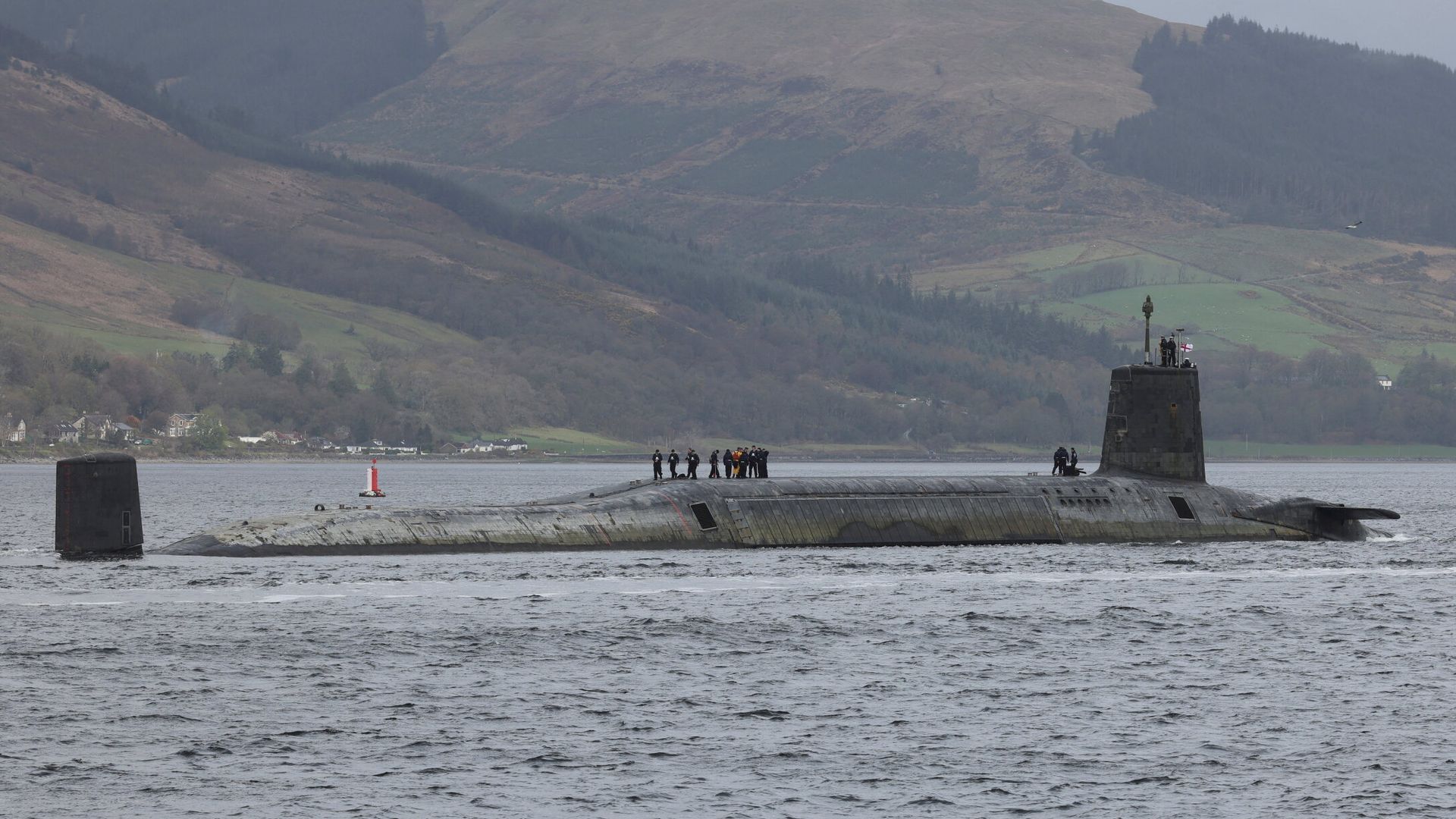
This level of deployment maintains the UK’s policy of continuous at-sea deterrence (CASD), which has been a cornerstone of British defense strategy since the 1960s. CASD guarantees that the nuclear deterrent is always ready to respond, ensuring national security through the principle of assured retaliation.
Why Continuous At-Sea Deterrence Matters
Continuous at-sea deterrence is crucial because it guarantees that the UK can respond to any nuclear threat instantaneously. Having multiple submarines at sea complicates potential adversaries’ calculations, reducing the risk of a successful first strike against the UK’s nuclear forces. The stealth and mobility of these submarines make them difficult to detect, further enhancing deterrence.
The deployment of three out of four submarines at once signals the UK’s commitment to maintaining a credible and reliable nuclear deterrent in an increasingly unpredictable global security environment. Rising tensions between major powers, alongside emerging nuclear threats, reinforce the importance of keeping the submarines operational and on patrol.
The Royal Navy invests heavily in training, technology, and maintenance to ensure these submarines remain among the most advanced and survivable nuclear deterrents in the world. This readiness supports the UK’s broader defense posture and its obligations within NATO, where the country plays a key role in collective security.
What This Means for UK National Security and Future Defense Strategy
Deploying three of four nuclear submarines simultaneously demonstrates the operational capacity and resilience of the UK’s nuclear deterrent. This posture reassures allies and signals to potential adversaries that the UK’s strategic capabilities remain robust and credible.
Looking ahead, the UK plans to replace its Vanguard-class submarines with the new Dreadnought class, expected to enter service in the early 2030s. These next-generation submarines will carry the Trident missile system forward with enhanced stealth, endurance, and technological improvements, ensuring the UK’s nuclear deterrent remains effective well into the future.
Maintaining a high operational tempo with the current fleet also provides critical experience and data that will inform the development and deployment of the Dreadnought submarines. This continuity is vital for national defense and for upholding international commitments to strategic stability.
In summary, the deployment of three nuclear deterrent submarines at sea highlights the UK’s unwavering dedication to safeguarding its security through continuous at-sea deterrence. This strategy remains a fundamental pillar of British defense, adapting to contemporary threats while preparing for future challenges.