

In the remote wilderness of southeast Alaska, a colossal natural disaster unfolded last summer—a megatsunami wave of unprecedented scale crashed through a fjord after a massive mountain collapse. This cataclysmic event has been confirmed as the second tallest megatsunami ever recorded, underscoring the escalating dangers linked to climate change and melting glaciers in the region.
The Unfolding of a Gigantic Natural Catastrophe
During the early hours of a summer morning, a staggering 64 million cubic meters of rock—roughly equivalent to the volume of 24 Great Pyramids—plummeted from a mountainside into the waters of Tracy Arm Fjord. This sudden landslide generated an enormous wave that soared to nearly 500 meters in height, sweeping through the fjord with devastating force.
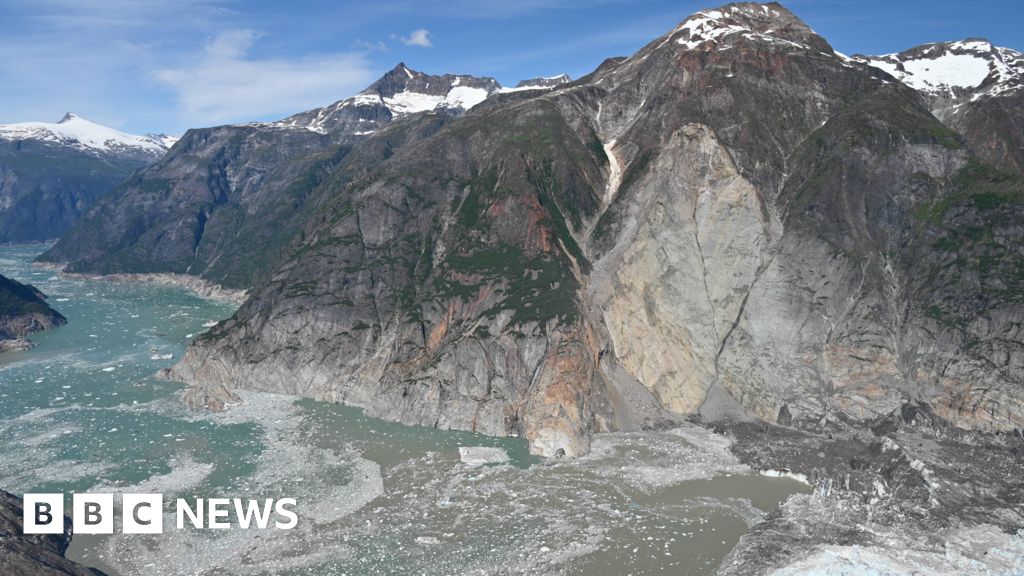
The event initially escaped widespread attention, occurring in a remote and sparsely populated area. However, a recent scientific investigation has brought the disaster into sharp focus, revealing the immense power unleashed when the mountain gave way. Experts now recognize this wave as a towering giant, second only to the infamous megatsunami recorded in Lituya Bay, Alaska, in 1958, which reached approximately 524 meters.
Scientific Insights and Environmental Implications
Geologists and climate scientists emphasize that this megatsunami was not merely a geological curiosity but a stark warning about the increasing instability of mountainous regions affected by climate change. As glaciers retreat due to rising global temperatures, the structural integrity of adjacent rock faces weakens, raising the risk of massive landslides.
Dr. Bretwood Higman, a prominent Alaskan geologist who conducted on-site surveys following the disaster, described the situation as “a close call.” He noted that the timing of the slide—early morning hours—likely prevented a far greater tragedy, as tourist cruise ships often navigate the fjord during daylight. “We know that there were people that were very nearly in the wrong place,” Higman remarked. “I’m quite terrified that we’re not going to be so lucky in the future.”
The geological community is now urgently studying the event to better understand how melting glaciers contribute to slope destabilization. This knowledge is critical for assessing future risks not only in Alaska but in similar glacial fjord systems worldwide.
Why This Megatsunami Matters
The implications of this megatsunami extend beyond the immediate destruction in Tracy Arm Fjord. It highlights the complex interplay between climate change, glacial retreat, and geological hazards. Rising temperatures accelerate glacier melt, which can undermine the stability of surrounding rock formations, setting the stage for catastrophic landslides and giant waves.
For communities and industries operating in glacier-fed fjords—such as tourism, fishing, and shipping—the event serves as a grim reminder of nature’s unpredictability and power. It underscores the necessity for enhanced monitoring of vulnerable landscapes and the development of early warning systems to protect lives and infrastructure.
Moreover, this disaster prompts a reevaluation of safety protocols for cruise ships and other vessels navigating similar environments. With climate change expected to increase the frequency of such events, preparedness becomes not just prudent but essential.
Looking Ahead: Preparing for a Changing World
As glaciers continue to recede globally, regions like southeast Alaska face heightened geological hazards that demand urgent scientific attention and public awareness. Researchers are calling for comprehensive studies to map unstable slopes, monitor glacier dynamics, and model potential tsunami impacts to mitigate future risks.
Dr. Higman’s warning resonates as a call to action: without proactive measures, humanity may not be so fortunate next time. The 2023 Alaska megatsunami stands as both a testament to nature’s raw power and a harbinger of the challenges posed by a warming planet.
In the face of these evolving threats, understanding the causes and consequences of such megatsunamis is crucial. It empowers communities, governments, and industries to adapt and respond effectively, safeguarding lives and preserving the fragile environments of our planet’s most spectacular yet vulnerable landscapes.