The 2026 Met Gala witnessed a striking moment of contrast when Indian model Bhavitha Mandava arrived in an outfit that defied conventional expectations. In an event renowned for its extravagant displays and theatrical fashion statements, Mandava’s carefully crafted ensemble ignited a complex discussion around cultural representation and minimalist expression on one of the world’s biggest fashion stages.
A Met Gala Look That Challenges Excess
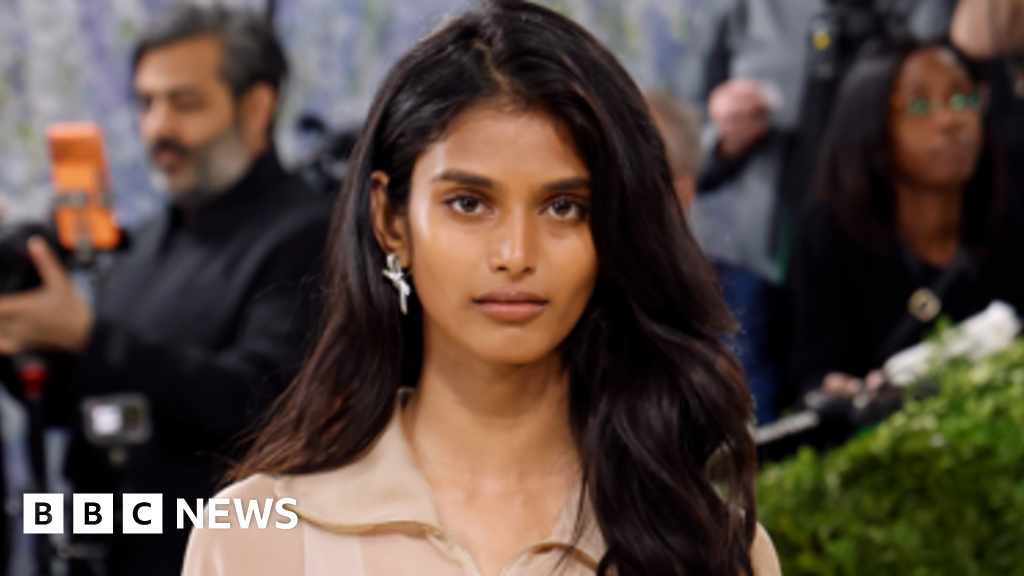
At first glance, Mandava’s outfit seemed deceptively simple. She wore a sheer zip-up jacket paired with what appeared to be low-slung jeans—an unconventional choice amid the towering gowns and dramatic silhouettes that typically dominate the red carpet. Yet this apparent simplicity was a deliberate design decision.
Fashion insiders soon revealed that the “denim” was not denim at all. Instead, it was silk muslin, expertly printed and tailored to imitate denim’s texture and appearance. This subtle detail highlighted the meticulous craftsmanship behind the look. The outfit’s restrained color palette and minimal design stood in stark contrast to the usual Met Gala spectacle, making a quiet but powerful statement.
This juxtaposition sparked divided reactions. Some hailed Mandava’s look as a refreshing, understated twist on the event’s usual flamboyance—a bold, elegant refusal of excess. Others felt the outfit lacked the grandeur expected at the Met Gala, interpreting it as an undersell of the moment.
The Cultural Debate: Indian Representation in Global Fashion
The discourse around Mandava’s Met Gala appearance quickly extended beyond fashion critics to a broader cultural conversation, particularly within Indian media and social platforms. Coverage oscillated between praise for her minimalist approach and criticism that the choice might reflect deeper issues of how Indian identity is portrayed on international stages.
Social media amplified these debates, probing how Indian representation is often simplified or stereotyped when showcased globally. Mandava’s look became a symbol for ongoing discussions about cultural authenticity versus global fashion narratives. Some observers questioned whether Indian models are expected to conform to certain aesthetic norms or if their heritage is genuinely celebrated.
Mandava herself has spoken about this dynamic, describing her career as part of “culture renegotiating itself.” Her presence at the Met Gala, along with prior milestones like major runway appearances and luxury brand campaigns, contributes to evolving perceptions of Indian beauty and style in the global fashion industry.
Bhavitha Mandava: From Rising Star to Cultural Icon
At just 26 years old, Bhavitha Mandava has rapidly ascended from relative obscurity to a prominent figure in international fashion. In less than two years, she has become one of the most closely watched new faces, with her trajectory reflecting broader shifts in diversity and representation within the industry.
Beyond her role as a model, Mandava embodies an understated confidence that challenges the notion that high fashion must always be loud or ostentatious. Her style evokes a sense of effortless grace, shaped by experiences far removed from the glamour of runways and exclusive photo shoots. This authenticity resonates with many who see her as a fresh voice redefining what it means to represent Indian culture on a global platform.
Why This Moment Matters
Bhavitha Mandava’s Met Gala appearance is more than a fashion statement; it is a lens into ongoing conversations about identity, representation, and cultural expression in the fashion world. Her choice to embrace minimalism at an event known for maximalism challenges audiences to rethink traditional notions of glamour and visibility.
This moment also underscores the evolving role of Indian models in global fashion narratives. As the industry grapples with diversity and inclusivity, figures like Mandava serve as catalysts for reimagining how culture and fashion intersect. The debate her outfit sparked reflects broader societal questions about authenticity, respect, and the power of visual storytelling.
Looking ahead, Mandava’s career will likely continue to influence how Indian heritage is integrated into mainstream fashion, encouraging nuanced portrayals that move beyond clichés. Her Met Gala look serves as a reminder that sometimes, subtlety carries the loudest message.
In an era when representation is continually renegotiated, Bhavitha Mandava stands at the forefront—quietly reshaping both style and cultural discourse with every appearance.