

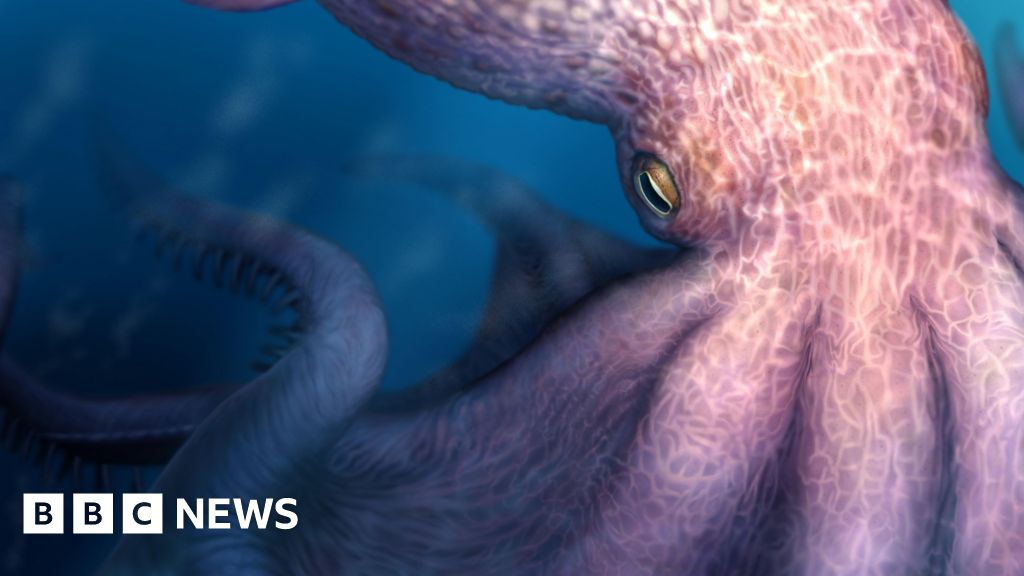
Imagine an octopus stretching nearly 19 metres across, prowling the prehistoric seas with crushing jaws and powerful tentacles. This giant marine predator challenges our understanding of ancient ocean ecosystems and reveals a world where colossal cephalopods ruled the depths. While the fossil record offers tantalizing clues, many mysteries about this enormous creature remain unsolved.
The Enigmatic Giant of the Ancient Seas
Fossils uncovered by paleontologists paint a picture of a massive octopus-like animal, far larger than any modern relative. This prehistoric behemoth possessed formidable arms and a jaw capable of crushing hard prey, suggesting it occupied a top predator role in its environment. Despite these insights, scientists still grapple with fundamental questions about its anatomy and behavior.
Details such as the exact body shape, fin size, and swimming speed remain speculative. Without complete fossilized soft tissue, researchers rely on indirect evidence and comparisons with modern cephalopods to reconstruct its appearance and lifestyle. This uncertainty fuels ongoing debate about how this giant octopus navigated and hunted in its ancient habitat.
Diet and Hunting Strategies: A Predator’s Puzzle
One of the biggest gaps in knowledge involves the giant octopus’s diet. No fossils have been found with preserved stomach contents, leaving paleontologists to infer feeding habits from related species and fossilized prey remains.
Dr Nick Longrich, a paleontologist at the University of Bath, suggests that this colossal octopus likely preyed primarily on ammonites—spiral-shelled marine creatures abundant in prehistoric oceans. Ammonites would have provided a substantial and rewarding food source for such a powerful predator.
However, much like modern octopuses, this ancient giant was probably an opportunistic hunter. Its intelligence, indicated by a relatively large brain, combined with its physical prowess, would have made it a versatile predator. It likely targeted a wide range of prey, including fish and smaller marine reptiles, taking advantage of any opportunity to feed.
Why This Discovery Matters
This giant octopus offers a rare glimpse into the complexity of ancient marine ecosystems. Understanding its role helps scientists reconstruct predator-prey dynamics and the evolutionary pressures that shaped cephalopod development. Its combination of brute strength and intelligence illustrates an evolutionary path parallel to modern octopuses, highlighting the long history of sophisticated hunting strategies in the ocean.
The discovery also challenges assumptions about the maximum sizes of soft-bodied marine animals in the past. It expands our appreciation for the diversity of life forms that once thrived beneath the waves, many of which have no direct modern analogues.
Published recently in the journal Science, this research marks a significant step forward but underscores how much remains to be learned. As Dr Longrich notes, “It’s going to take a while before we figure this thing out.” Each new fossil find could unlock further secrets about this giant of the deep and its place in Earth’s prehistoric oceans.
Looking Ahead: The Hunt for More Clues
Future fossil discoveries will be crucial in piecing together the life history of this extraordinary octopus. Researchers hope to find specimens that preserve soft tissues or stomach contents, which could confirm dietary habits and refine reconstructions of its anatomy.
Advances in imaging technology and comparative anatomy will also aid in unraveling how this giant moved, hunted, and interacted with other marine predators. Such insights will deepen our understanding of both ancient and modern cephalopods, shedding light on evolutionary trends that continue to influence marine life today.
Ultimately, this 19-metre octopus stands as a reminder of the ocean’s vast and mysterious history—a realm where giants once ruled and nature’s ingenuity flourished in forms both alien and awe-inspiring.