Former U.S. President Donald Trump has publicly expressed his support for a reunified Ireland, stating he would “love to see” the island united once again. Trump went further to assert confidently that Irish reunification “is going to happen eventually,” signaling his belief that the political and territorial division between Northern Ireland and the Republic of Ireland is ultimately unsustainable.
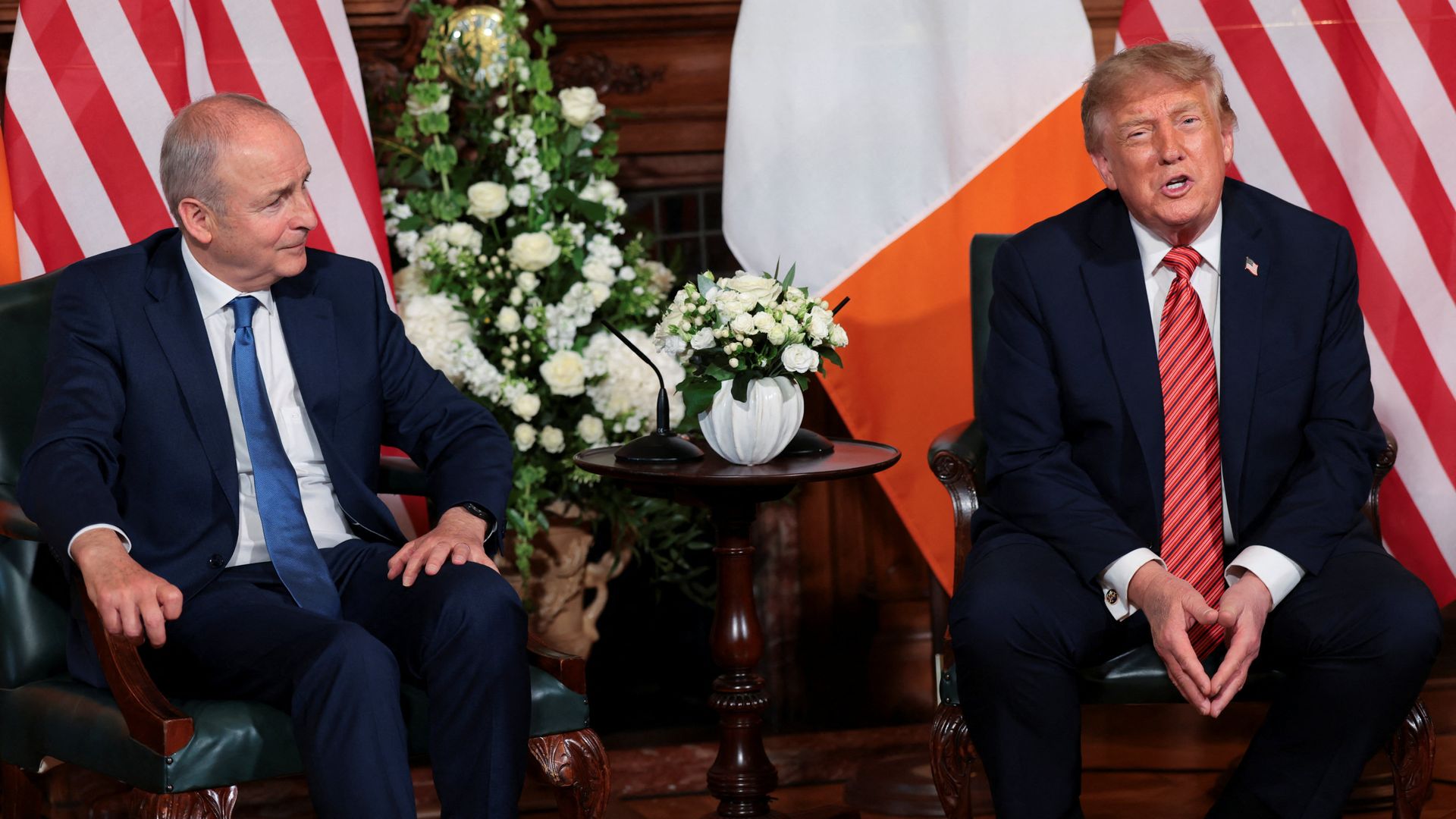
Trump’s Vision for Irish Reunification
Donald Trump’s comments come amid ongoing discussions about the future of Northern Ireland, which remains part of the United Kingdom, while the Republic of Ireland is an independent nation. The border between the two has long been a contentious issue, especially in the wake of Brexit and the subsequent political and economic challenges it has introduced.
Trump’s statement reflects a perspective that Irish reunification is not merely a political possibility but an eventual reality. Though he did not outline a specific timeline or political roadmap, his remarks suggest that the pressures and evolving identities on the island may drive the north and south toward reunification over time.
The topic of Irish reunification is deeply complex, involving sensitive historical, cultural, and political factors that have shaped relations for over a century. The island was partitioned in 1921, creating Northern Ireland as part of the UK and the Republic of Ireland as an independent state. Since then, efforts to reconcile the two have faced significant challenges, including sectarian conflict known as The Troubles, which lasted from the late 1960s to 1998.
Context: Why Irish Reunification Matters Now
In recent years, the question of Irish reunification has gained renewed attention, particularly due to Brexit. The UK’s departure from the European Union complicated the Irish border issue, threatening the fragile peace established by the 1998 Good Friday Agreement. This agreement was instrumental in ending decades of violence, relying heavily on an open border between Northern Ireland and the Republic.
Many political groups in Northern Ireland, such as Sinn Féin, have intensified calls for a referendum on reunification, arguing that Brexit has shifted public opinion toward joining the Republic of Ireland. Conversely, unionist parties remain committed to Northern Ireland’s status within the UK, highlighting the deep divisions that persist.
Trump’s endorsement of Irish reunification adds a high-profile voice to the debate. While the former president does not hold current political power in the region, his comments could influence public discourse and underscore the international interest in the island’s future.
What This Means for Ireland and the UK
Trump’s assertion that Irish reunification “will happen eventually” may resonate with those advocating for a united Ireland, but it also raises questions about the timing and mechanism for such a change. The Good Friday Agreement allows for a referendum on reunification if a majority in Northern Ireland supports it, but no such vote has occurred yet.
The implications of reunification are profound. It would reshape the political landscape of the British Isles, affect economic ties, and require complex negotiations on citizenship, governance, and international relations. The United Kingdom and the Republic of Ireland would need to collaborate closely to manage a transition that respects the identities and aspirations of all communities.
For many in Northern Ireland, the prospect of reunification is both hopeful and contentious. Community relations, economic stability, and cultural heritage all factor into the debate. Trump’s remarks may encourage renewed dialogue but also underscore the challenges ahead.
Looking Ahead: The Future of the Irish Question
While Donald Trump’s comments highlight a belief in the inevitability of Irish reunification, the path forward remains uncertain. Political consensus, public support, and international diplomacy will all play critical roles in determining if and when the island will reunite.
As discussions continue, the world watches closely. The future of Ireland’s political status carries significant implications not only for its citizens but also for broader questions of sovereignty, identity, and peace-building in Europe.
Ultimately, Trump’s statement serves as a reminder that the question of Irish reunification remains a live and evolving issue—one that continues to inspire passionate debate and careful consideration across the island and beyond.