A devastating explosion at a bustling railway station in the southern Russian city of Volgograd has claimed the lives of 15 people and injured dozens more, shaking the region with a stark reminder of ongoing security challenges. Authorities have identified the perpetrator as a female suicide bomber, a tragic figure intertwined with the violent insurgency gripping parts of Russia’s North Caucasus region.
What Happened in Volgograd
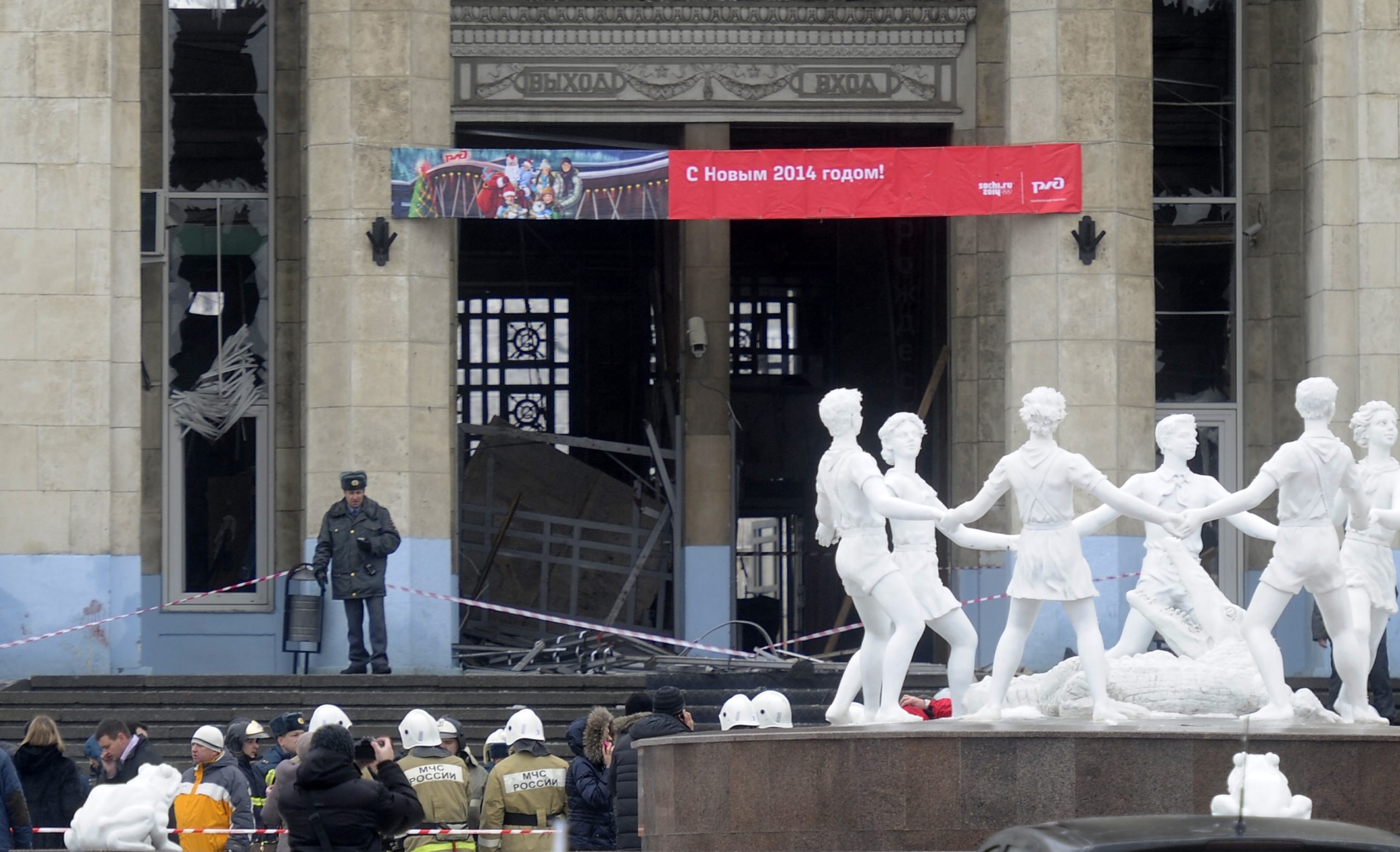
The attack unfolded at the main entrance of Volgograd’s central railway station, a vital transit hub serving over a million residents in this historically significant industrial city. The bomber, later named as Oksana Aslanova, detonated an explosive device just inside the entrance, near a metal detector, causing catastrophic destruction. Eyewitnesses described the scene as horrific, with shattered glass, twisted metal fragments, and numerous bodies scattered amidst the chaos. The powerful blast hurled some victims backward, while others scrambled in panic to escape the carnage.
One witness, identifying himself as Vladimir, recounted to Russian television: “I heard the blast and ran toward it. I saw melted, twisted bits of metal, broken glass and bodies lying on the street.” Another local, Valentina Petrichenko, who works at a store inside the station, said: “It was a very powerful blast. Some people started running and others were thrown back by the wave of the blast. It was very scary.”
Russian security officials have hinted at the possibility of a second attacker being involved, although details remain unclear. Regardless, the immediate response from President Vladimir Putin was swift and resolute. He instructed law enforcement agencies to take “all necessary measures” to prevent further attacks and to tighten security nationwide.
Federal police spokesman Vladimir Kolesnikov confirmed that security protocols would be significantly enhanced at major transportation hubs, including train stations and airports, in an effort to thwart future threats. This heightened vigilance reflects the escalating concern over militant activities targeting civilian populations.

Context and Connections to Regional Insurgency
The identity of the bomber sheds light on the complex and tragic human dimensions of the insurgency in Russia’s North Caucasus. Oksana Aslanova was reportedly a national of Dagestan, a republic that has been a hotspot for militant Islamist activity. She had been married twice to Islamist militants who were killed by Russian security forces, a personal history that aligns with the profile of so-called “black widows.”
“Black widows” are female suicide bombers who often seek revenge for the deaths of their husbands, becoming instruments of violent insurgency. They have played a notorious role in several high-profile terrorist attacks across Russia. For instance, in March 2010, black widows carried out coordinated bombings in the Moscow metro system, killing more than 35 people.
Aslanova is also believed to have trained alongside Naida Asiyalova, another female bomber who attacked Volgograd in October, killing seven. This pattern demonstrates a chilling continuity of militant operations in Volgograd, a city formerly known as Stalingrad and Tsaritsyn, that sits just 430 miles northeast of Sochi, the host city for the upcoming Winter Olympics.
The Threat to the Sochi Winter Olympics
The timing of the Volgograd bombing is particularly alarming given its proximity to the 2014 Winter Olympics scheduled to begin in Sochi in just weeks. Sochi lies approximately 430 miles southwest of Volgograd, near the volatile North Caucasus region where insurgent activity remains persistent. The attack has intensified concerns about security during the global sporting event, which has been a major priority for President Putin and the Russian government.
Sky News Moscow producer Yulia Bragina commented on the situation, emphasizing the gravity of the threat: “It’s very concerning with two months to go to the Sochi Olympics. The Russian security services are working 24/7 to make the Games safe for the sportsmen and people who want to visit the Olympics in Russia. There will be a big investigation into what has happened.”
In addition to the Volgograd bombing, a car bomb explosion in the southern city of Pyatigorsk, located 170 miles east of Sochi, killed three people shortly before the railway station attack. This string of violence underscores the persistent instability in the region despite intense security efforts.
Why This Matters
The Volgograd bombing highlights the ongoing threat posed by insurgent groups in the North Caucasus and their capacity to strike far beyond their traditional strongholds. It also illustrates the disturbing role of female suicide bombers in perpetuating cycles of violence, often motivated by personal loss intertwined with broader political and religious grievances.
This attack serves as a stark warning for the security environment leading up to the Sochi Olympics, placing immense pressure on Russian authorities to prevent any disruption of the international event. The insurgency led by figures such as Doku Umarov, a prominent militant leader, has explicitly targeted the Olympics, calling on militants to use “maximum force” to undermine the Games, a project deeply symbolic for the Kremlin’s image on the world stage.
For the people of Volgograd and Russia at large, the tragedy reinforces the urgent need for comprehensive counterterrorism strategies that address the root causes of militancy, while safeguarding public spaces from such devastating attacks.
As investigations proceed, the world will watch closely to see how Russia balances its security imperatives with the enormous task of hosting a peaceful, successful Winter Olympics. The resilience of Volgograd’s community and the effectiveness of law enforcement will be tested in the days and months to come.