

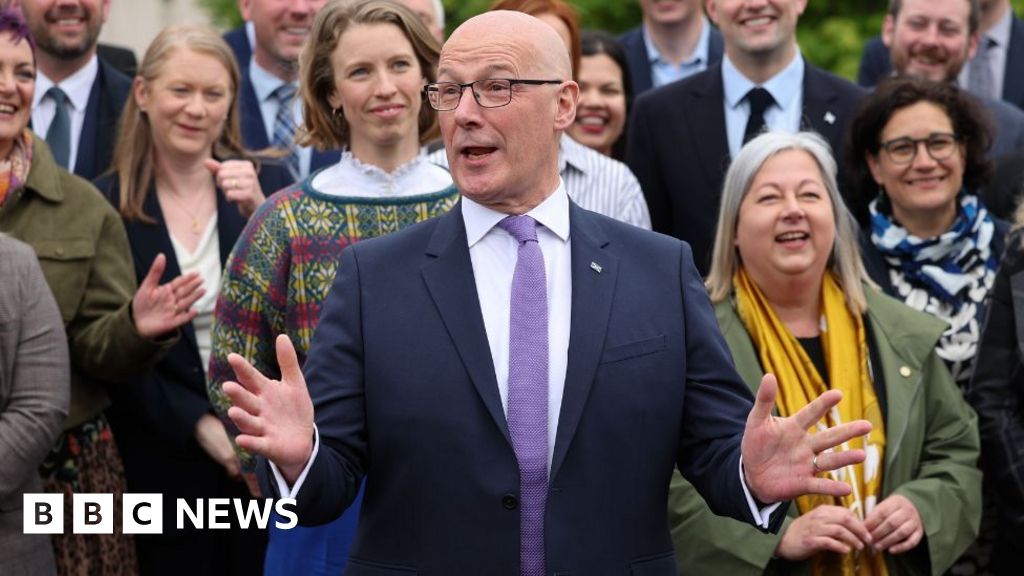
John Swinney, the leader of the Scottish National Party (SNP), has decisively ruled out engaging in talks with Reform UK representatives in Scotland, signaling a firm stance against the party’s growing influence across the UK. This move comes as Reform UK gains significant ground in local elections in England and Wales, intensifying the urgency of Scotland’s independence movement.
Why Swinney Rejects Reform UK Dialogue
Despite Reform UK’s expanding presence, particularly under the leadership of Malcolm Offord in Scotland, Swinney clearly stated that Offord would not be invited for any discussions with the SNP. This decision reflects deep ideological differences and a strategic effort to prevent Reform UK’s policies from gaining traction in Scottish politics.
Reform UK’s recent election successes in England and Wales have been eye-opening. In England, the party secured more than 1,400 council seats, marking a dramatic expansion of its grassroots support. Meanwhile, in Wales, Reform UK has become the second largest party in the Senedd, trailing only behind Plaid Cymru. These breakthroughs highlight Reform UK’s rising challenge to traditional party dynamics and have heightened concerns within the SNP leadership.
Swinney Sounds Alarm on Nigel Farage’s Influence
At a recent press conference, Swinney expressed grave concerns about the trajectory of Nigel Farage, the prominent political figure behind Reform UK. He warned that Farage was “galloping” toward Downing Street, suggesting that a Farage-led government could be “catastrophic” for the UK’s political stability and for Scotland’s future within the union.
To counter this threat, Swinney emphasized the necessity of uniting Scotland’s political forces to make the Scottish Parliament “fully Farage-proof.” This means empowering Scotland to determine its own constitutional future without interference from UK-wide political figures like Farage. Swinney stressed the importance of achieving this autonomy before 2029, when the next scheduled general election is expected to take place.
He highlighted a broader trend of constitutional change across the UK’s devolved nations, noting that after Plaid Cymru’s recent successes, all three—Scotland, Wales, and Northern Ireland—now have first ministers firmly committed to fundamental constitutional reform. This signals a growing momentum toward reshaping the United Kingdom’s political framework.
Renewed Drive for Scottish Independence
Swinney reaffirmed his commitment to securing Scottish independence, explaining that his primary goal remains winning an SNP majority in the Scottish Parliament. Such a majority would enable the party to break the current constitutional deadlock and push forward a second referendum on independence.
The SNP leadership views the current political landscape—marked by Reform UK’s rise and Farage’s ambitions—as a critical moment to advance their case for separation. Swinney’s refusal to engage with Reform UK representatives underscores the SNP’s determination to present a united front against UK-wide parties that oppose Scotland’s independence aspirations.
This strategy also reflects the SNP’s belief that Scotland should have the power to decide its constitutional future free from Westminster’s influence, especially if the UK government becomes dominated by figures hostile to Scottish autonomy.
What This Means for Scotland’s Political Future
The SNP’s rejection of talks with Reform UK and its intensified push for independence highlight the growing polarization in UK politics. With Reform UK gaining momentum in England and Wales, and nationalist parties consolidating power in devolved nations, the future of the United Kingdom’s constitutional arrangement appears increasingly uncertain.
Scotland faces a pivotal decision: either remain within a UK potentially led by Farage and Reform UK’s rising influence or pursue full sovereignty through another referendum. Swinney’s leadership signals a clear preference for the latter, viewing independence as the only viable path to protect Scotland’s political interests and values.
As these developments unfold, the coming years will be critical in shaping not only Scotland’s destiny but the broader direction of the United Kingdom itself. The SNP’s call for a “Farage-proof” Scotland encapsulates the urgency felt by many who see constitutional change as essential to preserving their nation’s future.
Full details on the SNP’s next steps and potential referendum timeline have not yet been released. However, the party’s firm stance against Reform UK and emphasis on independence set the tone for fierce political debates ahead.