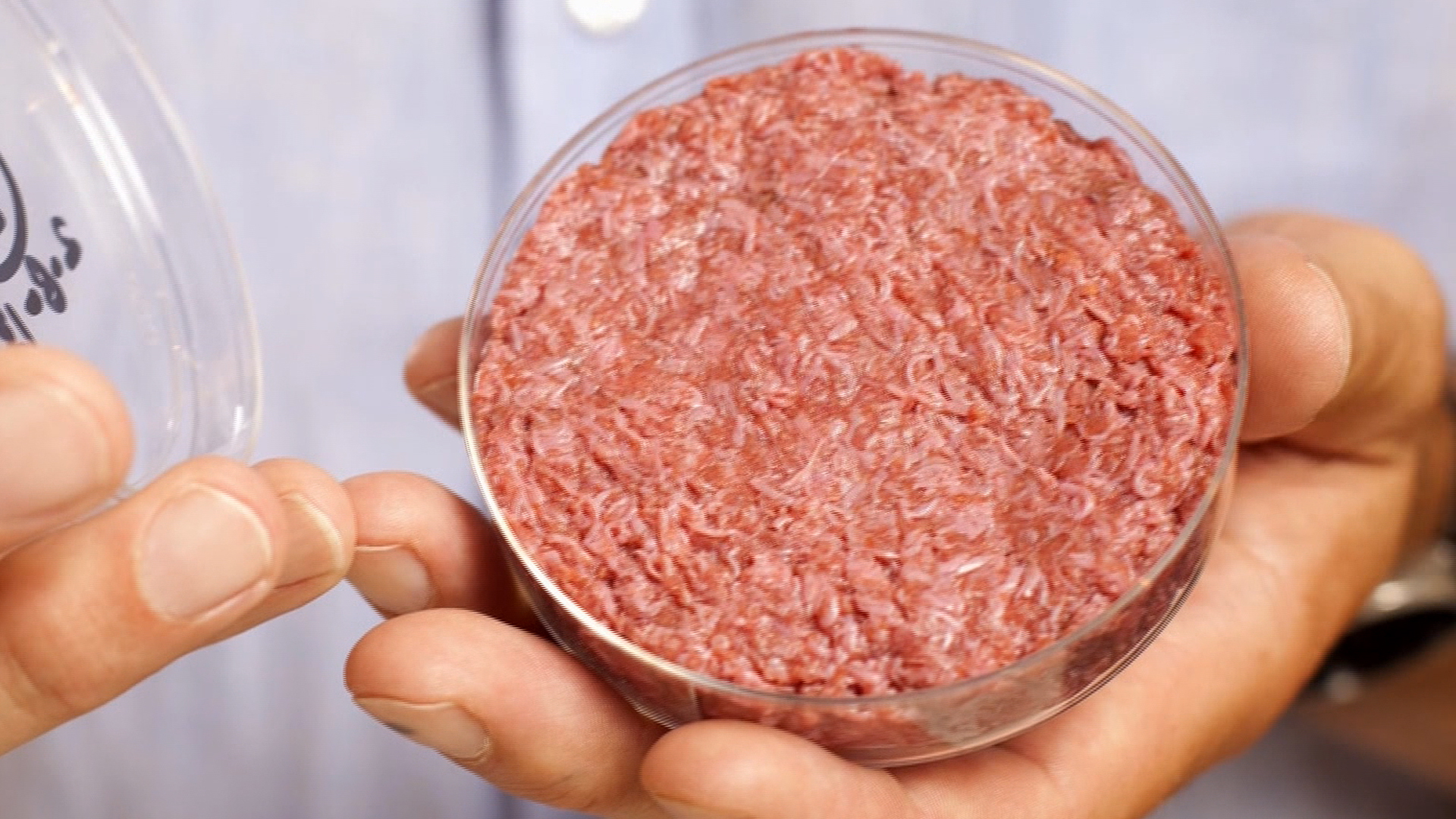
In a groundbreaking culinary experiment, two volunteers took the first-ever bites of a hamburger cultivated entirely in a laboratory setting. While the bite confirmed the texture closely resembled traditional meat, the flavor left the tasters wanting more. The absence of fat was a notable factor contributing to the burger’s comparatively muted taste.
The First Public Taste Test of Lab-Grown Meat
The hamburger, developed by a research team led by Mark Post at Maastricht University in the Netherlands, represents a pioneering step toward the future of meat production. The burger was the culmination of five years of intensive research aiming to grow real muscle tissue from animal cells without raising livestock. The process involved extracting muscle cells from two organic cows, then immersing these cells in a nutrient-rich solution to encourage growth into muscle strands. Nearly 20,000 of these tiny strands were meticulously assembled to form a single 140-gram patty.
On the day of the taste test, the patty was seasoned simply with salt, egg powder, breadcrumbs, red beet juice, and saffron to enhance its natural flavor without overshadowing the meat’s intrinsic qualities. The volunteers deliberately avoided condiments and toppings to focus exclusively on the meat’s taste and texture.
Among the tasters was Austrian nutritionist Hanni Ruetzler, who noted, “I would say it’s close to meat. I miss the salt and pepper.” She bypassed the bun and sliced tomatoes to concentrate on the patty itself. U.S. journalist Josh Schonwald echoed similar sentiments, observing, “The absence is the fat, it’s a leanness to it, but the bite feels like a conventional hamburger.” Schonwald added that it was one of the rare occasions he sampled a hamburger without the typical accouterments like ketchup, onions, or bacon.
__IMAGE_PLACEHOLDER_1__
Why Lab-Grown Meat Matters
The significance of this development extends far beyond the novelty of tasting artificially cultivated meat. The global demand for meat is projected to double by 2050, driven by rising incomes and population growth, especially in developing countries. Traditional livestock farming currently occupies approximately 70 percent of all agricultural land worldwide, exerting immense pressure on natural resources, contributing to deforestation, greenhouse gas emissions, and animal welfare concerns.
Mark Post envisions lab-grown meat as a sustainable alternative that could alleviate the environmental impact of conventional animal farming. The technology promises a future where the “look, feel, and taste” of meat can be replicated without the significant resource use and ethical dilemmas associated with raising and slaughtering billions of animals annually.
Sergey Brin, co-founder of Google and a notable supporter who funded the €250,000 ($330,000) project, appeared via video at the event. Brin emphasized his motivation rooted in animal welfare, expressing optimism about the scalability of cultured beef. “We’re trying to create the first cultured beef hamburger. From there I’m optimistic we can really scale by leaps and bounds,” he said. This backing from influential tech entrepreneurs highlights the growing intersection of biotechnology and innovative food production.
__IMAGE_PLACEHOLDER_2__
Scientific Challenges and Future Improvements
One of the primary critiques from the taste test was the lack of fat, which is critical for flavor and mouthfeel in meat products. Scientists, however, believe this is a surmountable hurdle. Stig Omholt, director of biotechnology at the Norwegian University of Life Sciences, explained that fat content can be engineered by coaxing some of the stem cells to develop into fat cells within the cultured meat. This approach not only promises improved flavor but could also yield healthier meat by controlling fat composition more precisely than conventional livestock.
Jonathan Garlick, a stem cell researcher at Tufts University who has developed similar tissue engineering for human skin, praised the innovation despite being a vegetarian himself. “I would be first in line to try this,” he remarked, underscoring the broad appeal and potential of lab-grown meat technologies across diverse communities.
Broader Implications and the Road Ahead
The support for lab-grown meat extends beyond scientific circles. Animal rights organizations like PETA have embraced the concept enthusiastically. Ingrid Newkirk, PETA’s president and co-founder, highlighted the ethical benefits: “As long as there’s anybody who’s willing to kill a chicken, a cow or a pig to make their meal, we are all for this.” She envisions a future where cloning a few cells could replace the slaughter of millions of animals each year.
Despite the excitement, experts caution that lab-grown meat products will initially be luxury items, accessible primarily to affluent consumers and early adopters. Isha Datar, director of New Harvest, an international non-profit promoting meat alternatives, noted, “The first lab-made meat products are going to be very exclusive. These burgers won’t be in Happy Meals before someone rich and famous is eating them.”
For now, only one patty was produced for the public taste test, and the volunteers each consumed less than half. Mark Post plans to take the leftovers home for his children, indicating a personal as well as professional commitment to the project’s future.
__IMAGE_PLACEHOLDER_3__
Looking Forward: What This Means for Food and the Planet
While the lab-grown hamburger still falls short of delivering the full flavor profile of traditional meat, this milestone signals a transformative shift in food production. The ability to culture meat outside of animals could revolutionize the agricultural industry, reducing environmental strain and improving animal welfare without forcing consumers to compromise on taste and texture.
As the technology advances, scientists anticipate enhancing the flavor by incorporating fat cells and refining the tissue structure. The scalability of lab-grown meat remains a challenge, but with continued investment and innovation, it could become a mainstream option within decades.
Ultimately, this first taste test is more than an experiment; it is a tangible glimpse into a future where sustainable, ethical, and environmentally friendly meat alternatives could reshape global diets and food systems for the better.