

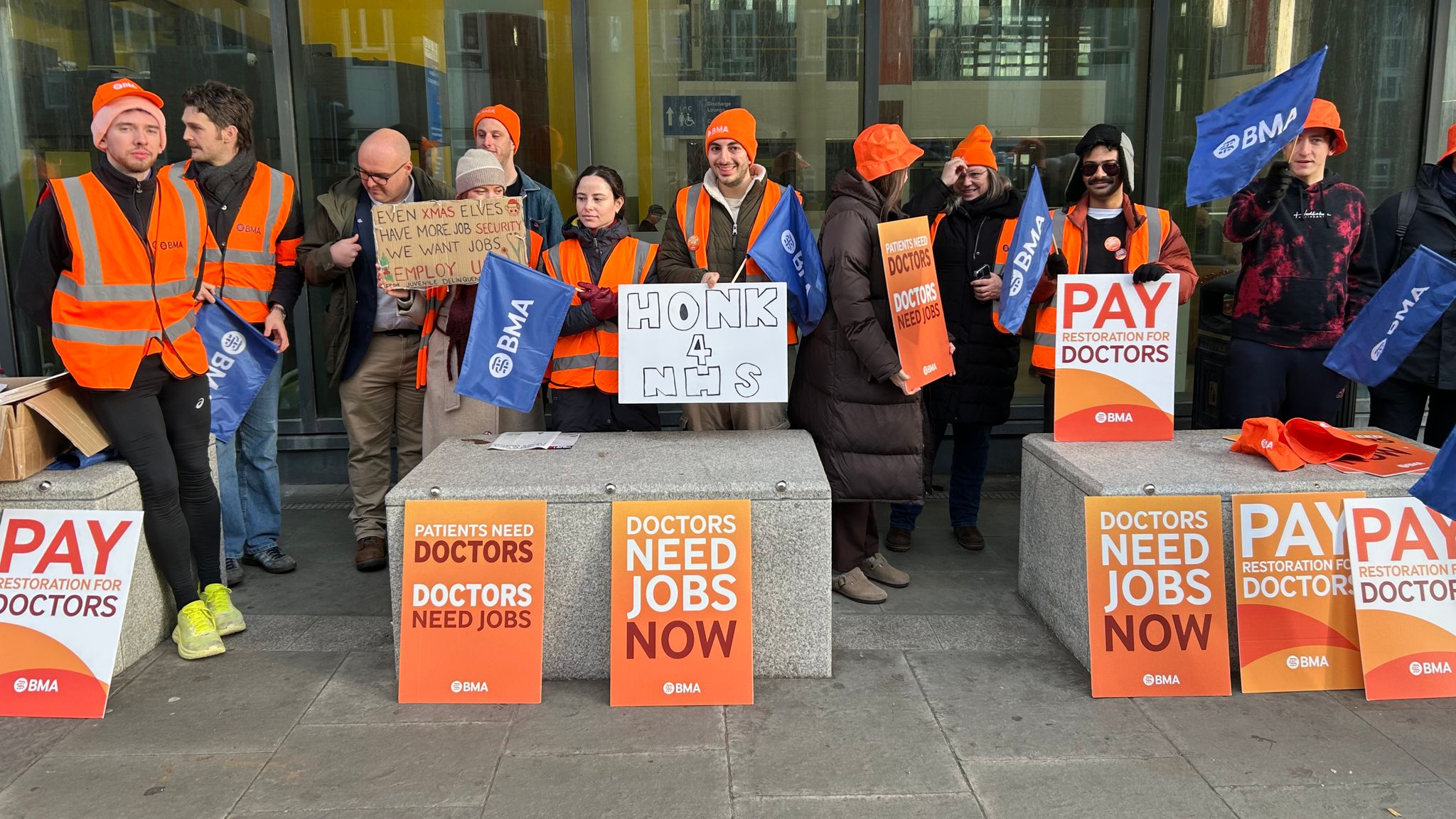
England braces for a major disruption as tens of thousands of resident doctors prepare to launch a six-day strike starting at 7am on Tuesday. The walkout, centered on demands for better pay and job security, threatens to unsettle hospital services nationwide and intensify a standoff between the government and medical professionals.
What’s Driving the Upcoming Strike?
The upcoming strike reflects deep-rooted tensions between the British Medical Association (BMA) and the government over how to address the challenges facing the National Health Service (NHS England). Resident doctors are pressing for improved compensation and assurances about their employment conditions amid concerns that current levels are unsustainable.
Though both sides publicly express hope for a resolution before the strike, behind closed doors negotiations have stalled, with accusations flying about trust breaches and shifting demands. The government’s recent move to retract previously agreed-upon specialty training positions—offered as part of a tentative deal—has further inflamed the dispute.
In response, the BMA charged the government with undermining its own commitment to restore the NHS to full operational capacity, highlighting the fragile state of ongoing talks.

Government and NHS Response: Strategies to Limit Impact
NHS England is mobilizing hospital teams across the country to mitigate the impact on patient care during the strike. Officials emphasize contingency plans to maintain essential services, but acknowledge that the scale of the walkout will inevitably cause disruption.
At the helm of NHS operations is Sir Jim Mackey, known for his pragmatic approach and tasked with fulfilling Labour’s manifesto pledge to reduce waiting times. Mackey has signaled a firm stance, stating he will find ways to keep the NHS functioning despite the strike action. His remarks suggest that NHS leadership is considering strict measures to limit operational paralysis.
Meanwhile, Prime Minister Rishi Sunak has stepped into the fray, issuing a 48-hour ultimatum that resulted in the government withdrawing extra specialty training places previously offered to the BMA. This hardline move reflects the escalating political stakes surrounding the dispute.
Escalation: Potential Expansion of Strikes to Senior Doctors
Further heightening tensions, the BMA has announced plans to ballot senior doctors—including consultants and specialty doctors—across England on industrial action. The formal ballot period is set from 11 May to 6 July 2026, with the possibility that senior doctors could join the strike alongside resident doctors.
If this occurs, the NHS could face an unprecedented simultaneous walkout involving nearly all hospital doctors. Such a scenario would overwhelm contingency efforts and severely disrupt hospital services across the country.
This move underscores the BMA’s determination to leverage broad medical staff support to compel the government to negotiate in good faith and address the workforce’s concerns comprehensively.
Why This Matters: The Future of NHS Workforce Stability and Patient Care
The looming strike highlights critical fault lines in the NHS’s ability to retain and fairly compensate its medical workforce amid increasing pressures. Pay disputes and job security concerns not only affect doctors but also have direct consequences for patient care quality and waiting times.
With the government and BMA entrenched in a bitter standoff, the risk of prolonged industrial action grows, threatening to exacerbate NHS backlogs and staff burnout. The outcome of this dispute will shape the future relationship between health professionals and policymakers, influencing recruitment, retention, and the overall resilience of the NHS.
As negotiations continue under intense public scrutiny, all eyes remain on whether both sides can reach a compromise that safeguards both doctors’ welfare and patients’ access to timely healthcare—or if the strike will mark a turning point toward deeper disruption.
Takeaway: The upcoming six-day strike by resident doctors signals a critical juncture for the NHS, revealing urgent challenges around pay, job security, and workforce morale. With the potential for senior doctors to join the action, the healthcare system faces a pivotal test of its capacity to balance staff demands with patient needs amid mounting political and operational pressures.