Imagine a robotic dragonfly that soars through the air with the grace of its living counterpart, all while navigating complex environments completely on its own. Dutch engineers have transformed this vision into reality by developing an autonomous flying robot that mimics the delicate motions of a dragonfly’s wings and possesses the intelligence to avoid obstacles mid-flight. This breakthrough represents a significant leap forward in micro aerial vehicle technology, combining ultra-lightweight design with advanced sensory and processing capabilities.
Design and Flight Capabilities of the Robotic Dragonfly
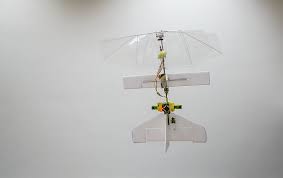
The robotic dragonfly, known as the DelFly, weighs barely more than a few sheets of paper, making it one of the lightest flying robots ever created. Its flight mechanism relies on flapping wings that replicate the intricate wing beats of a real dragonfly, allowing it to maneuver with exceptional agility and stability in the air. This biomimetic approach to flight provides advantages over traditional fixed-wing or rotor-based drones, particularly in confined or cluttered environments.
Equipped with two miniature on-board cameras, the DelFly continuously captures visual data from its surroundings. These cameras feed information to a tiny, yet powerful, on-board computer that processes the images in real time to detect potential obstacles. When the system identifies an obstruction in the drone’s path, the DelFly does not abruptly stop but instead follows a sophisticated avoidance algorithm.
Upon detecting an obstacle, the DelFly continues forward for a brief distance, which helps it maintain momentum, and then initiates a circular flight pattern around the object until it is no longer within the camera’s view. This behavior enables the robot to navigate around obstacles smoothly without requiring external control or intervention, effectively allowing it to explore unknown and dynamic spaces autonomously.
Additionally, the DelFly can perform an autonomous take-off sequence, launching itself into flight without human assistance. This feature enhances its operational independence and potential for deployment in scenarios where manual piloting is impractical or impossible.

Potential Applications Across Industries
Researchers from the Delft University of Technology in The Netherlands envision a diverse range of practical applications for the DelFly, leveraging its unique combination of light weight, autonomous navigation, and precise flight control.
One promising industrial use involves inspection tasks in environments that pose risks or are difficult to access for humans. For example, the DelFly could be deployed to monitor the structural integrity of buildings that are at risk of collapse. Its small size and maneuverability enable it to enter tight spaces and gather critical visual data without endangering human inspectors.
Similarly, factories with high ceilings and complex pipe networks often require regular maintenance inspections. The DelFly’s ability to navigate autonomously and avoid obstacles would make it an ideal candidate for examining piping systems or other elevated infrastructure efficiently and safely.
In agricultural settings, the DelFly could assist in greenhouse management by flying through rows of plants to detect ripe fruit. This capability could streamline harvesting operations, improve crop monitoring, and reduce labor costs by providing farmers with timely and accurate information.
Non-Industrial and Recreational Uses
Beyond industrial and agricultural sectors, the DelFly’s unique characteristics open doors for creative and recreational applications. For example, it could be used to stream live aerial video from parties, concerts, or outdoor events, offering new perspectives and enhancing audience engagement. Its unobtrusive size and autonomous flight make it suitable for capturing dynamic scenes without the need for bulky equipment or extensive piloting skills.
Why This Innovation Matters
The creation of the DelFly represents more than just a novel robotic toy; it signals important progress in the field of autonomous micro drones. Achieving obstacle avoidance in such a lightweight, bio-inspired flying machine requires overcoming significant engineering challenges, including miniaturizing sensors and processors, developing efficient flight mechanics, and programming reliable autonomous behaviors.
These advances could pave the way for a new generation of flying robots capable of operating in environments previously inaccessible to drones. The DelFly’s capacity to explore unknown spaces without human guidance could revolutionize inspection, monitoring, and data collection in hazardous or confined locations, improving safety and operational efficiency across multiple industries.
Moreover, the robotic dragonfly exemplifies how biomimicry, drawing inspiration from nature’s designs, can lead to innovative technological solutions. By emulating the flight patterns and sensory systems of dragonflies, researchers have created a flying robot that not only functions effectively but also inspires future developments in robotics and aerial exploration.
Looking Ahead
As autonomous flying robots like the DelFly continue to evolve, their integration into everyday applications will likely expand. Continued research and development will focus on enhancing flight duration, improving sensor accuracy, and enabling more complex autonomous behaviors. Ultimately, these robotic insects could become indispensable tools in fields ranging from infrastructure maintenance and agriculture to entertainment and environmental monitoring.
The DelFly is a compelling example of how cutting-edge robotics, combined with nature-inspired engineering, can unlock new possibilities for exploration and functionality in the skies above us.