

Authorities face intense scrutiny following a large-scale protest in Dover, where hundreds of black-clad, masked demonstrators blocked key roads to voice opposition against illegal migration. The police response has come under fire amid reports that officers were caught off guard by the scale and coordination of the protest, raising serious questions about preparedness and public safety.
The Dover Protest: What Happened?
The protest erupted with hundreds of participants dressed in black and wearing masks, creating a striking and intimidating presence on the streets of Dover. The demonstrators deliberately blocked major roads, disrupting traffic and drawing significant public attention. Their focus was to oppose illegal immigration, a contentious issue that has sparked heated debate across the UK.
Eyewitness accounts describe the protest as highly organized, with demonstrators moving strategically to maximize disruption. The black attire and masks added a layer of anonymity, making it difficult for law enforcement to identify individuals and manage the crowd effectively.
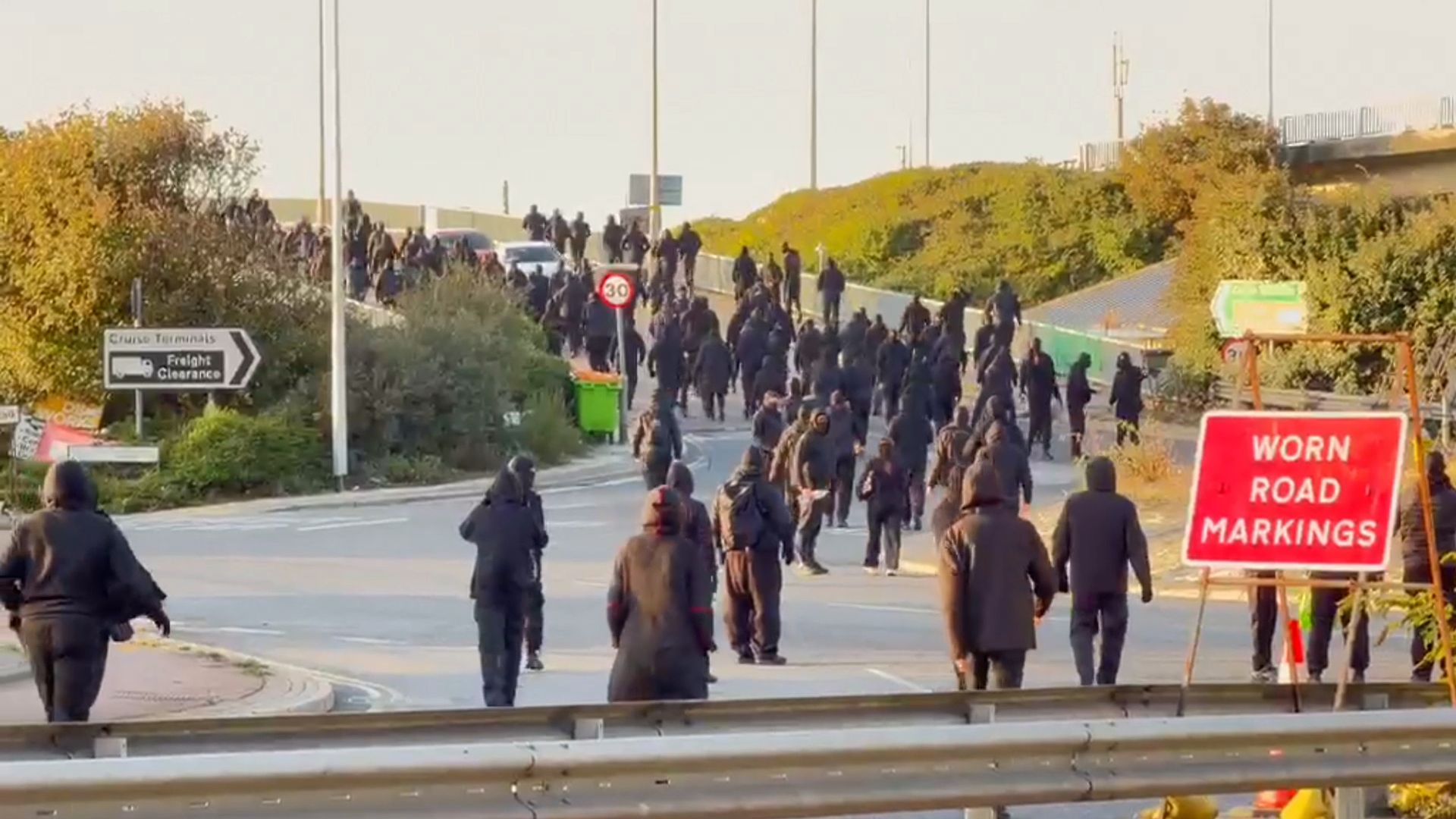
Despite the scale and visibility of the event, police appeared unprepared for the intensity and coordination displayed by the protesters. Critics argue that the authorities’ delayed and seemingly reactive approach allowed the demonstrators to control the area for an extended period, creating safety risks for residents and commuters.
Controversy Surrounding Police Preparedness
The police response is now under close examination, as questions mount over whether adequate intelligence and resources were deployed in advance. The fact that officers seemed caught off guard has fueled concerns about communication and planning within law enforcement agencies responsible for the Dover area.
Local officials and community leaders have demanded a full review of the incident, emphasizing the need for robust strategies to handle similar protests in the future without compromising public order or safety.
Adding to the controversy, an associate of Tommy Robinson, a well-known far-right activist, reportedly appeared to claim credit for organizing or influencing the protest. Robinson has long been a polarizing figure in debates surrounding immigration and law enforcement, and his alleged involvement has intensified scrutiny of the entire event.
Why This Matters: Broader Implications for Law Enforcement and Public Order
The Dover protest is not an isolated incident but part of a wider series of demonstrations addressing immigration policy in the UK. How police respond to these events can set precedents affecting public trust, safety, and future protest management.
Effective policing requires balancing the right to protest with the need to maintain order, protect citizens, and prevent violence or disruption. The apparent shortcomings in the Dover response highlight the challenges law enforcement faces in navigating this complex terrain.
Furthermore, the involvement—or perceived involvement—of figures associated with far-right activism adds another layer of complexity. It raises concerns about the potential for protests to be co-opted by extremist elements, complicating police efforts to maintain neutrality and fairness.
Looking Ahead: What Comes Next?
Authorities are expected to conduct thorough investigations into the police response, with potential reforms aimed at improving intelligence gathering, crowd control tactics, and communication strategies. Community engagement will be critical in rebuilding trust and ensuring that law enforcement agencies can effectively manage protests without exacerbating tensions.
The situation also underscores the need for clear policies addressing the influence of extremist groups in public demonstrations. As immigration remains a flashpoint issue, law enforcement and policymakers must prepare for ongoing challenges to public order.
Ultimately, the Dover protest serves as a stark reminder of the evolving nature of civil unrest in the UK and the pressing need for adaptive, well-coordinated responses to safeguard communities and uphold democratic rights.
Full details of the police review and any subsequent actions have not yet been released.