Former British Prime Minister Sir John Major delivered a scathing critique of Donald Trump’s handling of the conflict with Iran, accusing the former US president of bypassing essential diplomatic protocols and warning of lasting consequences across the Middle East. At the same time, Sir John condemned Labour leader Sir Keir Starmer for adopting a “demeaning” and overly cautious approach toward Trump, describing it as “tiptoeing” around the volatile American leader.
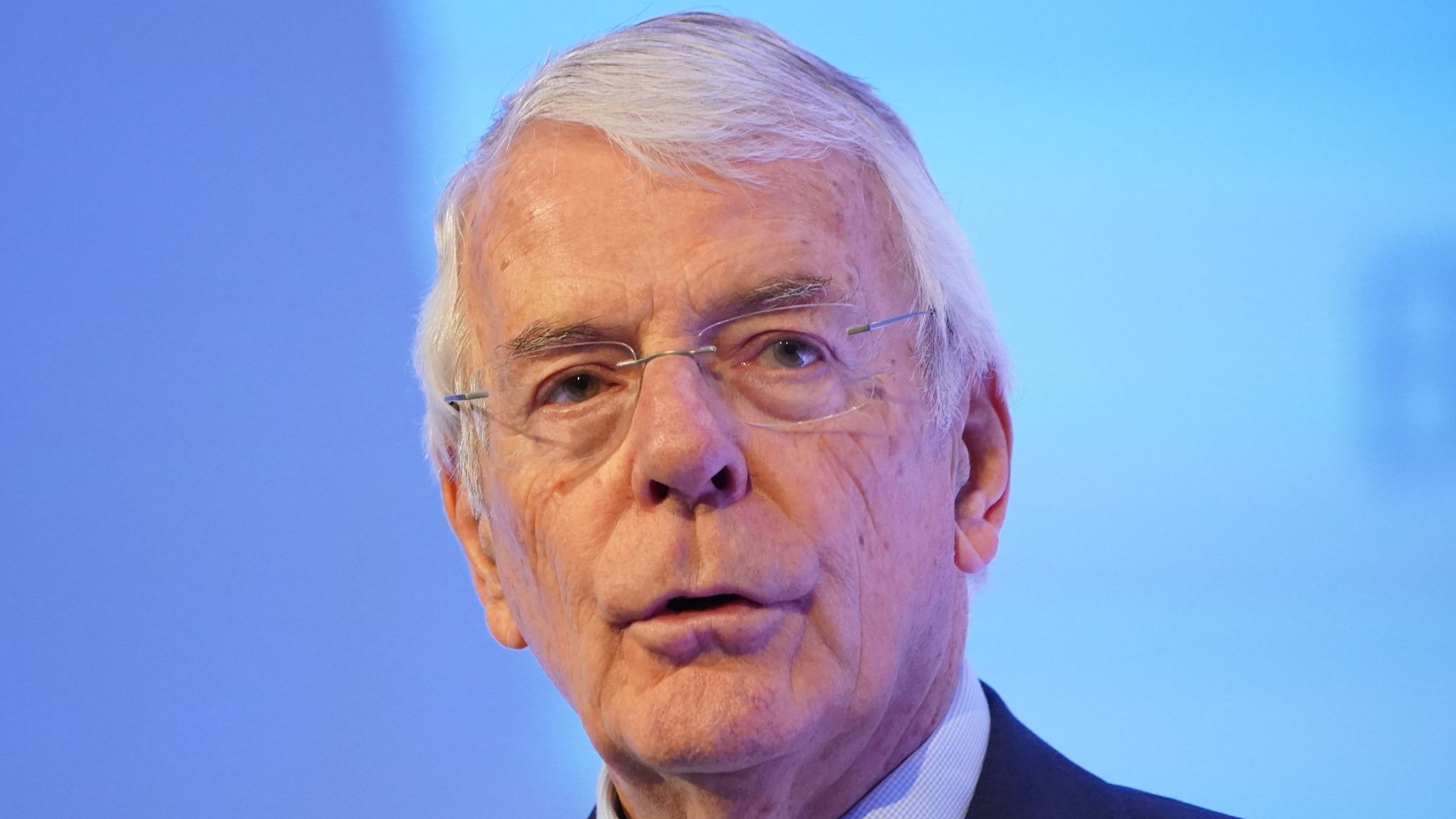
Trump’s Iran Strategy Faces Sharp Rebuke
Speaking at King’s College London during a lecture honoring former Prime Minister Clement Attlee, Sir John Major criticized the initiation of military action against Iran without seeking United Nations approval or consulting allied nations beyond Israel.
“There was no diplomatic attempt to obtain a UN resolution to give legality to the war,” he declared. “No nation—other than Israel—was even consulted.”
Sir John warned that the conflict would not simply end when the bombing stops. Instead, he predicted, “Old hatreds will linger. New hatreds will have been born. A new generation may have been radicalized. Retaliation may be deferred, but it is likely to come.”
He also highlighted the murky and shifting objectives of the Iran campaign, emphasizing that no clear exit strategy exists. “The president demanded surrender. He is unlikely to get it,” Sir John noted, underscoring the dangers of pursuing war without a defined plan.
Diplomacy vs. Military Action
Sir John contrasted the current approach with his own experience working alongside President George H.W. Bush during the 1990-91 Gulf War. He praised their frank and straightforward discussions, which he said are sorely lacking today.
“But today, there is a tendency to tiptoe around the president to avoid upsetting him,” Sir John observed. “Although I understand that, I do not agree with it.”
He warned that the UK risks degrading its sovereign standing by acting as a subordinate ally rather than an equal partner. “If we disagree with American policy, we should say so—as a friend that cares for the wellbeing of an ally. Statesmen do this in private—not in public.”
Condemnation of US Officials and NATO Relations
Turning his attention to recent remarks by US officials, Sir John denounced Vice President JD Vance and Defense Secretary Pete Hegseth for their “shameful” attacks on Europe and the NATO alliance.
He took particular issue with Vance’s claim that Europeans pose a greater threat to freedom than Russia, calling the assertion “offensive and absurd in equal measure.” Sir John firmly stated, “It was President Putin who sent Russian troops to invade Ukraine—not vice versa.”
Moreover, he criticized the stark contrast in treatment given to Ukraine’s President Volodymyr Zelenskyy and Russian President Vladimir Putin during their visits to Washington. While Zelenskyy was “ambushed” at the White House, Putin received a “red-carpet reception.”
Regarding NATO, Sir John highlighted Vance’s recorded statement expressing disdain for “bailing out Europe again” and Hegseth’s contempt for international law and “stupid rules of engagement.” He labeled such dismissiveness as a “shameful example for a lawmaker to set.”
A Shift in US Foreign Policy Tone
Sir John also criticized Trump’s broader approach to international relations, noting a “new tone from America” marked by unilateralism and protectionism.
“President Trump argues that America is being ripped off by trading partners and—without consultation—he raised tariffs on imports from wealthy and poor countries alike, friend or foe,” he said.
He pointed out Trump’s disregard for international norms through actions such as attempting to acquire Greenland—a territory belonging to a NATO ally—and minimizing the Russian invasion of Ukraine as solely “a problem for Europe.”
Implications for UK Politics and Brexit
Domestically, Sir John issued a stark warning against the rise of populist movements, implicitly referencing groups like Reform UK. He condemned “populist insurgents” who seek to divide society by exploiting grievances and scapegoating minorities based on race or religion.
“It is ugly politics that deserves no place in our country,” he said firmly. “So—if you rejoice at the dire polling of Labour and the Conservatives—beware of what you wish for.”
He also called on MPs who defect from their parties to trigger by-elections, emphasizing accountability in parliamentary democracy.
On Brexit, Sir John stated that the UK suffers economically, estimating losses of £100 million a year in trade and £40 billion in tax revenue. He warned that this damage is inflicting serious harm on the lives and livelihoods of British citizens.
Why This Matters
Sir John Major’s forceful critiques illuminate the risks of unchecked military action, the importance of maintaining strong diplomatic alliances, and the dangers of political divisiveness at home. His call for principled, honest dialogue between allies—balancing respect with frankness—resonates amid ongoing global tensions and shifting geopolitical dynamics.
For the UK, his warnings underscore the need to assert sovereign judgment while preserving vital international partnerships, especially with the United States and Europe. The future stability of global security and domestic cohesion depends on measured leadership that refuses to compromise core values or international law.
As the UK navigates uncertain waters—from Middle East conflicts to the fallout of Brexit—Sir John’s insights offer a timely reminder that leadership demands courage, clarity, and commitment to lasting peace and unity.