

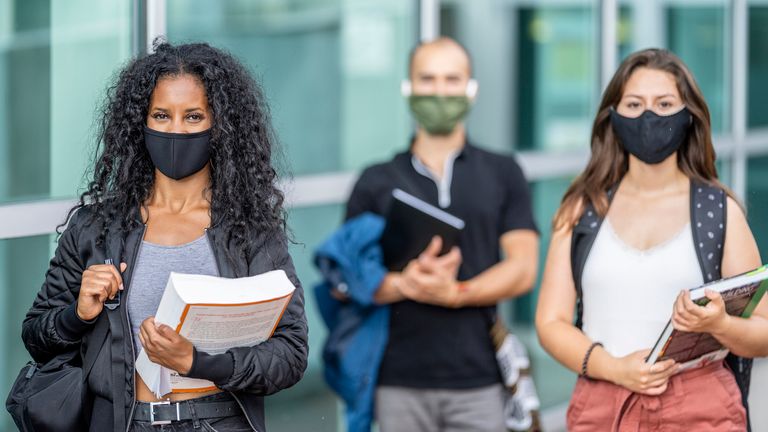
Thousands of students who endured an unprecedented shift in their university experience during the COVID-19 pandemic are now seeking financial redress for what they argue was a diminished educational service. Nearly 200,000 students across England and Wales have joined a collective legal action claiming compensation from their universities for the abrupt transition to online teaching and the loss of in-person resources they initially paid for.
Understanding the Student Group Claim
The Student Group Claim, spearheaded by the law firms Harcus Parker and Asserson Solicitors, challenges the value of university education delivered during the pandemic years. The claim asserts that because universities shifted their teaching online and restricted access to campus facilities, students received a service of lower quality than what their tuition fees promised. Under English consumer protection laws, the students argue they are entitled to compensation since they did not receive what they paid for.
The legal action began gaining traction in 2023 when an initial 100,000 students registered for the no win, no fee claim. That number has now surged to approximately 170,000, reflecting widespread student dissatisfaction. Pre-action legal letters outlining the claim have been sent to 36 universities, marking a significant escalation in the campaign.
However, it is important to note the specific scope of the claim. Currently, it covers only teaching that was moved online due to COVID-19 during the academic years 2020-21 and 2021-22 at English and Welsh universities. To qualify, students must have accepted their university offer before 1 April 2020. The claim does not extend to teaching moved online during the earlier 2019-20 academic year, nor does it address restrictions on campus facilities or teaching cancellations caused by industrial action.
The Catalyst: The UCL Settlement
One of the pivotal moments in this growing movement was the £21 million settlement agreement reached with University College London (UCL). Although UCL admitted no liability, the university acknowledged the challenges posed by the pandemic and the disruption to students’ education. This settlement served as a crucial test case, drawing national attention and prompting thousands more students to join the claim.
Asal Reyhanian, an associate at Asserson Law Offices, highlighted that the surge in student sign-ups following the UCL settlement demonstrated a strong desire to hold universities accountable for charging full fees despite delivering a service that many perceived as inferior.
The deadline for submitting claims related to COVID-19 educational disruption is set for September 2026, providing a clear timeframe for affected students to come forward.
What Compensation Is Being Demanded?
The Student Group Claim contends that fees for online degrees are typically 25 to 50 percent lower than those for in-person courses. As such, they argue universities should reimburse students for the difference in value. This demand is grounded in the principle that students paid for a comprehensive, on-campus experience, complete with face-to-face teaching and access to facilities, but instead received a significantly reduced offer.
Ms Reyhanian explained the rationale using a relatable analogy: “It is like paying for a five-star holiday and getting a one-star holiday. You are entitled to compensation.” She emphasized that the claim does not criticize universities for following government-imposed restrictions but rather questions the fairness of charging full tuition fees when the educational experience was substantially compromised.
Universities Involved and Their Response
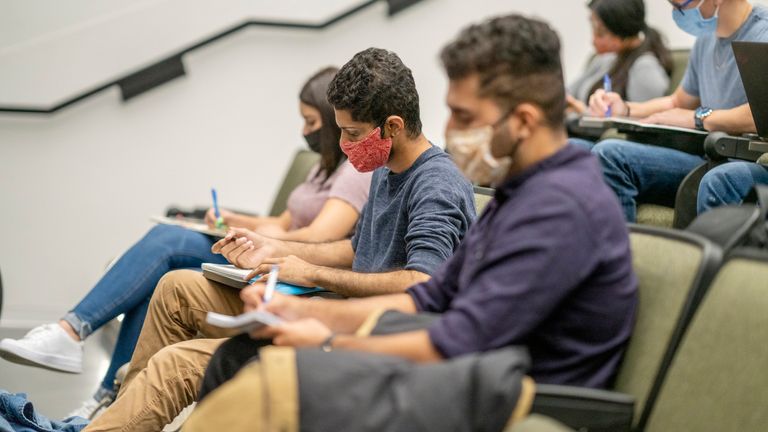
Following the UCL settlement, formal pre-action letters have been dispatched to 36 other universities, signaling the potential for further legal challenges across the higher education sector. These letters serve as official notices outlining the claim and requesting specific remedial actions before court proceedings may commence.
Universities UK, which represents over 140 institutions, acknowledged the unprecedented nature of the pandemic and the rapid adaptations universities had to implement. A spokesperson stated that during lockdowns, universities were prohibited from offering traditional in-person teaching and instead pivoted swiftly to online platforms to enable students to complete their courses.
Estimating Compensation Amounts
The amount each student may receive varies based on several factors, including the university attended, the fees paid, and how significantly their course relied on in-person elements such as labs, studios, or clinical placements. The Student Group Claim estimates that UK-resident undergraduates affected by the pandemic could claim an average of around £5,000 each.
It is important to understand that the law firms behind the claim operate on a no win, no fee arrangement. This means students face no upfront legal costs but will pay a percentage of any awarded compensation if their claim succeeds. The firms’ fees are capped at 35 percent, so for an average £5,000 settlement, the law firms might receive approximately £1,750.
Why This Matters: The Broader Significance
This legal campaign taps into a broader debate about the value and cost of higher education in the UK, especially in extraordinary circumstances. The pandemic forced universities to reinvent their delivery models virtually overnight, but for many students, the quality and nature of the experience fell short of expectations.
For prospective and current students, the outcome of this claim could set important precedents about universities’ accountability for the services they provide. It also raises questions about how institutions balance financial sustainability with fairness, especially when external factors severely disrupt traditional education models.
As the claim progresses, students, universities, and policymakers will be watching closely. The resolution of these claims may influence future tuition fee structures, contractual terms, and the way universities prepare for emergencies that impact teaching and learning. Ultimately, this case highlights the ongoing conversation about ensuring that students receive fair value for their investment in higher education.