

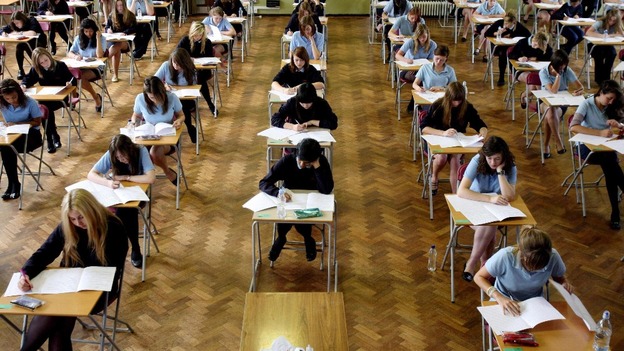
The GCSE English marking controversy has exposed alarming vulnerabilities within England’s examination system, revealing how intense pressures on teachers and flawed assessment structures combined to undermine student outcomes this summer. The exams watchdog, Ofqual, expressed profound shock at the findings that many pupils were failed by a system strained beyond its limits and manipulated under duress.
What happened during the GCSE English marking fiasco?
This summer’s GCSE English results sparked widespread concern after Ofqual uncovered significant over-marking of students’ work by teachers in numerous secondary schools across England. The watchdog’s investigation revealed that some educators, facing immense pressure to deliver high grades, deliberately inflated marks to boost pupil results. This practice, while understandable under the circumstances, distorted the integrity of assessments and unfairly raised expectations.
The new GCSE English qualifications, introduced for the first time this year, adopted a modular format. Students completed a combination of written exam papers and controlled assessments, coursework conducted under strict supervision within classrooms. Crucially, individual schools determined when controlled assessment pieces were submitted and when students sat their exams, creating inconsistencies across institutions.
Ofqual’s report detailed how many schools relied on January’s more lenient grade boundaries and exam marks as a benchmark to allocate controlled assessment scores. This approach effectively encouraged schools to calibrate coursework marks to ensure pupils achieved desired overall grades. Since most controlled assessments were submitted in the summer, examiners discovered widespread evidence of this over-marking, prompting Ofqual to raise grade boundaries to compensate. Consequently, many students saw their final results reduced compared to earlier expectations, sparking outrage among pupils, parents, and educators alike.
__IMAGE_PLACEHOLDER_1__
Why did this situation arise?
At the heart of the crisis lies the immense pressure placed on schools to meet stringent performance targets. Under the current accountability framework, schools are evaluated based on the proportion of students achieving at least five GCSEs at grade C or above, including English and Maths. Institutions must meet or exceed a 40% threshold in this measure to avoid being classified as failing. This high-stakes environment fosters a culture where teachers feel compelled to maximize student grades by any means necessary.
Ofqual’s chief executive, Ms Stacey, highlighted that teachers struggle to uphold professional integrity when they perceive that peers are exploiting the system. She lamented that children are spending excessive time “jumping through hoops” instead of acquiring essential life skills, underscoring that the pressures in English far surpass those in other subjects. Such conditions push educators to their limits, contributing to the compromised marking standards observed.
Moreover, the modular design of the new English GCSEs created structural challenges. Unlike linear exams, where students are assessed at the end of a full course, modular exams are taken in parts, allowing interim grading. This fragmentation encouraged teaching staff to use initial exam results as a guide for controlled assessment marking, inadvertently inflating scores. Recognizing these flaws, Ofqual announced plans to revert to non-modular (linear) English GCSE exams starting September next year. Under the new system, exams and coursework completed in January will be marked but not graded until after the full exam series concludes in June, aiming to prevent early grade inflation.
__IMAGE_PLACEHOLDER_2__
Reactions from educators and stakeholders
The fallout from Ofqual’s findings has sparked sharp criticism from various educational bodies. The Association of School and College Leaders (ASCL) estimated that hundreds of schools experienced a significant drop in students achieving grade C or above in GCSE English this year. ASCL’s deputy general secretary, Malcolm Trobe, slammed Ofqual’s suggestion that teachers and schools were primarily responsible as “outrageous” and contrary to the evidence. He emphasized that inconsistent standards between January and June exams were the root cause of the discrepancies.
Similarly, Christine Blower, general secretary of the National Union of Teachers (NUT), accused Ofqual of deflecting blame while revealing the absurdity of floor targets that pressure schools excessively. She called for a regrading of the summer exam results to correct the injustice inflicted on students who worked diligently within the parameters established earlier in the year.
An alliance comprising pupils, schools, local councils, and professional organizations has initiated a legal challenge demanding that this summer’s English GCSE results be regraded to reflect fairer standards.
Andrew Hall, chief executive of the AQA exam board, acknowledged that the structural design of the GCSE English qualifications, combined with performance pressures on schools, largely contributed to the problems highlighted in Ofqual’s report. His comments underline the complex interplay between policy, assessment design, and educational practice.
__IMAGE_PLACEHOLDER_3__
What this means for the future of GCSE English assessments
The GCSE English marking controversy serves as a cautionary tale about the unintended consequences of high-stakes accountability systems and modular exam structures. The intense pressure on teachers to meet performance targets can distort educational integrity, compromising fairness and the reliability of student assessments.
Ofqual’s decision to abolish modular GCSE English exams in favor of a linear format reflects a significant policy shift aimed at restoring confidence in the grading process. By delaying final grading until the entire course is completed, the system hopes to remove incentives for premature grade inflation and encourage more accurate evaluations of student ability.
Furthermore, this episode highlights the urgent need to balance accountability with support for teachers, ensuring they can maintain professional standards without succumbing to external pressures. It also raises broader questions about the effectiveness of current performance measures that emphasize grade thresholds over genuine learning and skill development.
Ultimately, the scandal underscores that education systems must prioritize the interests of students above bureaucratic targets. Only by fostering an environment where teaching and learning flourish free from undue stress can the true potential of young learners be realized. The lessons from this GCSE English fiasco should guide policymakers, educators, and exam regulators as they work to rebuild trust and fairness in public examinations.