India’s silk industry is undergoing a quiet revolution, blending cutting-edge technology with traditional farming to meet rising global demand. But challenges loom as the country grapples with shrinking farmer numbers and fragmented landholdings that threaten silk cocoon production—the cornerstone of this centuries-old craft.
Modernizing Silk Production: Technology and Sustainability at the Forefront
In the heart of India’s silk-producing regions, advanced machines now produce between 50kg and 60kg of raw silk daily, a dramatic leap from the slow, manual reeling methods of the past. Industry veteran Kannur highlights how technology has revolutionized the sector, transforming silk reeling into a fast, precision-driven industry. He also emphasizes the growing role of solar power in making silk production more environmentally sustainable.
“Technology is transforming silk reeling from a slow, manual craft into a fast, precision-driven industry, while solar power is quietly making it more sustainable,” Kannur explains. This shift not only boosts productivity but also aligns with global demands for greener manufacturing processes.
The Supply Challenge: Declining Farmers and Fragmented Landholdings
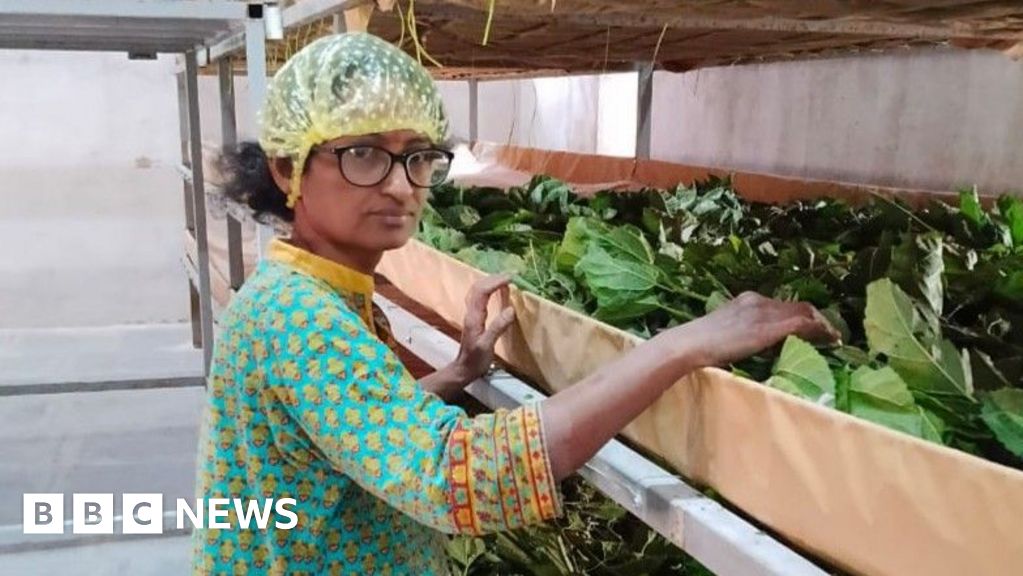
Despite technological advances, Kannur voices a pressing concern: the supply of silk cocoons may not keep pace with demand. The raw material for silk—the cocoon—is entirely dependent on farmers who rear silkworms. He warns that many second-generation farmers are reluctant to continue silk farming, and small, fragmented landholdings hinder large-scale cocoon production.
“Without cocoons, there is no silk. The entire industry depends on farmers. Many second-generation farmers are not willing to continue silk farming, and the landholdings are spread in small sections. For this industry to grow, we need huge lands,” Kannur asserts.
This challenge is rooted in broader rural dynamics where younger generations often migrate to urban areas or choose alternative livelihoods, leading to a decline in traditional farming practices. Additionally, fragmented land makes mechanization and large-scale farming less feasible, further straining silk cocoon output.
Counterbalancing Optimism: The Silk Board’s Perspective and Farmer Innovations
Contrasting Kannur’s concerns, the Silk Board of India remains optimistic. They emphasize that despite a reduction in the number of silk farmers, innovations in sericulture have driven up cocoon yields per acre.
“With advancements in rearing techniques, disease control, and scientific support to farmers, yield per acre has gone up significantly,” the Silk Board stated. This reflects increased adoption of modern farming practices, including improved silkworm breeds, better pest management, and enhanced mulberry cultivation.
On the ground, farmers like Umamaheswari in Andhra Pradesh are integrating traditional farming with sustainable practices to diversify income and improve production. She is adding a cow shed to her farm, which will supply milk as an additional revenue stream. Equally important, the cow manure will serve as organic fertilizer for her mulberry plants, enhancing soil health and mulberry leaf quality—critical for silkworm nutrition.
Such mixed farming approaches not only increase farm resilience but also demonstrate how smallholder farmers innovate to sustain silk production despite land constraints.

What This Means for India’s Silk Industry
The fusion of technology, sustainability, and farmer ingenuity signals a hopeful future for India’s silk sector. However, the concerns raised by industry insiders like Kannur highlight the need for strategic interventions to secure the supply chain.
To maintain India’s position as a global silk leader, policymakers and stakeholders must address the declining farmer base and fragmented landholdings by promoting land consolidation, incentivizing the younger generation to pursue sericulture, and expanding scientific support for farmers.
Moreover, expanding renewable energy use, such as solar power in silk reeling units, can further enhance environmental sustainability, aligning India’s silk industry with global eco-conscious market trends.
Ultimately, the industry’s resilience will depend on balancing technological advancement with robust support for the farmers who cultivate the very foundation of silk—the humble silkworm cocoon.