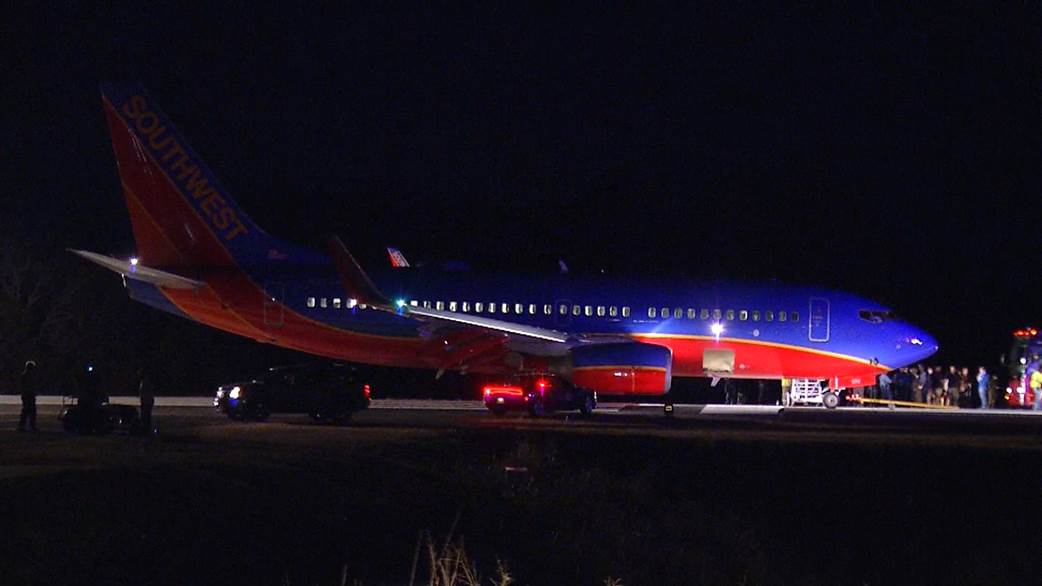
In an unusual aviation incident, a Southwest Airlines flight from Chicago landed seven miles away from its intended airport, leaving experts and passengers puzzled. The Boeing 737-700, carrying 124 passengers and five crew members, was scheduled to fly from Chicago’s Midway International Airport to Branson Airport in Missouri. Instead, the aircraft touched down at Taney County Airport, a much smaller facility located just a few miles away, prompting immediate investigation by aviation authorities.
What Happened During the Flight?
Flight 4013 departed Chicago Midway Airport as planned, bound for Branson Airport, a regional airport known for its longer runway and ability to accommodate commercial jets like the Boeing 737-700. However, the plane landed at Taney County Airport, also known as M. Graham Clark Airport, which has a runway measuring only 3,738 feet, less than half the length of Branson Airport’s 7,140-foot runway.
Despite the unexpected diversion, the landing itself was reportedly safe and uneventful. Southwest Airlines spokesman Brad Hawkins confirmed that all passengers and crew were unharmed. He explained that the airline’s ground crew promptly arrived at Taney County Airport to assist customers and handle their baggage after the landing.
A passenger on the flight, Scott Schieffer, recalled the moment of touchdown. He described how the pilot applied the brakes “very hard and very forcibly” upon landing, which was necessary given the shorter runway length. Initially, an announcement from a flight attendant welcomed passengers to Branson, but moments later, the pilot informed them that they had, in fact, landed at the wrong airport.
Fortunately, the Boeing 737-700 is capable of taking off from Taney County Airport despite its relatively short runway. Southwest planned for the aircraft to depart “as early as Monday morning” to continue its journey. Meanwhile, another Southwest plane was dispatched to Branson at 10 p.m. on Sunday to transport the passengers and crew to their originally intended destination of Dallas Love Field.

Why Did This Happen? The Investigation and Context
The Federal Aviation Administration (FAA) swiftly launched an investigation into the incident, with spokesman Tony Molinaro confirming that officials were working to determine how the plane ended up at the wrong airport. At this stage, Southwest Airlines has stated that it cannot explain the cause of the error.
Mislandings at incorrect airports, while rare, are not unprecedented. This recent event marks the second such occurrence in the United States within a two-month span. In November, a Boeing 747 Dreamlifter intended for McConnell Air Force Base in Wichita, Kansas, mistakenly landed nine miles north at Colonel James Jabara Airport, highlighting the challenges pilots face when navigating airports in close proximity.
Several factors can contribute to such errors, including pilot miscommunication, confusing airport layouts, visibility issues, or navigational system anomalies. Both Branson Airport and Taney County Airport are located near each other in southwestern Missouri, which can potentially cause confusion during approach, especially under certain weather or visibility conditions. However, the investigation by the FAA will seek to clarify the exact chain of events responsible for this particular mistake.
Why This Incident Matters
Landing at the wrong airport poses significant safety and logistical challenges. Although in this case, the landing was safe and no injuries occurred, the runway at Taney County Airport is considerably shorter and less equipped for handling a commercial aircraft of this size, increasing risks during landing and takeoff phases.
Additionally, passengers experience inconvenience and disruption in their travel plans. Southwest Airlines had to arrange alternate transportation swiftly to minimize delays, demonstrating the importance of responsive ground operations in such unexpected situations.
From an industry perspective, such incidents underscore the critical need for rigorous pilot training, clear communication protocols, and advanced navigation technology to prevent similar occurrences. It also highlights the importance of regulatory oversight by agencies like the FAA to ensure safety standards are met and maintained at all airports.
Looking Ahead: Lessons and Implications
While the investigation is ongoing, this event serves as a reminder of the complexities inherent in modern air travel. Airports located close to each other require heightened situational awareness from flight crews, and airline operations must be prepared to manage contingencies when deviations occur.
For passengers, the incident may raise concerns about flight safety, but it also illustrates how airlines and regulators respond promptly to ensure continued safety and service reliability. Southwest Airlines’ quick action to deploy ground crews and arrange alternative flights demonstrates effective crisis management.
Ultimately, the FAA’s findings will be crucial in preventing future mislandings and enhancing overall aviation safety. Until then, this unusual case remains a significant example of how even routine flights can encounter unexpected challenges, emphasizing the ongoing need for vigilance and precision in the aviation industry.