

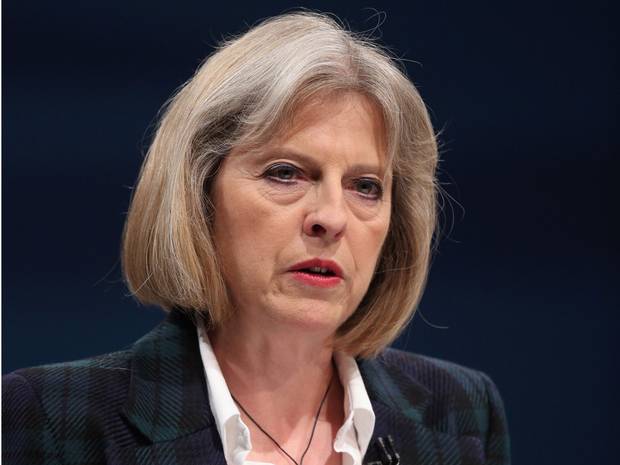
Theresa May has called for a fundamental overhaul of the UK’s approach to European migration, insisting that only migrants arriving with a confirmed job offer should be allowed entry. Her remarks underline growing concerns about the sustainability of current migration levels and spotlight the challenges posed by the EU’s principle of free movement.
Rethinking Free Movement: A Call from the Home Secretary
As the UK grapples with record migration numbers, Home Secretary Theresa May has publicly challenged the existing framework that allows EU citizens to move freely across member states without prior employment. Citing the latest data from the Office for National Statistics, May highlighted that net migration to Britain reached an unprecedented 330,000 in the year leading up to March. This surge starkly contrasts with the government’s earlier pledge, made by then-Prime Minister David Cameron in 2011, to reduce immigration figures to the “tens of thousands.”
May described the current scale of migration as “simply unsustainable,” emphasizing the strain it places on the country’s infrastructure and public services. She pointed to pressures on housing availability, transportation networks, schools, and hospitals, all of which struggle to keep pace with rapid population growth fueled in part by migration.
Crucially, May identified migration from within the European Union as the principal factor impeding the government’s ability to meet its immigration targets. While migration from outside the EU has declined by 10% since 2010, migration from EU member states has more than doubled. This sharp rise, she argues, necessitates renegotiation of the UK’s relationship with the EU concerning freedom of movement.
May firmly rejected the notion that controlling migration within the EU is impossible due to the free movement principle. She argued that the original intent of free movement was to allow individuals to relocate for a specific job, not to wander in search of work or claim social benefits without employment. Her position calls for a recalibration of this principle to better align with economic and social realities.
__IMAGE_PLACEHOLDER_1__
The Human and Economic Costs of Unrestricted Migration
Highlighting the consequences of open migration policies, May drew attention to the economic impact on the countries migrants leave behind. She noted alarming statistics such as one-third of qualified nurses in Portugal migrating abroad, 20% of Czech medical graduates departing shortly after qualification, and nearly 500 Bulgarian doctors leaving annually. These “brain drains” exacerbate healthcare shortages in source countries, further complicating regional stability and development.
Back in the UK, May revealed that four out of every ten migrants arriving last year had no job lined up, suggesting many come motivated by the prospect of better living standards rather than employment opportunities. This dynamic, she contended, fuels economic costs on both ends: source countries lose skilled workers, and the UK faces additional pressures on public services.
May also linked these migration patterns to broader European challenges, including the Schengen agreement’s borderless zone, which she believes has intensified the continent’s migration crisis. The summer’s migration surge exposed vulnerabilities in Europe’s system, with tragic consequences falling heavily on vulnerable migrants. She highlighted the role of criminal gangs exploiting free movement and selling false hopes to desperate individuals seeking entry into the UK.
__IMAGE_PLACEHOLDER_2__
Security Measures and the Calais Crisis
Earlier in the month, May visited Calais to inspect new security efforts aimed at preventing migrants from crossing into Britain via the Channel Tunnel. The French port harbors an estimated 5,000 migrants, with at least nine fatalities recorded since June among those attempting the perilous journey. This situation underscores the urgency of effective border management and international cooperation.
Industry Concerns and Student Visa Reforms
Theresa May’s proposals have sparked debate among business leaders and education institutions. John Cridland, director general of the Confederation of British Industry (CBI), acknowledged the economic benefits that most EU migrants bring but expressed concern about requiring workers to secure jobs before arrival. He warned such a policy could hinder firms lacking the capacity for wide European recruitment campaigns, potentially stalling vital sectors such as healthcare, construction, and infrastructure development.
Cridland stressed the importance of maintaining freedom to work while ensuring that migrants who do not contribute economically are not encouraged to enter. The CBI advocates continued collaboration with European partners to refine migration rules, balancing economic needs with control measures.
__IMAGE_PLACEHOLDER_3__
On the education front, May targeted international students, arguing that the current system too often leads to permanent settlement rather than temporary study. Official statistics reveal a significant gap between the number of non-EU students arriving and those departing annually, a difference of 96,000, which accounts for half of net migration from non-EU countries.
To address this, May is exploring stricter visa regulations. A leaked government document suggests requiring international students to prove substantial independent financial resources before admission and encouraging universities to develop funding models less reliant on international enrolments. This approach aims to curb the unintended long-term residency many students currently transition into.
What This Means for the Future of UK Migration Policy
Theresa May’s call to restrict EU migration to those with pre-arranged employment signals a significant shift in UK immigration policy. It challenges one of the fundamental freedoms of the European Union and reflects growing domestic concerns about migration’s impact on public services and social cohesion.
The emphasis on renegotiating the UK-EU relationship over free movement reveals underlying political pressure to regain control over borders while balancing economic necessities. The debate highlights the complex interplay between humanitarian considerations, economic imperatives, and national sovereignty.
As the government contemplates tighter controls on both migrant workers and international students, the implications will ripple across sectors, from healthcare and construction to higher education. Stakeholders will closely watch how policies evolve to ensure they safeguard economic growth without exacerbating social strains.
Ultimately, Theresa May’s stance encapsulates the broader European struggle to manage migration flows effectively while upholding rights and responsibilities. The coming months will be critical in defining the UK’s immigration framework and its stance on the principle of free movement within the EU.